EXCLUSIVE INTERVIEW: “Nigeria Must Become a Manufacturing Nation”-Gen. Danbazzau Nigeria’s Ambassador to China

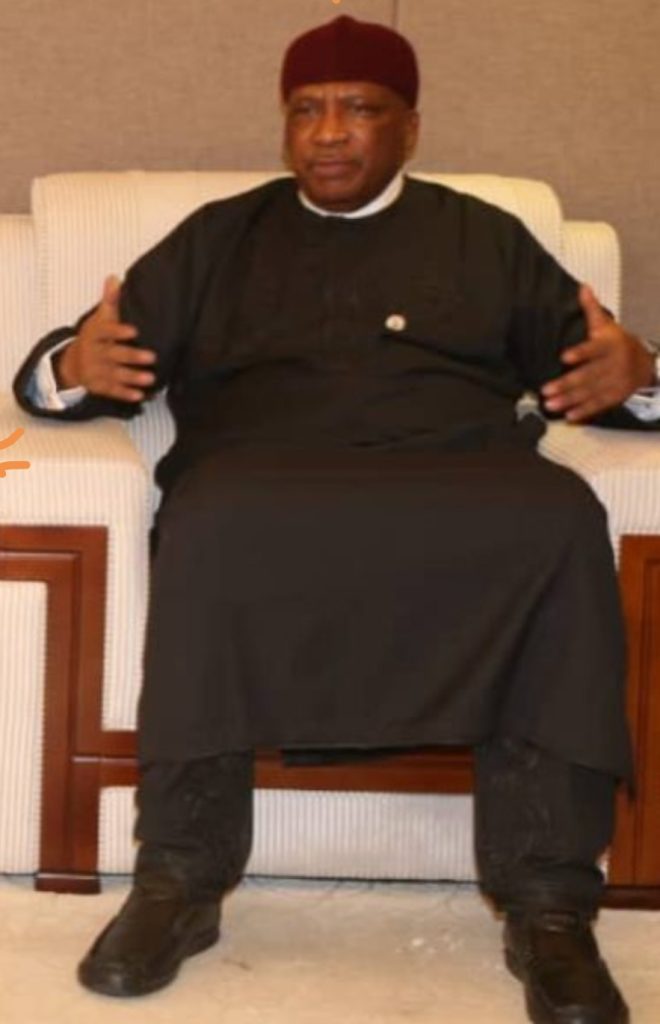
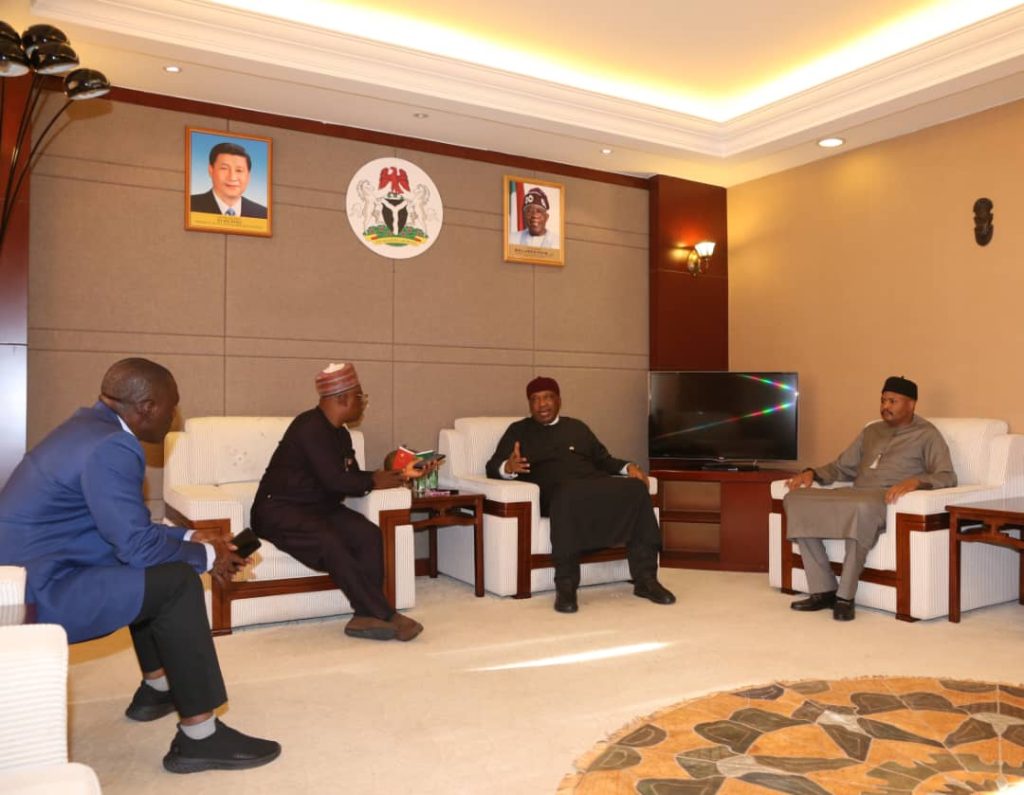
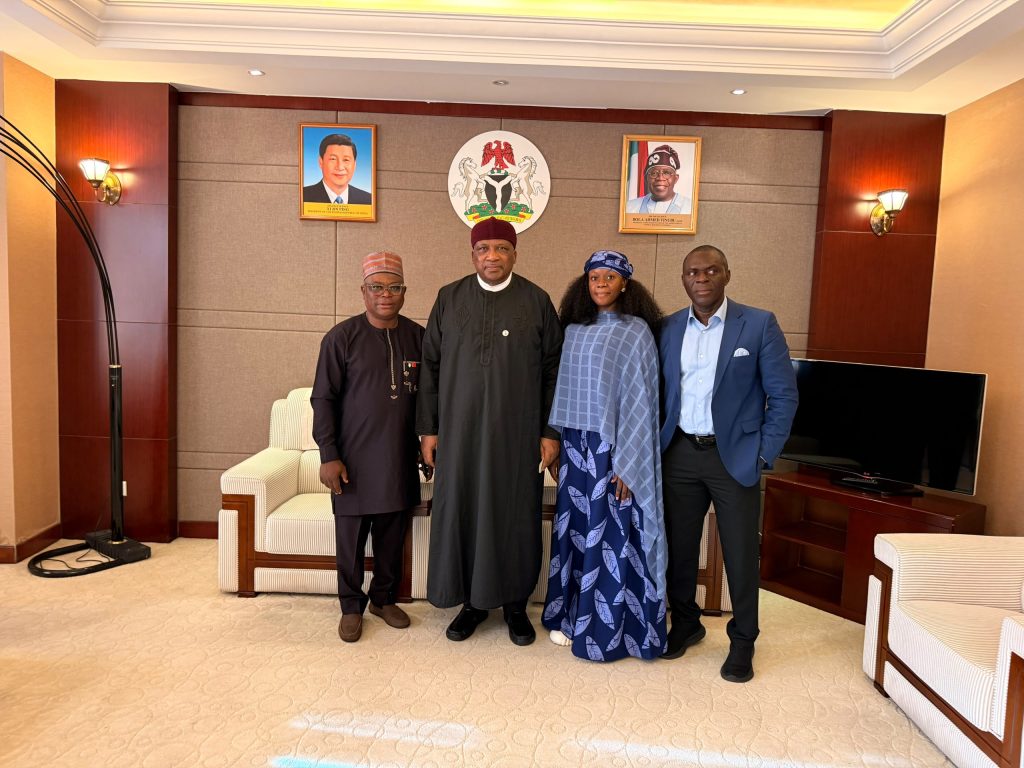
In an exclusive media engagement since assuming office, Nigeria’s Ambassador to China, Rtd. Gen. Abdulrahman Danbazzau, received three senior Nigerian journalists in his office in Beijing. The interview, conducted by Sarafina Christopher, Fred Idehei and Dr. Austin Maho, centered on how to turn Nigeria’s 55-year diplomatic and commercial relationship with China into tangible prosperity for Nigerians at home and abroad. Gen. Danbazzau spoke with the calm authority of a soldier and the detail of a policymaker. At the heart of his message was one goal: industrialization. From Raw Materials to Manufacturing On Nigeria-China economic ties, the Ambassador was direct. China remains one of Nigeria’s largest trading and infrastructure partners, but the relationship must evolve. Excerpts:
NIGERIA MUST LEARN FROM CHINA
“China’s rapid development over the last four to five decades has been remarkable, transforming it into one of the most technologically advanced countries in the world,” he said. “Nigeria must leverage this relationship to learn from China’s experience to develop our own nation.” His core priority, he explained, is moving Nigeria up the value chain. “As former President Buhari stated a few years ago, Nigeria should no longer simply be a provider of raw materials; we must transition into a manufacturing nation. This is my core focus. More industries mean more youth employment and a significant reduction in poverty.” He pointed to lithium as a test case. With large deposits in Nasarawa, Kebbi and Sokoto, “we are encouraging them to establish manufacturing plants so Nigeria can become the hub for lithium battery manufacturing in Africa, serving both the continent and Europe.”
TRADE IMBALANCE/ZERO TARIFF POLICY
The trade imbalance was also in the front burner. General Danbazzau noted that out of a $28 billion trade volume, “only about $3 billion comes from the Nigerian side.” To address this, he is studying China’s new zero-tariff policy for African goods that took effect on May 1st this year. “We need to study its conditions, criteria, and requirements thoroughly so that our local farmers and traders can actually benefit from it. In fact, I held meetings this afternoon specifically to dissect this policy.” Beyond trade, he wants Nigeria to borrow China’s planning discipline. “One important lesson from China is how it manages its massive population of over 1.4 billion people. We are studying how they manage this diversity. In Nigeria, people often waste time fighting over primordial sentiments, religion, and ethnic differences. China stays strictly focused on its goals through structured five-year development plans.”
AGRICULTURE/ENERGY
For agriculture and energy, he cited irrigation and localized power as priorities. “Nigeria has an abundance of surface and groundwater that we must tap into via large-scale irrigation schemes, we are encouraging localized energy solutions for rural communities to power Small and Medium Enterprises to boost local manufacturing.”

NIGERIANS IN CHINA
With thousands of Nigerians in China for business and study, consular protection was the second major theme. “We have a significant number of Nigerian students in China—some on scholarships and others studying privately. This embassy is duty-bound to provide consular services, ensure they respect local Chinese laws, and encourage them to focus strictly on their studies,” Gen. Danbazzau said.When issues arise, the mission moves fast. “Whenever a student encounters an issue, such as visa expiration, we intervene immediately by writing to the immigration departments across the various provinces. We monitor their welfare closely through student leadership networks.” He also urged business travelers to coordinate with the mission. “We are collaborating with major trade organizations to help coordinate the movements of their members traveling here for business. We encourage everyone to notify us when they arrive so we can better support them. Protecting Nigerians is our fundamental duty, not a favor.”The embassy, he added, works closely with consulates in Guangzhou, Shanghai and Hong Kong to ensure “the welfare of Nigerians is never taken for granted.”
PARTNERSHIP IS NOT CONCESSION
“Products manufactured in Nigeria can easily travel globally, even back into China,” he noted. Under FOCAC, the next meeting of which will be in Congo next year, he wants African challenges like climate change and the receding Lake Chad to be addressed collectively. But he was clear that partnership does not mean concession. “Whether in bilateral or multilateral partnerships, we must actively protect our own interests… While we speak of ‘shared prosperity,’ the reality of global politics means China will protect its interests, and we must aggressively protect ours. I never take anything for granted; I study their strategies so that I can implement a counter-strategy that maximizes the benefits for Nigeria.”
MESSAGE FOR NIGERIANS AT HOME AND ABROAD
He closed with a message to Nigerians on both sides. To those in China: “Please recognize the immense distance you travelIed to get here and make sure your stay is positive and impactful. Ensure your actions advance both your personal goals and the reputation of Nigeria. Be an excellent ambassadors for your country opportunity knocks but once, so grab it when it does. ”To those back home: “Know that the embassy is here to protect your interests 24/7. It is our job, not a favor. If you are coming to China for business, do not come blindly. Take time to understand the Chinese environment, their strict rules, and their laws… Our doors are always open.”