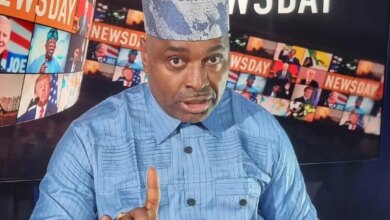
Femi Falana’s influence does not come from elected office, ownership of a television station or control of a government institution. It comes from more than four decades of legal practice, human-rights advocacy and public-interest litigation that have placed him at the centre of Nigeria’s debates about power, justice and accountability.
Falana is a Senior Advocate of Nigeria and the lead partner at Falana and Falana Chambers. He was called to the Nigerian Bar in 1982 and has built his career around constitutional law, civil liberties, labour rights and challenges to government conduct.
Falana is a lawyer and activist. He does not host a regular television programme or operate mainly through political interviews. His media influence comes from frequent appearances on news programmes, public lectures, legal commentary and statements that are widely reported online.
His standing rests on a simple source of power: he knows how to turn public complaints into legal arguments and, where necessary, court action.
Current Power and Institutional Control
Falana does not control a ministry, political party, court or security agency. His authority is professional rather than constitutional.
As a senior lawyer, he can initiate litigation, represent individuals and organisations, advise campaign groups and challenge public institutions through the courts. He has also served as president of the West African Bar Association, giving him influence within the regional legal community.
His position gives him access to judges, lawyers, activists, labour leaders, journalists and public officials. Governments often respond publicly when he questions the legality of a decision because his interventions can move beyond criticism into formal legal proceedings.
That influence has limits. Falana cannot order government agencies to act, remove an official or guarantee that a court will accept his argument. His authority depends on the strength of the law, the independence of the judiciary and the willingness of institutions to obey judgments.
Reach and Visibility
Falana is one of Nigeria’s most recognisable human-rights lawyers.
He appears regularly on Channels Television, ARISE News, TVC and other platforms to discuss constitutional disputes, elections, policing, labour rights and government policy. These appearances are often republished on YouTube and shared across X, Facebook and WhatsApp.
He does not run a major personal television show or a widely established podcast. Unlike a broadcaster, he is usually invited into the media because of a legal controversy or public-interest issue.
This gives him a different kind of visibility. He may not appear on television every day, but his comments often enter the news cycle when a government decision is being challenged.
His audience also extends beyond Nigeria. His work on regional justice, press freedom and the ECOWAS Court gives his interventions relevance across West Africa. In June 2026, he called for an appellate division of the ECOWAS Court, arguing that conflicting decisions and the absence of a review process were weakening confidence in the institution.
Falana rejects Lagos restriction over sanitation exercise
Femi Falana sues Meta for $5m over privacy invasion
Femi Falana SAN pushes for legal aid in police stations across Nigeria
Soft Power and Cultural Influence
Falana has become a symbol of rights-based resistance in Nigeria.
His public image was shaped by his opposition to military rule and his continued willingness to confront civilian governments. Over time, this has made his name closely associated with civil liberties, court orders and the rule of law.
His soft power comes from credibility built across different political administrations. He has criticised governments led by rival parties and has frequently argued that constitutional standards should apply regardless of who is in office.
That consistency strengthens his public standing, although it does not remove criticism. Some Nigerians may see him as too political, too quick to litigate or more sympathetic to certain causes than others.
His family also extends his cultural visibility. His son, the musician and actor Falz, has used entertainment to address social and political issues. However, Femi Falana’s influence should be judged mainly on his own legal record rather than his family connections.
Relevance to 2026
Falana remains relevant in 2026 because Nigeria continues to face disputes over security, elections, economic hardship, judicial independence and the conduct of public institutions.
As the country moves towards the 2027 general election, questions about party primaries, electoral rules, political rights and state power will become more important.
Falana has already argued that the election must produce greater security, good governance and respect for human dignity. He has also continued to challenge decisions that he believes lack legal authority.
His relevance also comes from the weakness of institutional accountability. In a system where court orders may be delayed or ignored, lawyers who publicly explain the law can help citizens understand when government conduct may be unlawful.
However, public commentary cannot replace functioning institutions. Falana’s importance partly reflects the fact that many Nigerians still rely on prominent individuals to raise issues that legislatures, regulators or oversight bodies should address themselves.
Generational Influence
Falana’s career offers a model for younger lawyers who want to combine professional practice with public service.
He has shown that legal influence does not have to come from becoming a judge, attorney-general or corporate adviser. A lawyer can build a career around public-interest cases, constitutional interpretation and the defence of vulnerable people.
His work also demonstrates the importance of preparation. Effective rights advocacy requires more than strong language. It requires knowledge of legislation, legal procedure, previous judgments and the limits of government authority.
Younger activists also benefit from his ability to connect legal principles with ordinary concerns such as unlawful arrest, unpaid wages, police violence and access to justice.
His generational influence is significant but not complete. Nigeria still needs stronger institutions, wider legal-aid systems and more lawyers willing to take difficult cases without depending on the reputation of one senior advocate.
Weighted Influence Scorecard
| Influence Indicator | Weight | Score | Assessment |
|---|---|---|---|
| Current Power and Institutional Control | 20% | 6/10 | He controls no public institution, but his senior legal position and ability to initiate major cases give him indirect institutional influence. |
| Reach and Visibility | 15% | 8/10 | His television appearances, public statements and online coverage give him strong national visibility, especially during legal and political disputes. |
| Impact and Tangible Results | 20% | 7/10 | He can turn advocacy into litigation and has represented vulnerable people, although not every intervention produces an immediate result. |
| Soft Power and Cultural Influence | 10% | 7/10 | He has become a recognised symbol of human-rights advocacy and resistance to official abuse. |
| Relevance to 2026 | 15% | 8/10 | Election preparations, judicial disputes, security concerns and questions about constitutional government keep his work important. |
| Generational Influence | 10% | 7/10 | His career provides a strong professional model for younger lawyers and activists committed to public-interest work. |
| National and International Recognition | 10% | 6/10 | He has received important national and regional recognition, but his international public profile remains more limited. |
Final weighted influence score: 70 out of 100