NEW YORK – Pools were packed and power grids strained as millions of Americans sweltered in stifling heat and humidity on July 2, with dangerous temperatures expected to hit major cities through the Fourth of July holiday weekend.
The heat wave that has been broiling the Midwest began intensifying in the north-east, with temperatures surpassing 38 deg C in cities including New York, Philadelphia and Washington.
The US National Weather Service (NWS) said the New York city area saw several decades-old records for July 2 break, notably at LaGuardia airport and New Jersey’s Newark, which both hit 40 deg C.
In Washington, a high of 39 deg C on July 2 broke the record of 38 deg C set on the same day in 1898.

The heat index – which measures how hot it feels based on temperature and humidity combined – was even more merciless. The NWS warned the index could peak as high as 46 deg C in the mid-Atlantic region.
The intense heat was of particular concern given the many planned outdoor events to celebrate America’s 250th anniversary, as well as a string of weekend World Cup matches.
The authorities urged people to stay indoors especially in the hottest parts of the afternoon, to check on their neighbours, drink more water than usual, and to find air conditioning if they do not have access at home.
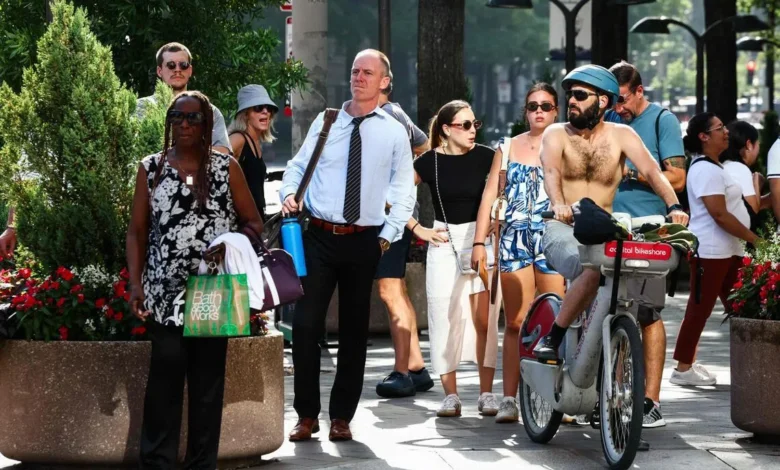
Many dog-walking New Yorkers were out early before temperatures grew unbearable and hot asphalt posed risks to their pets.
But plenty of people including delivery drivers and construction workers had little choice but to be out.
New York designated hundreds of public buildings as cooling centres, extended public swimming pool hours, dispatched volunteers to check on vulnerable residents, and opened cooling stations with misting fans and wet towels.
Luis Rivera, who works in his family’s restaurant in lower Manhattan, took a quick dip at a packed public pool before work.
“It’s hot, man,” he told AFP. “If you don’t need to come outside, stay home.”
Trey Parker, 27, traded his apartment in a highrise for a few hours at the pool as well, his two primary-aged children in tow.
On July 1, the air conditioner got overwhelmed and stopped working adequately, he told AFP.
“So we had to come outside, get some air, get some Icees, get some water on our body,” he said.
Those hoping for some coastal respite over the three-day weekend could face disappointment: City authorities warned “multiple shark sightings” would mean intermittent closures at one of the city’s most popular beaches.
The city’s electric authority and New York Mayor Zohran Mamdani stressed on social media that the “power grid is working overtime to keep us cool”.
He asked that air conditioning be set to 26 deg C – which left him, like many of his predecessors who have made similar requests, facing backlash on social media. Some people urged the city to turn off the bright lights of Times Square first.
The power authority urged residents to defer using appliances like dishwashers and laundry machines, and avoid excessive air conditioning use.
Officials across the country were making similar pleas, including in Philadelphia, where authorities said to only use ovens when absolutely necessary to avoid overtaxing the air conditioner units.
More frequent, longer-lasting and more intense heat waves are one of the clearest signs of climate change, with Europe also recently hard hit.
Global average surface temperatures have risen roughly 1.4 deg C above pre-industrial averages as a result of human-caused climate change, mainly driven by the burning of fossil fuels.
The recent “heat dome” conditions in the US occur when high-pressure systems trap warm air like the lid on a pot.
The heat wave falls at a particularly busy time in the United States, with amped-up Fourth of July parties as the nation celebrates 250 years of independence.
A rodeo on the National Mall that’s part of the festivities was postponed.
And a dress rehearsal for an annual holiday concert on the lawn of the US Capitol would be closed to the public over the aggressive heat, police said, with an announcement to come on the status of the official show.
June Martin, 65, was selling merchandise near the White House under the beating sun, toting cold water and Gatorade he said was vital to surviving the day.
“If you don’t have to be out here, don’t be out here,” he told AFP. “It’s excruciating.” AFP