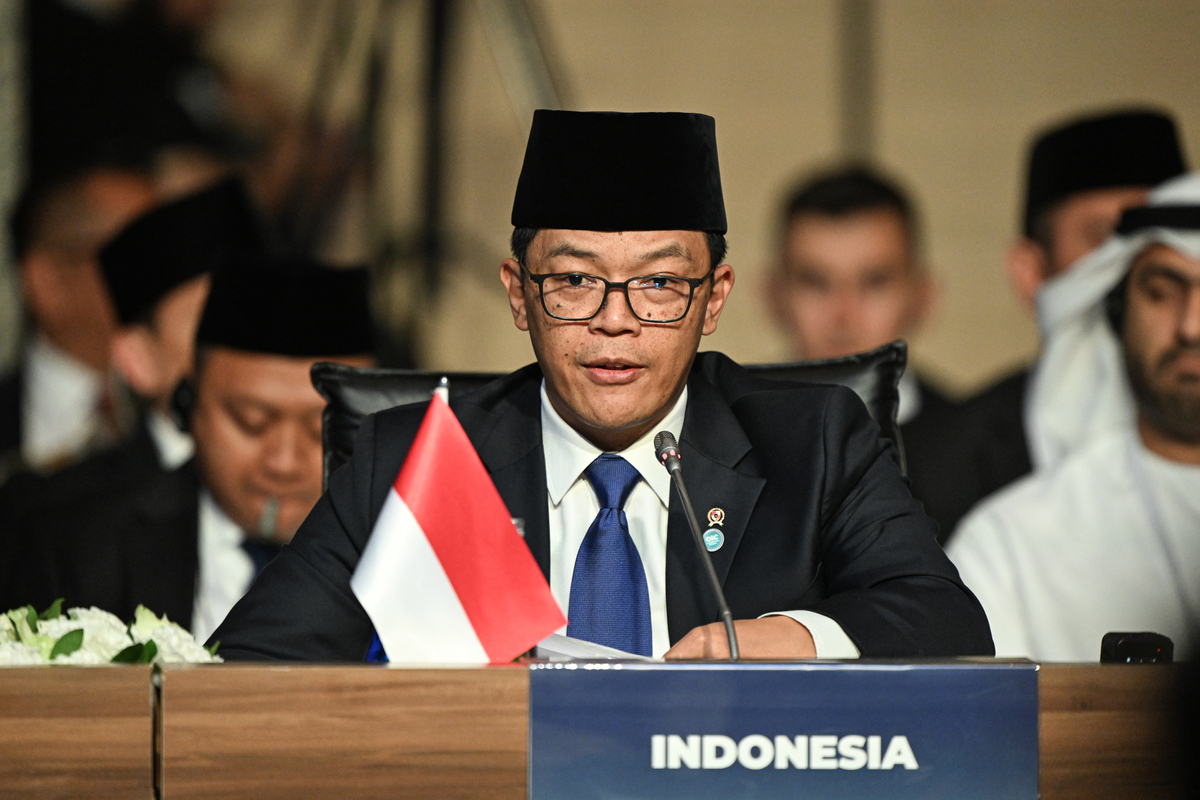
Indonesia eventually sent Foreign Minister Sugiono and MPR Speaker Ahmad Muzani to attend the funeral of Iran’s late Supreme Leader Ayatollah Ali Khamenei. It was the correct decision. But the way Jakarta arrived at that decision revealed a troubling lack of confidence in its own foreign policy.
The problem was not that Indonesia attended. The problem was that it hesitated.
Initially, Jakarta informed Tehran that Indonesia would be represented by its ambassador in Iran, Rolliansyah Soemirat. Only later did the government decide to send a higher-level delegation.


Sugiono explained that Indonesia learned of Iran’s protocol requirements too late and that logistical constraints made an earlier decision difficult.
That explanation may be reasonable. But diplomacy is not only about explaining decisions after they are made. It is about anticipating how those decisions will be interpreted.
Iran’s funeral for its supreme leader was not an ordinary event. It was a major diplomatic gathering attended by foreign delegations. Indonesia’s choice of representation sent a message about how seriously it viewed the relationship.
By initially sending only an ambassador, Jakarta created the impression that it was keeping Iran at arm’s length.
That perception was damaging because Indonesia has always claimed that its foreign policy is independent and active. The principle is simple: Jakarta should engage countries based on its own interests, not because of pressure from larger powers or concerns about how others might react.
Yet in this case, Indonesia appeared hesitant.
READ: Inside Indonesia’s growing market for fake Middle Eastern doctorates
The decision raised questions about whether Jakarta was worried about international reactions, particularly from countries that have taken a harder position toward Tehran. Some analysts argued that Indonesia’s caution risked making its foreign policy appear influenced by external considerations rather than national interests.
This is exactly the kind of situation where Indonesia should demonstrate confidence.
Engaging Iran does not mean endorsing every policy of the Iranian government. Diplomatic representation is not an act of political approval. Countries maintain relations with states they disagree with because diplomacy requires communication, not isolation.
Indonesia understands this principle in other contexts. It has consistently argued that dialogue must remain open with all sides, including countries that are controversial internationally. That approach has helped Jakarta build a reputation as a country capable of talking to competing powers.
But that reputation depends on consistency.
The later decision to send Sugiono and Muzani, along with representatives from Indonesia’s largest Muslim organizations, was clearly intended to repair the damage and reaffirm ties. The delegation also used the visit for bilateral discussions with Iranian officials.
However, diplomacy is not only about fixing problems after they emerge. It is about avoiding unnecessary problems in the first place.
A country with Indonesia’s diplomatic experience should have prepared for different scenarios. International ceremonies often involve changing protocols and political sensitivities. A stronger diplomatic process would have considered from the beginning whether ambassador-level representation was appropriate for such a significant event.
Instead, Jakarta appeared reactive.
That matters because foreign policy is built through small decisions. A delayed visit, a lower-level representative, or an unclear signal may seem minor individually. But together, they shape how other countries assess Indonesia’s seriousness.
READ: The latest Indonesia-Qatar defence agreement needs deliverables, not diplomacy
The episode also raises a broader question about decision-making inside Indonesia’s foreign policy apparatus. Who made the initial assessment that ambassador-level representation was sufficient? Was the decision based purely on logistics, or did political calculations also play a role?
The government should answer these questions, not because attending Khamenei’s funeral was controversial, but because strategic clarity matters.
Indonesia wants to be seen as a middle power. It wants to play a role in regional and global diplomacy. But influence requires more than economic size or international slogans. It requires confidence in making difficult choices.
The lesson from this episode is straightforward: Indonesia should not wait for criticism before demonstrating its principles.
If Jakarta believes engagement with Iran serves Indonesian interests, it should act accordingly from the beginning. If it believes certain diplomatic gestures are unnecessary, it should apply that standard consistently.
What weakens Indonesia’s position is not engagement with Iran. It is appearing uncertain about whether it should engage at all. A truly independent foreign policy is not one that avoids difficult diplomatic choices. It is one that makes those choices confidently.
The views expressed in this article belong to the author and do not necessarily reflect the editorial policy of Middle East Monitor.


