Nigeria’s digital payments revolution has transformed the way millions of people transact. From roadside traders accepting transfers to businesses settling transactions instantly across the country, electronic payments have become an essential part of everyday life.
Yet, beneath the rapid growth of financial technology lies a more fundamental question: can Nigeria build a payment ecosystem that is not only innovative but also secure, trusted and capable of supporting a modern digital economy?


For the governor of the Central Bank of Nigeria (CBN), Olayemi Cardoso, the answer lies in two critical pillars, interoperability and cybersecurity.
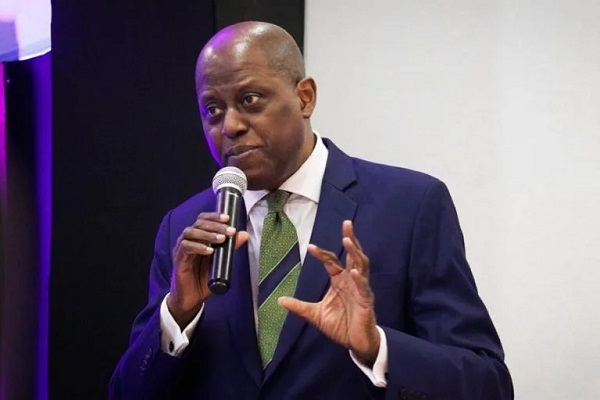
Speaking at the Future of Banking Summit 2026 organised by CNBC Africa and the ABN Group, Cardoso unveiled the broad direction of the CBN’s Payment System Vision (PSV) 2028, describing it as the blueprint for creating a payment ecosystem that is secure, inclusive, transparent and globally competitive.
His message reflected a shift in regulatory priorities. While Nigeria has spent the last decade encouraging fintech innovation and expanding digital financial services, the next phase, according to the CBN governor, is to ensure that the entire ecosystem works seamlessly and earns Nigerians’ confidence.
“Payment systems are no longer simply banking infrastructure. They have become strategic national infrastructure,” Cardoso noted.
He likened payment systems to road networks that people hardly notice until they fail.
“We simply expect them to be safe, reliable, and capable of taking us where we need to go. Payment systems earn public confidence in exactly the same way, by becoming so dependable that people scarcely think about them.”
Digital Payments Reshape Nigeria’s Economy
Nigeria has emerged as one of Africa’s fastest-growing digital payment markets. The widespread adoption of smartphones, agency banking, mobile applications and fintech innovation has fundamentally changed how individuals and businesses move money.
According to industry figures, the value of instant electronic transactions reached a record N1.078 quadrillion in 2024, representing a 79.6 per cent increase from N600.349 trillion recorded in 2023.
The country now boasts one of the continent’s most vibrant payment ecosystems, supported by instant payment platforms, hundreds of fintech operators, and nearly two million banking agents who extend financial services into rural communities.
This rapid expansion has helped reduce dependence on cash while bringing millions into the formal financial system.
However, Cardoso believes the next challenge is not simply increasing transaction volumes but ensuring that every payment channel can communicate seamlessly with one another.
Why Interoperability Matters
At the centre of the Payment System Vision 2028 is interoperability.
Today, consumers often encounter differences between banks, digital wallets and payment platforms that can complicate transactions.
According to Cardoso, Nigerians should be able to transfer money across banks, fintech platforms, payment wallets and even international payment systems without worrying about technical incompatibility.