BRUSSELS – Volodymyr Zelensky is in good spirits ahead of talks with US President Donald Trump and other NATO leaders at their summit in Turkey, according to a person who spoke with him in recent days.
The Ukrainian president has grounds for confidence.
Missile and drone strikes targeting Russian supply routes deep behind the front line and in occupied Crimea are bolstering Ukrainian morale.
Billions in European Union funding have started to flow to Kyiv, easing a financial crunch that threatened to hobble its military and economy.

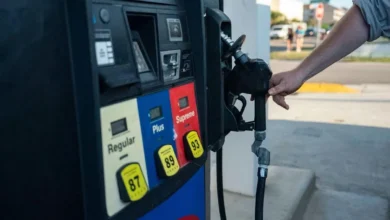
That’s all as Russian President Vladimir Putin faces mounting difficulties at home after an unprecedented series of Ukrainian strikes on key oil refineries in the past two months triggered a nationwide gasoline-supply crunch.
Russians from Kaliningrad on the Baltic Sea to the Pacific Coast reported fuel rationing, hours-long lines at filling stations and an expanding black market for gasoline.
“At the NATO Summit, Zelensky will have something to present as the results of the Ukrainian Armed Forces,” said Oleksiy Honcharenko, a member of the opposition European Solidarity Party in Ukraine’s Parliament. “Ukraine can definitely surprise its allies once again.”
It’s a marked contrast to the summit in The Hague in 2025, when Trump kept Zelensky guessing until the last moment on whether the two are going to meet, only months after their infamous argument in the Oval Office.
Now, Zelensky even allowed himself a wry joke after Putin rejected as “rude” an open letter calling for direct peace talks that he sent to the Kremlin leader in June.
“You didn’t read first version,” he told Sky News’ Yalda Hakim in an interview.
Ukraine is “doing so much better over the last couple of months”, North Atlantic Treaty Organisation Secretary-General Mark Rutte told Ukrainian reporters on July 6.
“You’re hitting deep into Russia when it comes to energy infrastructure or crucial defense industrial capacity. And you’re able in the frontline to prevent the Russians from making big advances.”
To be sure, far from everything is going Ukraine’s way even if there’s greater optimism in Kyiv recently over the war that’s now well into its fifth year.
Russian troops continue to grind forward in Ukraine’s fortified eastern Donetsk region, though at immense cost in casualties.
Relentless Russian missile and drone attacks on Kyiv are exposing Ukraine’s dire need of more air defences as shortages of US-made Patriot interceptors become acute.
Strikes overnight on July 5 through July 6 killed at least 14 people, a day after Putin and Trump discussed Ukraine in a phone call.
“He wants to end it,” Trump said of Putin in comments to reporters on July 6. “And President Zelensky actually wants it to end now. And we’re going to be going to NATO, we’re going to be talking about it, and I think we’re going to get it.”
There’s no visible sign that Putin’s willing to end the war despite growing disruption to the lives of millions of Russians from Ukrainian attacks that have undercut Kremlin efforts to insulate the population and avoid social tensions.
Russians’ anger over fuel shortages follows discontent over widespread mobile internet outages the Kremlin imposed on security grounds.
“It’s having absolutely no effect on Putin,” while the attacks are prompting many Russians to adopt a siege mentality and rally behind the authorities, said Andrey Kolesnikov, a Moscow-based political analyst.
“Nevertheless, fatigue is increasing which can turn into irritation,” he said.
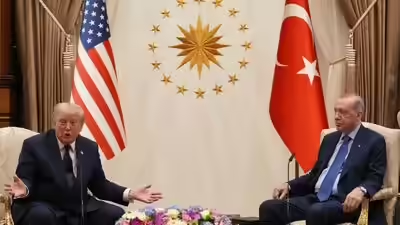
Zelensky and Trump are expected to hold talks at the summit in Ankara on July 7. They also spoke by phone on July 4.
In a potential sign of his greater confidence in Ukraine’s position, Zelensky is holding off on signing a cooperation deal with the US on drone production, according to a person familiar with the matter.
Ukrainian officials say the president may be seeking better terms from the US and for senior US officials to recognise the deal’s value.
They privately confirmed in May that the US is seeking to gain access to Ukraine’s proprietary technology as part of the accord.
Zelensky’s spokesman Dmytro Lytvyn has denied in a response to Bloomberg News that the president was stalling on the drone deal.
Trump’s view of Ukraine may also have mellowed since he told Zelensky “you don’t have the cards” during their spectacular White House bust-up in 2025.
He told reporters in June that Zelensky’s “doing pretty well” against Russia.
Even so, some European allies are cautious even as they acknowledge that Ukraine’s expertise in drone production and warfare has given Zelensky a stronger hand in negotiations.
While the expectations now are for a good meeting between Trump and Zelensky, the US president’s volatility means there’s no certainty the talks will go well, according to two people familiar with the situation.
European officials don’t expect Trump to substantively increase pressure on Russia either through new sanctions or resuming weapons aid to Ukraine.
Putin has acknowledged public anger over the fuel shortages in many areas of Russia.
While the Kremlin insisted the situation is under control the president’s popularity has taken a hit in opinion polls.
Putin’s trust rating among Russians fell by 3.4 percentage points on the previous week, to 73.3 per cent, in a July 3 survey by VTsIOM, the biggest decline the state-run pollster has recorded since the start of the war in Ukraine.
The president’s approval rating fell five percentage points to 74 per cent in a June poll by the independent Moscow-based Levada Centre, the lowest since February 2022.
The proportion of Russians believing the country was heading in the right direction slumped to 52 per cent from 61 per cent, also the lowest since the war began.
“Russians are very much concerned and aware of these disruptions,” said Ella Paneyakh, a research fellow at the London-based New Eurasian Strategies Centre think tank.
“At the same time, fuel shortages do not affect the same segments of the population that suffer most from mobile network outages – meaning that a new group of dissatisfied people is emerging.”
To support domestic fuel supplies and keep a lid on retail prices, the Russian government paid over US$2.7 billion (S$3.49 billion) in June alone in subsidies to refiners, further raising pressure on the nation’s strained wartime budget.
If Zelensky’s position looks rosier now, that’s partly because 2025 was so tough for Ukraine.
Political squabbling in Europe delayed a critical €90 billion (S$132.9 billion) support package for months, while Russian attacks on Ukraine’s energy infrastructure knocked out heat and power for millions during the coldest winter since the February 2022 full-scale invasion began.
Zelensky admitted in November that Ukraine faced “one of the most difficult moments in our history” after the US threatened to cut off support unless Kyiv accepted a peace deal that would force it to cede territory to Russia under a 28-point peace plan.
Ukraine and its European allies pushed back against that plan.
US-led diplomacy has stalled since the Middle East conflict erupted in February.
European attempts to find a representative to engage with Putin haven’t produced a candidate so far.
Kremlin officials insist that agreements they say were reached with Trump at his summit with Putin in Alaska last August must form the basis of peace deal.
Putin wants Ukraine to surrender the eastern Donetsk region that Russia has failed to capture in fighting since 2014, a demand Kyiv rejects.
Kremlin spokesman Dmitry Peskov told reporters on July 6 that Putin and Trump had an “understanding” to continue their contacts soon.
US officials earlier indicated that Trump may follow up with Putin after his meeting with Zelensky.
Zelensky tasked his security service on June 25 to conduct a “40-day influence operation” aiming to convince Putin to end the war, though he gave no details of the plan.
The Ukrainian leader is simultaneously making his case for taking the fight to Russia in the international arena, proposing a drone deal to the EU and striking bilateral agreements with numerous European states for joint defence production.
“Without Ukrainian experience and security expertise and testing in modern war, today it’s simply impossible to guarantee security,” Zelensky said in a July 1 visit to Ireland as Dublin assumed the EU’s six-month rotating presidency.
“The mood music ever since the winter has changed,” said John Foreman, a former UK Defence Attaché to both Moscow and Kyiv.
“The narrative of Ukraine surviving and fighting back and taking the battle to the Russians, to Crimea, and embarrassing Putin isn’t lost on NATO leaders.” BLOOMBERG