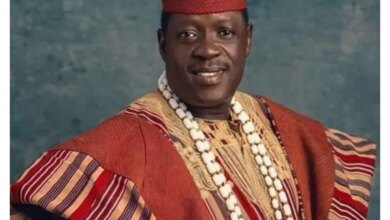
“KAFIRI MUST NOT RULE!” — Firestorm as Mufty-Iwo’s Explosive Directive Threatens to Set Oyo Politics Ablaze

Oyo State is sitting on a keg of gunpowder.
A shocking and incendiary declaration allegedly made by Mufty-Iwo has detonated outrage across the state, after the cleric reportedly urged Muslims in Oke-Ogun to reject and resist any non-Muslim branded “kafiri” from occupying positions of power, including Oba, Local Government Chairman, and even the Governorship seat.
The message was not subtle. It was not diplomatic. It was a blunt, hardline directive that has now ignited fierce backlash, with critics describing it as a reckless call capable of tearing apart the fragile religious harmony in Oyo State.
At the heart of the storm is a dangerous question:
Is Oyo politics now being weaponized along religious lines?


Witnesses and circulating reports suggest the cleric didn’t just advocate political participation he allegedly drew a red line of exclusion, insisting that leadership must remain strictly within the Muslim fold. The repeated use of the word “kafiri” a term widely regarded as derogatory when used in political context—has only intensified the fury.
Across social and political circles, the reaction has been swift—and explosive.
“This is not politics. This is provocation,” one stakeholder fumed. “You cannot declare an entire group unfit to lead in a democracy and expect peace to follow.”
Behind the outrage lies a deeper fear: the slow but dangerous fusion of religion and political power plays. Analysts warn that statements like these could embolden extremists, fracture communities, and drag Oyo into a cycle of suspicion, retaliation, and identity-based politics.
Even more alarming is the potential ripple effect.
Oke-Ogun, long seen as a relatively calm political zone, could now become ground zero for a high-stakes religious showdown, as politicians scramble to either capitalize on or distance themselves from the controversy.
Supporters of Mufty-Iwo are already attempting damage control, claiming his words are being “misinterpreted” or “taken out of context.” But critics aren’t buying it. For them, the message is clear—and dangerous.
Legal minds are also weighing in, warning that if verified, such statements may not just be morally questionable but could brush dangerously close to constitutional violations, particularly on grounds of discrimination and incitement.
Meanwhile, the silence from key political figures is deafening.
Will authorities step in?
Will religious leaders condemn or defend?
Or will this spiral into something far more volatile?
One thing is certain:
This is no longer just a comment—it is a crisis.
And as Oyo watches the fire spread, many fear this may only be the beginning of a much bigger, more dangerous political and religious clash.