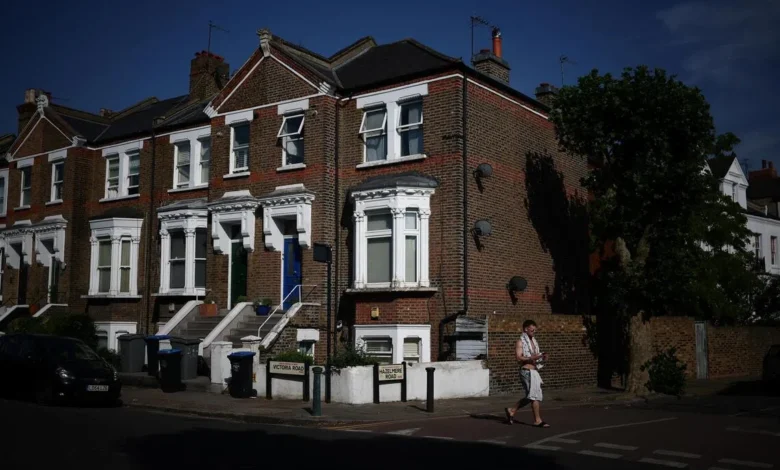
LONDON – As London swelters through successive heatwaves and record temperatures, the local government’s long-held opposition to air conditioning appears to be melting.
Requirements intended to keep the city’s inhabitants safe from extreme heat were laid out by the office of the Mayor of London this week.
The draft plan says air-conditioners will probably be necessary in schools, hospitals and care homes.
The plan “does not prevent the use of air-conditioning in new buildings and it is likely that it will need to be provided in heat-sensitive uses such as hospitals, care homes, and schools,” according to the document, which was released on July 16.


The previous plan had said air conditioning was “not desirable.”
The office has long voiced scepticism toward air conditioning, due to the technology’s energy consumption and to the urban heat island effect that is worsened when hot air is transferred from buildings to streets.
But as Londoners struggle to cope with extreme heat in a city that was designed for a cooler climate, pressure has been mounting on Mayor Sadiq Khan to respond.
Temperatures above 35 deg C through May and June forced many of London’s schools to close, setting off a ripple effect that dragged parents away from work as they looked after their children at home.
In late June, British teachers said their classrooms were reaching temperatures as high as 38 deg C, according to the non-profit Global Witness.
While many schools closed because of the heat, others stayed open in line with the British government’s official advice.
At the same time, many London homes aren’t designed for the kinds of temperatures increasingly common in the British capital, with indoor heat in some cases hitting dangerous levels.
That’s especially true of modern apartment block housing, which often comes with large unshaded windows and without a dual-aspect layout that would allow proper ventilation.
More than 2,700 people are estimated to have died in England and Wales in May and June due to extreme heat.
Khan said in June that protecting the British capital from rising temperatures will require billions of pounds, and force the city to also turn to private investors for help.
Bureaucratic hurdles
The plan put forward by the Mayor of London is part of a scheduled update that comes every five years and determines how the city’s local councils approach decisions about what’s built and how properties can be adapted.
The draft released on July 16, which will be open for consultation until mid-October, emphasised the need for external shading on windows, after complaints from many homeowners that they face endless bureaucratic hurdles when trying to install such features.
The new plan will “encourage developers to use practical design features – such as shading, natural ventilation and building orientation – to help buildings stay cool naturally,” the Mayor’s office said in a press release.
New buildings will be expected to have external shading, like awnings and external shutters, to shield windows from strong sunlight and prevent overheating.
The London Mayor’s new plan still says that air conditioning should be “minimised” and building designers should include low-energy shading and ventilation to keep a lid on AC running costs.
But it no longer uses the so-called cooling “hierarchy,” which had required developers and some homeowners to prove that ventilation and shading measures weren’t enough to prevent overheating.
Only then were they likely to get permission to install air-conditioning.
The new plan also encourages local authorities to make it easier for owners of listed buildings – older structures whose facades and design are protected by law – to adapt to extreme heat.
Tor Burrows, chief sustainability officer at London landlord Grosvenor, called the step “really positive” but said more reforms were needed at the national government level to help historic buildings adapt to heat.
Research by Loughborough University shows that external shutters and awnings can reduce temperatures by over 6 deg C.
But only around 3 per cent of UK households use awnings to keep their property cool, which is an even smaller proportion than use air-conditioning, according to a recent government survey.
British homeowners have so far faced “significant hurdles” when trying to install external shutters and shading, says Andy Love, managing director at Shade the UK, a community interest company that works with government and local authorities to manage overheating risks in buildings.
And they regularly struggle to get AC, he says.
People living in flats, conservation areas and listed buildings are often “frustrated by the process,” Love said.
The national government has also proposed planning changes to make it easier for homeowners to install external shading features, a spokesperson for the UK’s housing ministry said.
The measures, currently under consultation, require decision-makers to take the risk of overheating into account, making it easier for residents to get things like shutters approved, the spokesperson said. BLOOMBERG


