0
The controversy over the N8.4 billion earmarked in the 2026 budget of the National Commission for Almajiri and Out of School Children Education for road construction (NCAOOSCE) has taken a fresh turn, with the commission insisting that the projects were inserted into its budget by members of the National Assembly.
The development has brought to the fore growing concerns over the integrity of Nigeria’s budget process, particularly the practice of inserting projects into the budgets of Ministries, Departments and Agencies that fall outside their statutory mandates.
It has also renewed calls for greater transparency and accountability in public spending, amid fears that such allocations could undermine the effective delivery of programmes aimed at tackling the country’s education crisis, including the challenge of millions of school dropouts and out of school children.

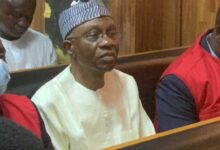
In a statement issued on Tuesday, the commission’s spokesperson, Nura Muhammad, maintained that the projects falling outside the agency’s statutory mandate were constituency projects inserted by the National Assembly.
In the 2026 budget, the agency also budgeted for several other off-mandate projects, including the procurement of ambulances and medical equipment and the installation of solar power facilities.
The projects are located in Ogun, Ekiti and Katsina states.
There are, however, concerns about the insertion of off-mandate projects in the commission’s budget at a time the country is still grappling with over 15 million out-of-school children, the highest in the world.
But in the statement, Muhammad clarified that “these projects are National Assembly constituency projects incorporated into the 2026 Appropriation Act for implementation through the commission. This is in line with the long-standing budgetary practice under which constituency projects are assigned to Ministries, Departments and Agencies (MDAs) for execution through the Appropriation Act.
“As part of a duly enacted federal budget, every project assigned to the commission forms part of its implementation responsibilities and will be executed in strict compliance with extant laws, financial regulations and due procurement processes”.
Muhammad said the commission’s statutory mandate remained unchanged despite the controversy, stressing that it was established to coordinate national efforts aimed at reforming the Almajiri education system and tackling the challenge of out-of-school children.
According to him, the commission remains focused on expanding access to quality education, strengthening Almajiri education, supporting states and other critical stakeholders, and implementing programmes that directly improve the lives of millions of vulnerable children across the country.
He said the agency would continue to pursue its core mandate with renewed vigour, noting that it had already identified and profiled more than 700,000 out of school children nationwide, established 119 learning centres across the country, and sustained ward-to-ward advocacy and community mobilisation.
Muhammad added that the commission was also working towards the full implementation of the National Policy on Almajiri to reform the system and address the social vices associated with it.
The spokesman reiterated that addressing the plight of Almajiri and out-of-school children remained the commission’s foremost priority.