The National Assembly has commenced a major overhaul of the proposed Women’s Special Seats Bill, introducing an Electoral College system that would fundamentally change how women are elected into designated legislative positions across Nigeria.
Under the revised framework, women will no longer contest these additional seats through direct general elections. Instead, political parties will nominate candidates, while specially constituted Electoral Colleges will conduct indirect elections under the supervision of the Independent National Electoral Commission (INEC).
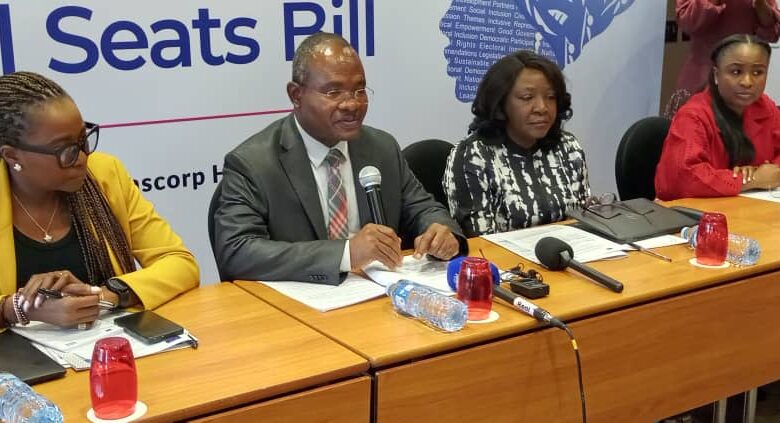
The development was disclosed in Abuja by the Executive Director of the Policy and Legal Advocacy Centre (PLAC), Dr. Clement Nwankwo, during a Civil Society Roundtable on the proposed model, organised with support from the European Union.
Nwankwo revealed that Committees on Constitution Review in the National Assembly recently introduced the amendment, describing it as a significant shift with far-reaching implications for women’s political representation. He urged civil society organisations to critically examine the proposal and coordinate advocacy strategies ahead of legislative deliberations.
According to him, the roundtable was convened to assess ongoing constitutional amendment processes and prepare stakeholders for deeper engagement during the National Assembly’s Open Week scheduled for July 14.
The revised proposal establishes a State Electoral College in each of the 36 states and the Federal Capital Territory (FCT). These Colleges will be responsible for electing women into the newly created special seats at both federal and state levels.
– All elected local government chairpersons and vice chairpersons
– All elected councillors
– Members of the State House of Assembly
– Members of the House of Representatives from the state
In the FCT, the serving senator will also be included. Each member will have one vote in the election process.
The bill provides for a total of 157 additional seats exclusively for women, broken down as follows:
– 12 Senate seats (2 per geopolitical zone)
– 37 House of Representatives seats (1 per state and the FCT)
– 108 seats in State Houses of Assembly (3 per state, one per senatorial district)
If passed, the National Assembly’s size will expand from 360 to 397 members, while State Houses of Assembly nationwide will increase from 990 to 1,098 seats.
Importantly, the proposal maintains that existing legislative seats will remain open to all candidates, including women, while the special seats are designed as a temporary intervention to address persistent gender imbalance.
Special Adviser to the Deputy Speaker on Youth and Women Affairs, Joy Akut, defended the shift to the Electoral College model, stating it was intended to make the bill more practical, politically feasible, and easier to implement without undermining its core objective.
She noted that the revision followed recent party primaries where many qualified female aspirants—including sitting lawmakers—failed to secure party tickets, raising fresh concerns about systemic barriers within political parties.
With women’s representation in the National Assembly currently below five percent, Akut warned that the figure could decline even further in the incoming 11th Assembly if decisive action is not taken.
While acknowledging concerns over transparency and the risk of elite manipulation, she argued that such challenges already exist within Nigeria’s broader electoral system. She expressed confidence that the revised model offers a realistic pathway to boosting women’s participation in governance and strengthening democratic inclusion.
The proposal is expected to generate intense debate as lawmakers, civil society groups, and political stakeholders prepare for the next phase of constitutional amendments.