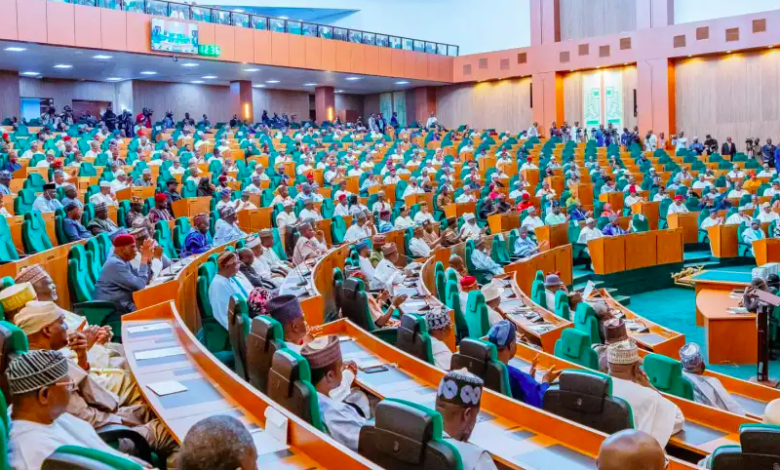
The House of Representatives Committee on Public Petitions has begun reviewing how it handles complaints from Nigerians as the 10th National Assembly enters its final year, with hundreds of petitions still awaiting legislative action.
At a retreat held on Thursday, Committee Chairman Hon. Kwamoti Bitrus La’ori said the panel has received 890 petitions since the Assembly was inaugurated, completed work on 200 and presented reports on 70 cases to the House.
READ RELATED NEWS
Reps criticise NCC over high tariffs, poor network quality
Reps give mining marshals panel four weeks to review legal status, funding

Reps amend electoral act, propose N10m fine, two-year jail for party membership
He blamed the refusal of many Ministries, Departments and Agencies to honour committee invitations for slowing the resolution of many complaints.
The retreat was organised to improve the committee’s work before the present Assembly completes its tenure.
Members are reviewing weaknesses in petition handling, documentation and reporting while considering digital systems that can speed up case management and preserve institutional records for future assemblies.
Committee works to reduce pending cases
La’ori said the committee has become one of the main places where Nigerians seek legislative intervention when they believe they have been treated unfairly.
He noted that petitions now cover a very large range of issues, including disputes between husbands and wives, because many citizens trust the committee’s process.
He explained that the committee has concluded 200 petitions since the inauguration of the 10th National Assembly. Reports on 70 of those cases have already been considered by the House, while many others are still waiting for legislative action.
La’ori identified poor cooperation from several MDAs as one of the biggest obstacles facing the committee. He said invitations sent to government institutions are often ignored until the committee threatens those involved with arrest.
He said such delays prevent complaints from being resolved quickly and slow the committee’s work.
He stressed that every petition represents a Nigerian looking for justice and that the committee must improve the speed, fairness and quality of its work.
The chairman also said stronger documentation, knowledge management, institutional memory and digital record keeping have become necessary as the Assembly approaches its final year.
He said members at the retreat are developing practical steps to improve petition handling and ensure committee reports are prepared and presented more promptly.
Reform plans focus on stronger institutions
Executive Director of the Policy and Legal Advocacy Centre, Clement Nwankwo, urged committee members to complete pending assignments before the end of the present Assembly. He said stronger institutional systems would also benefit future assemblies.
Nwankwo also proposed a legal framework that would formally recognise constituency projects and establish a dedicated implementation mechanism so projects approved in the national budget are carried out.
Chief Commissioner of the Public Complaints Commission, Hon. Bashir Abubakar, said the commission and the House Committee on Public Petitions perform similar functions by giving Nigerians accessible channels to pursue justice and administrative redress.
He explained that the Public Complaints Commission investigates complaints against public institutions to improve accountability, while the House committee provides constitutional legislative intervention where administrative remedies have failed or parliamentary oversight is required.
Abubakar said stronger cooperation between both institutions would improve the handling of complaints because many cases received by the commission also find their way to the National Assembly.
He also noted that recent international engagements exposed the commission to digital case management, forensic investigation and citizen centred dispute resolution methods used in other countries
He said those experiences would help strengthen accountability, transparency and complaint handling within public administration.
For More News Details, Visit the New Daily Prime.