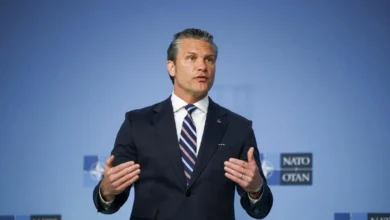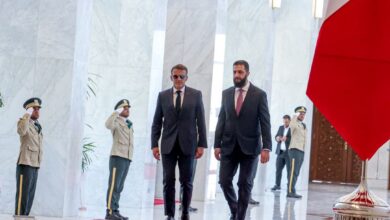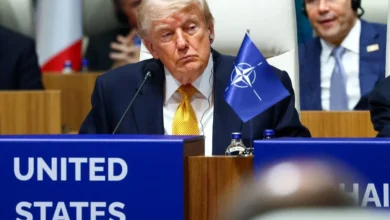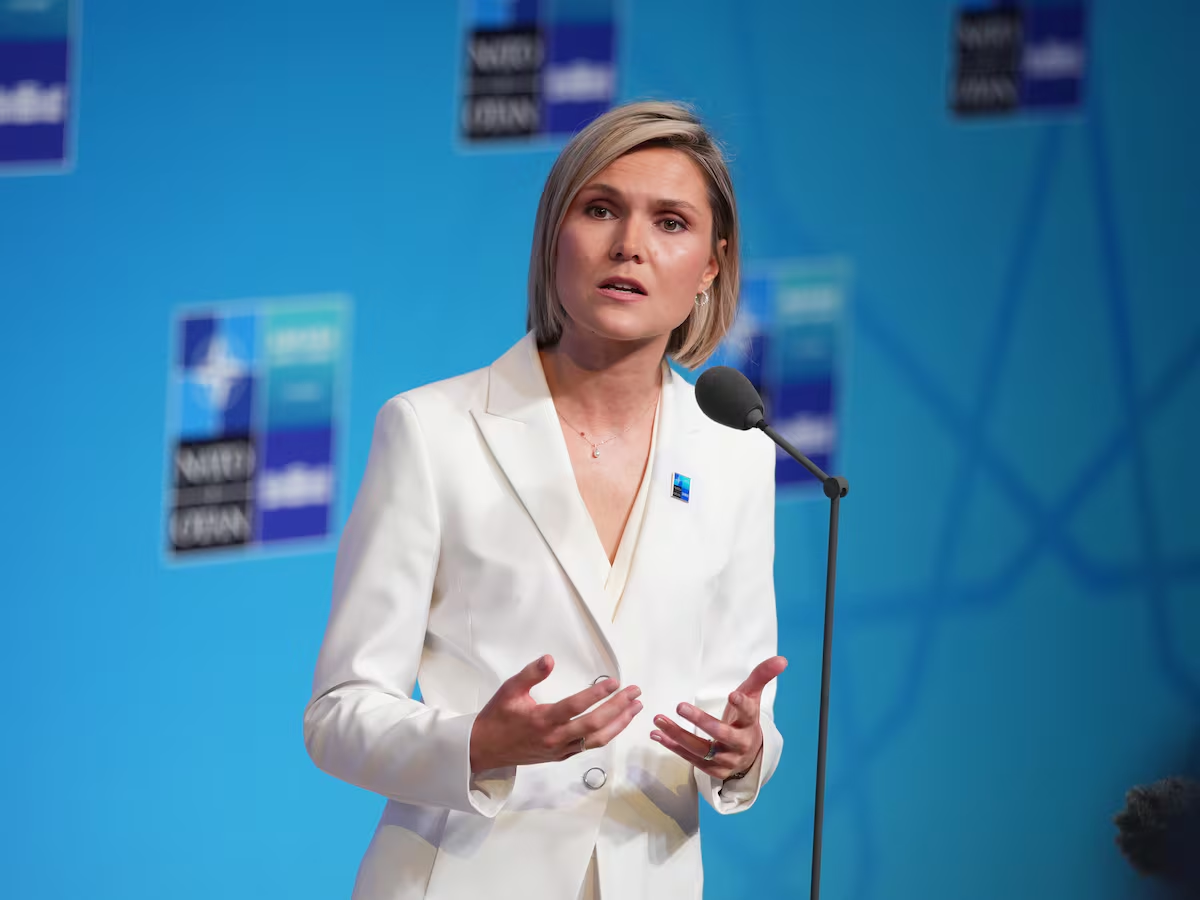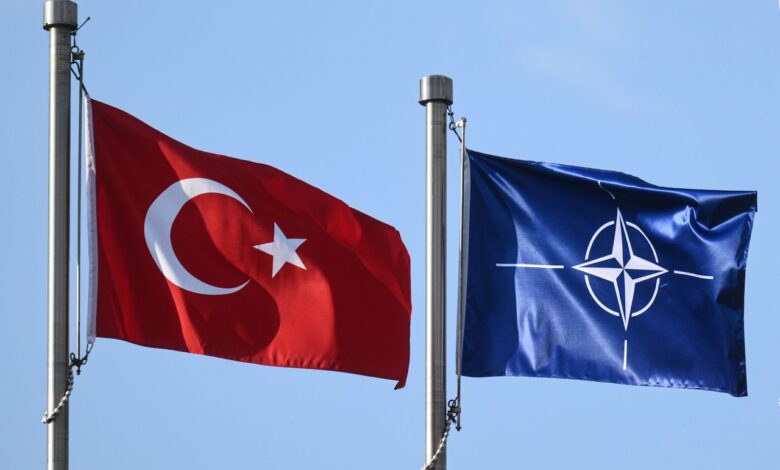
As football fans around the world follow every pass, tackle and goal at the ongoing FIFA World Cup, leaders gathered in Ankara used the language of the popular game to outline NATO’s vision for its next phase — one in which Türkiye cast itself not only as the summit host but also as a key industrial player in strengthening the alliance’s collective defence.
Opening the NATO Defence Industry Forum on the first day of the alliance’s summit, NATO Secretary General Mark Rutte compared collective security to a successful football team, while Turkish Vice President Cevdet Yilmaz extended the sporting analogy to describe what he called “NATO 3.0” and Türkiye’s ambition to move into football’s “first league” as a global defence exporter.
“As we are in the middle of the World Cup, let me start with a little football analogy,” Rutte said, joking that both his native Netherlands and Curacao had already been eliminated from the tournament.
“No team wins because of one brilliant player,” he said. “You need the goalkeeper, the defenders, the midfielders and the strikers… Everyone matters. No one wins alone.”
For Rutte, the comparison extended beyond soldiers and commanders. Governments, armed forces and defence manufacturers, he argued, must function as one team if NATO is to keep pace with an increasingly volatile security environment.
“Our political leaders set the direction. Our armed forces are on the pitch every single day. And you, our defence industry, provide the strength behind the team — the equipment, the innovation, the production capacity.”
Related
Türkiye says NATO entering ‘3.0’
Picking up on Rutte’s football theme, Yilmaz argued that the alliance is entering a new stage of its evolution, one centred on stronger industrial cooperation, fairer burden-sharing and increased defence production.
“The alliance is taking a new step into NATO 3.0,” he said, describing a future in which higher defence spending must translate into tangible military capabilities.
Using the football analogy himself, Yilmaz said Türkiye aimed to move into the sport’s “first league” as its defence industry continued climbing the global rankings.
Presenting Türkiye as an increasingly important defence producer within NATO, he noted that the country now ranks among the world’s leading defence exporters, with more than half of its exports destined for NATO and European Union countries.
He highlighted Türkiye’s expanding capabilities across land, air, naval, cyber and space domains, pointing to a domestic localisation rate exceeding 80 percent for the Turkish Armed Forces and describing the country as a reliable weapons supplier for allies.
Yilmaz also renewed Ankara’s longstanding call for deeper industrial integration within the alliance, arguing that defence export restrictions and sanctions between NATO allies undermine collective security.
“All bilateral restrictions between allied countries should be lifted,” he said, adding that removing such barriers would strengthen NATO’s military readiness while reducing production costs.

Related
Türkiye showcases its defence industry
Earlier at the same session, Turkish Defence Minister Yasar Guler argued that modern conflicts are increasingly shaped by industrial capacity as much as by battlefield performance.
“The fundamental question for all of us is how quickly can we turn our commitments into real capabilities,” Guler said.