Nigeria and Egypt are preparing to strengthen intelligence sharing, joint operations and training against drug trafficking through a Memorandum of Understanding (MoU), as both countries seek to stop criminal networks from shifting their activities into Africa.
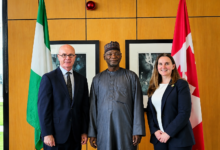
The National Drug Law Enforcement Agency (NDLEA) revealed this on its official website, in a statement by the Director of Media and Advocacy, Femi Babafemi. The plan was carried out in Abuja on Tuesday after Egyptian Ambassador Mohammed Fouad met NDLEA Chairman Brig. Gen. Mohamed Marwa (Rtd). The partnership aims to help both countries detect traffickers faster, coordinate investigations and improve enforcement against illicit drugs.
Read Related News
NDLEA reveals how drug traffickers hide deadly cargo across Nigeria
Drug cartels hit hard as NDLEA arrests multiple suspects in national crackdown
NDLEA arrests nine drug cartel leaders in one week
The planned agreement follows a series of major drug seizures and enforcement actions by the NDLEA. Nigerian authorities have stepped up efforts against international trafficking groups, while criminal networks have continued to search for new routes and production centres. This has pushed anti-drug agencies to deepen cooperation with foreign partners rather than work alone.
Marwa said the agency is ready to formalise cooperation with Egypt because drug trafficking is no longer a problem any country can tackle on its own. He noted that the NDLEA already works with agencies in the United States, the United Kingdom, France, Germany and India, and sees the proposed agreement with Egypt as another step towards stronger international action.
Nigeria seeks stronger intelligence sharing
Marwa said criminal organisations are adjusting their operations as pressure increases in other parts of the world. He warned that some cartels are now turning their attention to Africa, making cooperation among African countries more urgent.
He said, “The drug problem is a global challenge. Nowhere is untouched.” He also stressed that both countries must work together to stop criminal groups from establishing stronger footholds on the continent.
Marwa pointed to recent operations carried out by the NDLEA to show why intelligence sharing is important. He recalled that the agency dismantled a methamphetamine laboratory worth about 362 million dollars around two months ago. He said the facility was operated by Mexican nationals deep inside a forest in Nigeria.
He also revealed that another methamphetamine laboratory linked to Mexican suspects had been dismantled in a different state. These operations, he noted, show that international criminal groups are willing to establish production centres inside African countries if law enforcement agencies fail to work together.
He expressed confidence that signing the MoU would create a more structured relationship between both countries in the fight against narcotics and help competent agencies cooperate more closely.
Egypt backs continental cooperation
Ambassador Fouad said Nigeria and Egypt have an important responsibility because of their influence on the continent. He explained that stronger cooperation would help both countries confront drug trafficking from an African perspective instead of limiting efforts to national borders.
The envoy said his visit focused on identifying practical areas where both countries could work together against illicit drug trade and narcotics trafficking. He also sought to understand the priorities of the NDLEA and examine how Egypt could support those efforts through bilateral cooperation.
He noted that drug trafficking is affecting societies throughout Africa and called for closer collaboration between the two countries to confront the challenge.
It is believed that if the MoU is signed, it will provide a formal platform for intelligence exchange, coordinated operations and specialised training between the Nigerian and Egyptian anti-drug agencies. Such cooperation could improve investigations that involve traffickers operating in more than one country and strengthen efforts to stop illegal drugs before they reach communities.
For More News Details, Visit New Daily Prime.