Vice President Kashim Shettima has led six state governors and top Federal Government officials to the Republic of Benin to study a textile and agro-industrial hub that could help Nigeria rebuild its struggling textile industry, boost local production and create more jobs.
The delegation arrived in Cotonou on Thursday ahead of a visit to the Glo-Djigbé Industrial Zone on Friday. The trip is important as the Federal Government pushes to strengthen its Special Agro-Industrial Processing Zones Programme and revive local manufacturing.
Read Related News
Remi Tinubu backs Akwete revival with ₦2bn, pushes traditional textile onto national stage
FG to revive Kaduna textile industry amid regional development concerns
NEC endorses $90bn agribusiness, approves textile development board
ECOWAS Backs $25bn Nigeria-Morocco Gas Pipeline
The visit follows efforts by the Tinubu administration to increase local processing of agricultural products instead of exporting raw materials.
Nigeria is also working to improve industrial output, create employment and increase non-oil exports.

The delegation wants to examine practical ideas that can help improve investment, skills, infrastructure and value addition within Nigeria’s textile and agricultural sectors.
Visit targets practical lessons for textile revival
Shettima was received in Cotonou by Benin’s Minister of Foreign Affairs, Ambassador Corinne Amori Brunet, and the Minister of Tourism and External Trade, Olushegun Adjadi Bakari.
Travelling with the Vice President are the governors of Kwara, Imo, Jigawa, Plateau, Katsina and Zamfara states. Also on the trip are the Minister of Agriculture and Food Security, Senator Abubakar Kyari, and other senior Federal Government officials.
Soon after arriving, Shettima held a briefing with the governors and members of the Nigerian delegation before the scheduled visit to the industrial zone.
The delegation will tour the Glo-Djigbé Industrial Zone near Cotonou, where they will meet representatives of the Beninese government, investors and private-sector operators involved in building and managing the facility.
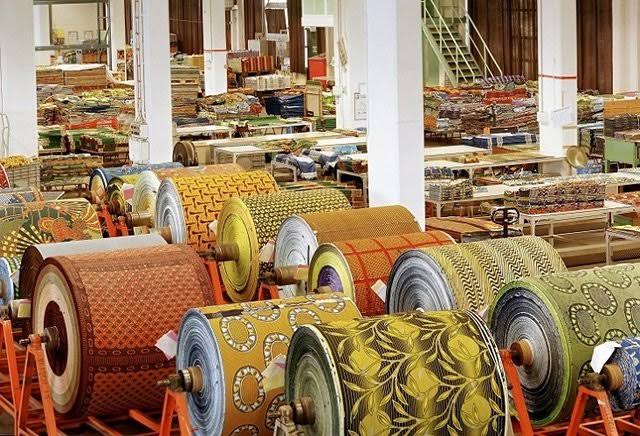
Particular attention will be given to the zone’s textile park, which links cotton spinning, weaving, fabric processing and garment manufacturing within one production system.
The industrial zone covers about 1,640 hectares. It is designed to process agricultural raw materials into finished products that can be exported to international markets.
Nigeria hopes to study how the model supports farmers, manufacturers and exporters while creating value within the local economy.
Focus on stronger local production
The visit also gives Nigeria a chance to examine ways of linking cotton farmers, ginneries, spinning mills, textile manufacturers, fashion businesses and export markets more effectively.
The delegation will also look at technology transfer, industrial training, modern machinery, reliable power supply, shared processing facilities and stronger partnerships between government and private investors.
The mission takes place as Nigeria works to rebuild a textile industry that has struggled with factory closures, weak local processing and heavy competition from imported fabrics and garments.
Even with those challenges, the sector continues to contribute significantly to the economy.
Figures released by the National Bureau of Statistics show that Nigeria’s textile, apparel and footwear industry was worth about ₦8.15 trillion at current prices in 2024.
The sector also recorded nominal output of about ₦2.45 trillion during the first quarter of 2025, showing its economic importance and its potential to support industrial growth if production improves.
Federal authorities believe that lessons from Benin’s industrial model could help strengthen Nigeria’s Special Agro-Industrial Processing Zones Programme, which aims to process more agricultural products within the country before they reach local and international markets.
The programme forms part of President Bola Ahmed Tinubu’s Renewed Hope Agenda, which focuses on industrial revival, economic diversification, agricultural transformation, import substitution, job creation and higher non-oil exports.
Findings from the visit could help shape future plans to strengthen Nigeria’s textile value chain, improve manufacturing capacity and create stronger links between agriculture and industry.
For More News Details, Visit New Daily Prime.