* Warns media against misinformation, deepfakes
President Bola Tinubu, on Thursday, declared that his administration has moved beyond merely reacting to security threats to systematically degrading terrorists and criminal networks across the country, even as he reaffirmed his unwavering commitment to press freedom and unrestricted access for journalists covering the Presidency.

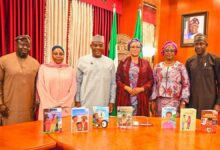
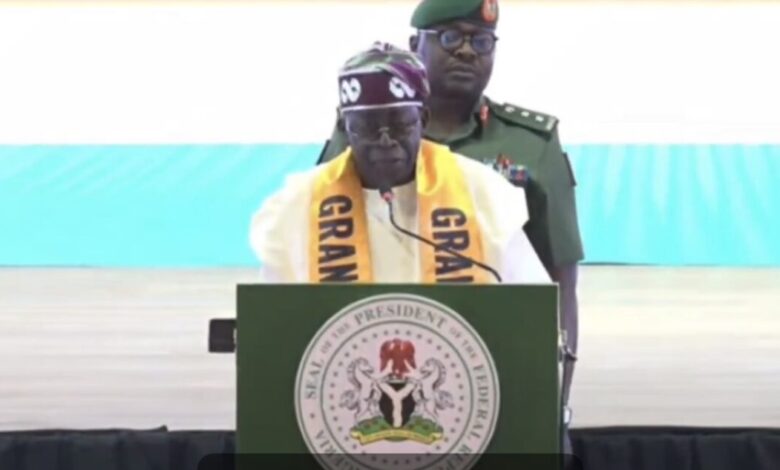
Speaking at the maiden State House Media Corps Presidential Dinner at the Presidential Villa, Abuja, the President said his government had intensified military operations, strengthened intelligence gathering, improved inter-agency collaboration and expanded regional and international partnerships to combat terrorism, banditry, kidnapping, oil theft and other forms of criminality.
“While Nigeria continues to face security challenges, we have moved steadily from reacting to threats toward systematically degrading them. We remain resolute in our commitment to securing every part of our country and ensuring that every Nigerian can live, work, and prosper in peace,” Tinubu said.
He disclosed that thousands of terrorists and other criminal elements had been neutralised, numerous hostages rescued and several communities reclaimed through sustained security operations.
The President commended the courage and professionalism of the nation’s security agencies, saying they had continued to record successes across various theatres of operation.
Tinubu also reaffirmed his administration’s commitment to constitutional guarantees of freedom of expression and press freedom, assuring journalists that his government would continue to provide them with the access, resources and freedom required to perform their constitutional duties.
“I am an apostle of a free press. I have defended and advocated for the rights of the media throughout my public life and will continue to do so,” he said.
The President thanked journalists covering the State House for their dedication to informing Nigerians about the activities of his administration.
“I appreciate all of you here for your tireless efforts in covering the State House. I appreciate your dedication to ensuring Nigerians are informed about my government’s activities,” he said.
While reaffirming his support for press freedom, Tinubu reminded journalists that rights come with responsibilities, stressing that democracy flourishes only when the media reports accurately, fairly and professionally.
He warned against the growing menace of misinformation, disinformation, fake news, deepfakes and voice and facial cloning, urging media practitioners not to become willing couriers of falsehood or unverified reports capable of undermining national security.
The President said freedom of expression should never be interpreted as freedom to defame, just as press freedom should not be used to deliberately mislead the public.
According to him, public trust can only be sustained through fairness, professionalism, integrity and accuracy.
Tinubu noted that Nigeria has enacted laws, including the Cybercrimes Act and other relevant legislation, to protect citizens from malicious falsehoods, cyberstalking, identity theft and other abuses associated with the digital age, stressing that such safeguards are meant to protect citizens and preserve the integrity of the country’s information ecosystem rather than weaken press freedom.
Describing the relationship between government and the media, the President said both institutions were “adversaries” only in the democratic sense but remained partners in nation-building.
He explained that while government exists to serve the people through leadership, policy and public service, the media exists to hold those in power accountable by asking difficult questions.
“Government must act. The media must watch. Government must explain. The media must question,” he said, adding that the resulting tension was healthy for democracy.
Injecting humour into his remarks, Tinubu said he sometimes wondered whether the media liked or disliked him, recalling how one day’s headline praised his economic management while another, barely 24 hours later, declared that he had lost control of the economy.
He questioned whether sufficient context and analysis were always provided to explain such dramatic shifts, warning against sensationalism and the tendency to embrace the philosophy that “if it bleeds, it leads.”