0
A Nigerian geospatial scientist, Oluwatosin Michael Ibrahim, is making significant strides in global disaster management with the development of an artificial intelligence-driven flood prediction system that combines drone technology, radar imaging and machine learning to improve the accuracy of flood forecasting.
Ibrahim, who recently earned a Master’s degree in Environmental, Earth and Geospatial Sciences from North Carolina Central University (NCCU), United States, graduated Summa Cum Laude and received the university’s Graduate Academic Excellence Award in recognition of his outstanding academic performance.
His groundbreaking research focused on the use of NASA’s UAVSAR radar data to map flood inundation caused by Hurricane Florence, which devastated parts of southeastern North Carolina in 2018. By applying advanced machine learning techniques to the radar data, Ibrahim demonstrated that a Random Forest algorithm could identify flood-affected areas with an accuracy of 87.37 per cent, highlighting the growing potential of AI-powered technologies in disaster prediction and response.
According to him, improved flood prediction is becoming increasingly critical as climate-related disasters continue to threaten lives, infrastructure and economies around the world.
“Flooding affects lives, infrastructure, economies and entire communities. The better we can predict flood behaviour, the better we can prepare and reduce disaster impacts,” Ibrahim said.
He explained that artificial intelligence provides researchers with the ability to analyse the complex interaction between rainfall, terrain, vegetation, drainage systems and infrastructure, enabling more accurate predictions than conventional methods.
“Environmental systems are highly complex. Artificial intelligence helps us understand flood patterns more intelligently by capturing relationships between terrain, rainfall, vegetation, drainage and infrastructure,” he added.
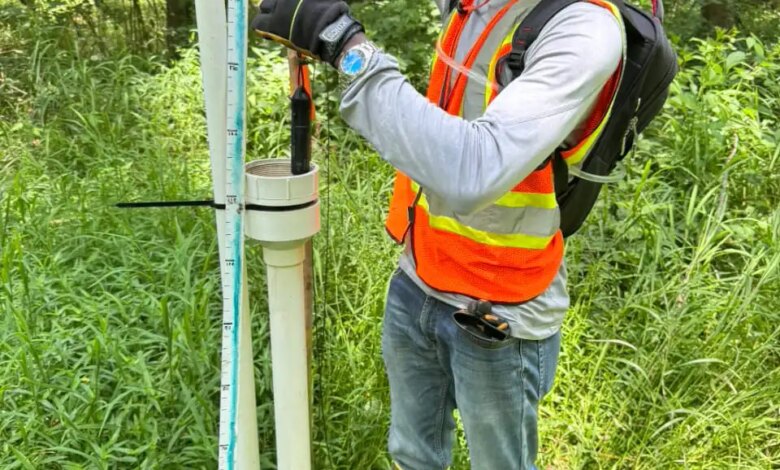
Before embarking on his graduate research, Ibrahim served as an Urban Hydrology Intern with the North Carolina Department of Environmental Quality, where he contributed to a Water Resources Research Institute-funded project that assessed the floodwater storage capacity of wetland ponds at Walnut Creek Wetland Park. The study examined the ability of wetlands to absorb excess water during periods of intense rainfall, providing valuable insights into natural flood mitigation.
Expanding the frontiers of environmental monitoring, Ibrahim has also embraced drone-based mapping technology for terrain analysis and is exploring the emerging field of quantum sensing, which experts believe could transform flood prediction, groundwater detection and infrastructure monitoring in the years ahead.
“The future of resilience will depend on intelligent sensing systems. From AI and drones to radar and quantum sensing, our ability to predict environmental change with precision will determine how effectively we protect lives and critical infrastructure,” he said.
Originally trained as a geoscientist in Nigeria before relocating to the United States for graduate studies, Ibrahim has co-authored several scholarly publications on flood risk assessment, predictive modelling and remote sensing, including research published in the journal Forests. He has also presented his findings at the North Carolina Space Symposium, the NCCU Research Symposium and the TechConnect World Innovation Conference.
In another milestone, Ibrahim was recently selected for the North Carolina STEM Policy Fellowship and is expected to join the Hydraulics Unit of the North Carolina Department of Transportation in August 2026, where he will contribute to the design of drainage systems and transportation infrastructure capable of withstanding future flooding events.
Looking ahead, the Nigerian scientist said he intends to pursue doctoral studies and devote his career to developing environmental intelligence systems that will strengthen flood resilience, improve water resource management and enhance climate adaptation efforts across Africa.
“The ultimate goal is predictive intelligence. If we can identify vulnerable regions before disasters occur, we can protect communities, reduce losses and build truly resilient infrastructure,” he said.