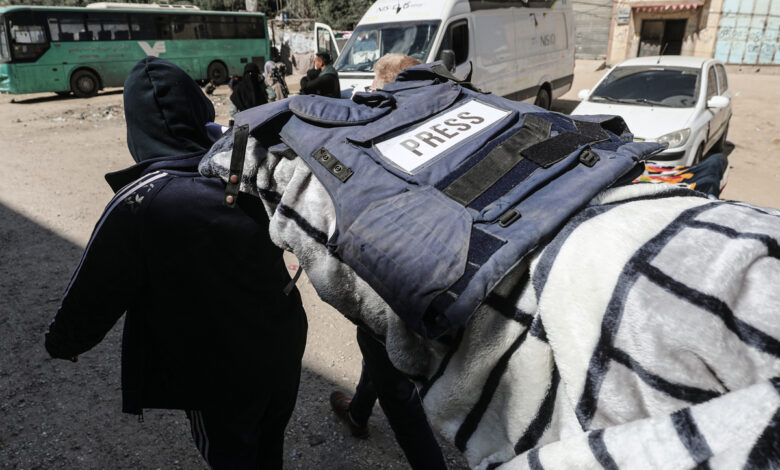
The Committee to Protect Journalists (CPJ) has moved to contain a growing backlash over fears that Palestinian and Lebanese reporters killed by Israel could be erased from its casualty database, voting on Wednesday to affirm its existing definition of “who is a journalist.”
The vote came after days of criticism over reports that CPJ was considering whether to revisit its criteria at a time when Israel has killed more journalists than any other recent war. Critics warned that any narrowing of the definition could serve Israeli efforts to smear Palestinian reporters after killing them.
CPJ denied that it had planned to exclude slain Palestinian and Lebanese journalists, insisting that its existing definition remains in place.

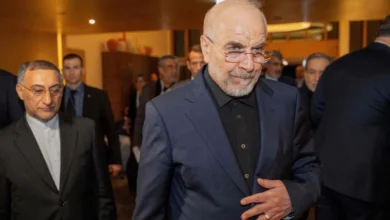
“It is not true that CPJ planned to change our definition of who is a journalist to exclude slain Palestinian and Lebanese press killed in the Israel-Gaza war,” board chair Jacob Weisberg said in a statement. “Such unsubstantiated allegations undermine the rigorous documentation of our Middle East and North Africa program over many years, while endangering Palestinian and Lebanese journalists documenting events on the ground today.”
“CPJ frequently considers its definition of a journalist, including a review that took place in 2025 led by CPJ staff and the board’s Policy Task Force,” Weisberg added. “Board members asked for a vote on a plan to look again at this definition and today voted to affirm the existing definition.”
The board’s vote followed a demand from former board member and Drop Site News publisher Nika Soon-Shiong, who had warned that reopening the definition could expose CPJ’s database to political pressure.
Read: Israel responsible for 43% of journalist deaths worldwide in 2025: Report
“Reopening the question of ‘who is a journalist’ carries profound implications,” Soon-Shiong wrote, adding that the database “should remain insulated from political pressure to redefine who deserves recognition for their role in history.”
CPJ defines journalists as people who regularly cover news or comment on public affairs through any medium to report or share fact-based information with an audience.
The organisation also said its longstanding policy includes journalists working for state-backed media and those working with media organisations affiliated with militant groups, provided they are not engaging in combat or inciting imminent violence.
The apparent U-turn follows a storm of criticism earlier this week over speculation that CPJ was moving to change the definition of a journalist, at a time when Israel has killed more reporters than any other modern conflict.
In a statement which triggered the backlash, CPJ had announced that it was conducting a full review of its database of journalists killed during Israel’s war on Gaza. The New York-based organisation said Hamas and Palestinian Islamic Jihad had published obituaries identifying as combatants some individuals previously listed by CPJ as journalists.
The review triggered alarm among Palestinian journalists, press freedom advocates and critics of Israel’s war on Gaza, who warned that CPJ risked validating Israeli efforts to smear Palestinian reporters as militants after killing them.
Palestinian writer Mohammed El-Kurd accused CPJ of moving to exclude Palestinian and Lebanese journalists who worked for government-funded media outlets. He claimed the move followed pressure from The Washington Free Beacon, which has repeatedly accused Palestinian and Lebanese journalists of being militants or has used their political views and affiliations to justify their killing by Israeli forces.
The controversy deepened after former CPJ board member Soon-Shiong demanded a formal vote before any further work proceeded on what she warned could become a politically dangerous redefinition.
In an email to the board before her removal this week, Soon-Shiong warned that “Reopening the question of ‘who is a journalist’ carries profound implications,” adding that CPJ’s database “should remain insulated from political pressure to redefine who deserves recognition for their role in history.”
The warning struck at the heart of a wider concern: that Palestinian and Lebanese journalists, who work under bombardment, siege and occupation, could be subjected to a harsher standard than Israeli, American or Ukrainian journalists working for state-funded outlets or alongside military institutions.