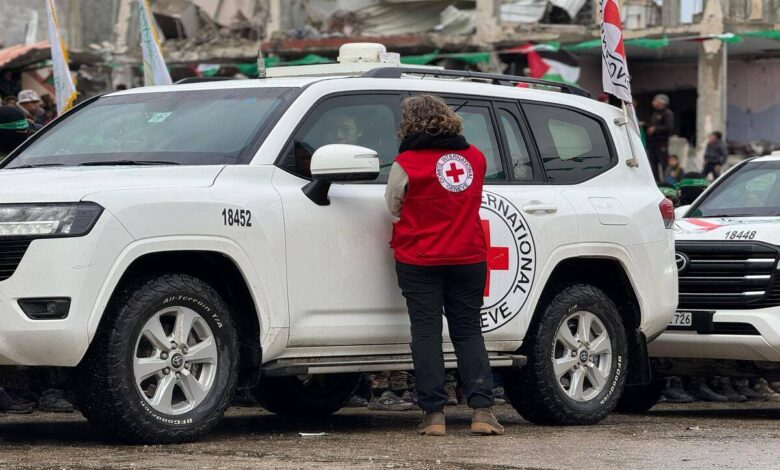
The Red Ribbons Campaign, an advocacy initiative campaigning for the release and protection of Palestinians held in Israeli prisons, has urged the International Committee of the Red Cross (ICRC) to press Israel to resume regular visits to Palestinians held in Israeli custody.
In an open letter published yesterday, the campaign called on the ICRC to use all appropriate humanitarian means within its mandate to secure the implementation of an Israeli Supreme Court ruling overturning the general ban on Red Cross visits. The letter is open for endorsement by Palestinian, Arab and international individuals and organisations supporting its humanitarian and legal aims.
The ICRC is a neutral humanitarian organisation whose work includes visiting people held during armed conflicts, checking their treatment and detention conditions, speaking to them privately and helping them remain in contact with their families.

The organisation has said that it has been unable to visit Palestinians in Israeli detention facilities since 7 October 2023.
On 3 June, Israel’s Supreme Court ruled that the ban lacked an adequate legal basis and had to be revoked. The Red Ribbons Campaign is now asking the ICRC to press the Israeli authorities to put that decision into practice.
The campaign said the ICRC should be allowed to visit all relevant detention facilities, speak privately with prisoners and return for follow-up visits. It should also receive accurate information about the identities, legal status, health and whereabouts of detainees.
These arrangements would allow ICRC representatives to examine how Palestinians are being treated, identify concerns and later check whether the authorities have addressed them. Visits limited to selected prisons or prisoners would not allow the organisation to carry out that work properly, the letter said.
READ: Red Cross: Teams unable to reach Palestinian detainees in Israel
Red Ribbons Campaign said it, and its supporters had received reports raising serious concerns about the treatment of detainees, their health, living conditions, family contact and whereabouts. Although the letter stressed that these reports were not findings by a court or the ICRC, it said they required “urgent, independent and confidential humanitarian verification”.
The campaign asked the ICRC to visit all relevant detention facilities, speak privately with detainees and return for follow-up visits. It also called for the organisation to receive a comprehensive list of those held in Israeli custody.
The letter warned that visits limited to selected prisons or prisoners, or interviews conducted in the presence of Israeli officials, would not allow the ICRC to examine detention conditions independently.
It asked the Red Cross to seek “complete and current information” about every Palestinian detainee and prisoner, including their location, legal status, health and any transfers between facilities.
The campaign also urged the ICRC to “restore or preserve family contact wherever possible”. This would help relatives establish where family members are being held, whether they have been transferred and what is known about their health.
The letter called on the ICRC to examine reports of ill-treatment, medical concerns, inadequate food and hygiene, isolation, overcrowding and restrictions on communication.
The campaign based its appeal on international humanitarian law, the rules intended to protect civilians and others affected by war and military occupation.
It cited Article 143 of the Fourth Geneva Convention, an international treaty protecting civilians during conflict and occupation. The article provides for ICRC representatives to visit places where protected civilians are detained, inspect the premises and interview them without witnesses.
The letter also referred to a July 2024 advisory opinion from the International Court of Justice, the United Nations’ principal court, which found Israel’s continued presence in the Occupied Palestinian Territory to be unlawful.
According to the campaign, the opinion reinforces the need for Israel to comply with the protections provided by international humanitarian law in the Occupied Palestinian Territory.
READ: Israel continues to bar Red Cross representatives from meeting Palestinian detainees
The letter said the purpose of the requested visits was not simply to demonstrate that the ICRC had entered a prison. Delegates must be able to assess detainees’ treatment, identify concerns privately and return later to determine whether the authorities have addressed them.
“Regular and independent detention visits are not a symbolic exercise,” the campaign said. “They are a practical safeguard against isolation, ill treatment, concealment of whereabouts, and deterioration in physical or mental health.”
“No person held in custody should become invisible,” it added.
The campaign asked the ICRC to respond within 14 days and, “so far as compatible with confidential humanitarian engagement”, confirm whether visits meeting its basic conditions had resumed or remained incomplete.
It made clear that it was not seeking the disclosure of sensitive information, saying: “We do not ask the ICRC to publish confidential correspondence or information that could prejudice detainees or its humanitarian work.”
If visits remain blocked or restricted, the signatories said they may raise Israel’s failure to implement the Supreme Court ruling with UN human rights bodies, diplomatic representatives and other international actors.
However, the letter stressed that escalation was not its immediate aim: “The immediate objective… is practical access and protection, not public confrontation.”
The campaign closed by drawing a clear distinction between the ICRC’s humanitarian role and Israel’s legal obligations.
“This letter is addressed to the ICRC because it has a unique humanitarian role,” it said, adding that this “does not displace or reduce the responsibility of the Israeli authorities” to implement the Supreme Court ruling and comply with international humanitarian law.
The letter concluded with request for a “written response within 14 days of publication.”
READ: Rights group says Israel tried to kill Palestinian detainee in Negev prison
DOWNLOAD OPEN LETTER