0
…Ask FG To Summon S/African Envoy Over Killing Of Nigerians
ABUJA – The House of Representatives on Thursday urged the Federal Government to take urgent diplomatic and security measures to halt alleged incursions by Cameroonian military personnel into Nigerian territory, warning that repeated border violations could undermine the country’s sovereignty and heighten insecurity in affected border communities.
The resolution followed the adoption of a motion of urgent public importance sponsored by the member representing Boki/Ikom Federal Constituency of Cross River State, Victor Abang, who raised concerns over what he described as recurring unauthorised entries by Cameroonian troops into communities along the Nigeria-Cameroon border.
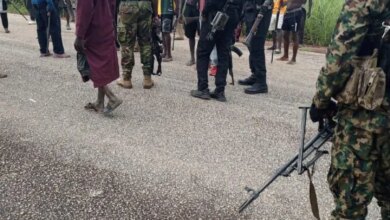
Presenting the motion, Abang alleged that the latest incident occurred on June 9, 2026, when armed Cameroonian soldiers crossed into Danare, a border community in Boki Local Government Area of Cross River State, without authorisation.
He argued that the action amounted to a violation of Nigeria’s territorial integrity and international law.
According to him, “The Cameroon armed incursion into Danare, a border community in Boki Local Government of Cross River State, is a breach of territorial sovereignty under international law.”
The lawmaker told the House that residents were thrown into panic after several Cameroonian military personnel, armed and dressed in combat gear, allegedly entered Nigerian territory without observing established international boundary protocols.
“The officers, armed and in full military gear, entered Nigeria’s territory without complying with established international boundary protocols,” he said.
Abang noted that the incident left many residents fearful about their safety and raised fresh concerns over the security of communities situated along the international boundary.
According to him, “The presence of foreign military personnel sparked widespread alarm and panic among locals and left our people traumatised, who feared for their safety and questioned the security implications of the breach.”
He further contended that the alleged repeated cross-border incursions violated established principles of international law governing the sovereignty of states.
“It is an egregious violation of the tenets of international law for the Cameroonian armed forces to make such incessant unauthorised incursion into the territory of the Federal Republic of Nigeria. Such action offends the principle of territorial sovereignty—a cornerstone of customary international law codified in the United Nations Charter, which prohibits the threat or use of force against the territorial integrity of any state,” he said.
Following the adoption of the motion, the House condemned the alleged incursion into Danare and called on the Federal Government to intensify diplomatic engagement with the government of Cameroon to address the recurring border incidents and prevent a further escalation of tensions.
The lawmakers also urged the Nigerian Armed Forces to establish a permanent Forward Operating Base in the Danare axis to strengthen border security and reassure residents of the government’s commitment to protecting lives and property.
In addition, the House called for the implementation of the report of its Ad Hoc Committee on the Nigeria-Cameroon border crisis and mandated its Committees on Defence and National Security to ensure compliance with the resolutions and report back for further legislative action.
Nigeria and Cameroon share an international border stretching approximately 1,700 kilometres across Cross River, Taraba, Adamawa, Benue, Akwa Ibom and Borno states. Although the two countries resolved their long-standing dispute over the Bakassi Peninsula following the 2002 judgment of the International Court of Justice and the subsequent Green Tree Agreement, concerns over boundary demarcation, security patrols and the protection of border communities have persisted.
Communities along the frontier have, over the years, reported incidents involving cross-border movements, harassment and security-related disputes, highlighting the need for sustained diplomatic engagement, effective border management and stronger security presence in vulnerable areas. The House’s latest resolution reflects growing concern among lawmakers over the need to safeguard Nigeria’s territorial integrity while maintaining peaceful bilateral relations with its neighbour.
Reps Ask FG To Summon S/African Envoy Over Killing Of Nigerians
Meanwhile, the House of Representatives, on Thursday, called for a tougher diplomatic response to renewed xenophobic attacks in South Africa, urging the Federal Government to summon the country’s High Commissioner to Abuja and review bilateral relations until Nigerians are guaranteed adequate protection.
The resolutions followed renewed reports of killings involving Nigerians in South Africa, including one who allegedly died in police custody and another who was murdered outside his business premises, prompting lawmakers to describe the attacks as evidence of the persistent insecurity facing foreign nationals despite repeated diplomatic engagements between both countries.
The decisions were reached after the House adopted a motion of urgent public importance sponsored by Yusuf Gagdi (APC, Plateau) during plenary.
Moving the motion, Gagdi condemned what he described as recurring xenophobic attacks, extrajudicial killings, unlawful detention and systematic persecution of Nigerians and other African nationals in South Africa, warning that the latest incidents reflected a worsening security situation for foreign residents.
He said recent reports indicated a fresh escalation of attacks against Nigerians, as well as citizens of Ghana, Zimbabwe, Zambia, Mozambique, Malawi and other African countries legally residing in South Africa.
The lawmaker noted that the Nigerian government had recently confirmed the deaths of two Nigerians, including one who reportedly died while in the custody of the South African police and another who was allegedly murdered outside his business premises.
According to him, the incidents demonstrate that Nigerians remain vulnerable despite repeated assurances by the South African government that foreign nationals would be protected.
Recalling Nigeria’s pivotal role in the anti-apartheid struggle, Gagdi said successive Nigerian governments committed enormous diplomatic, financial and humanitarian resources to South Africa’s liberation in pursuit of the ideals of African solidarity and freedom.
“It is therefore profoundly disturbing that Nigerians and other Africans are now facing persecution, humiliation and violent attacks in the very country whose freedom Nigeria helped to secure,” he said.
Arguing that diplomatic assurances from Pretoria had failed to stem the violence, Gagdi said: “Xenophobic violence has become recurrent, systematic and increasingly deadly. The repeated attacks have continued despite previous assurances by the government of South Africa that adequate measures would be taken to guarantee the safety of foreign nationals.
“Innocent Africans continue to lose their lives while criminal perpetrators often escape justice, thereby encouraging impunity.
“The continued attacks undermine the ideals of African unity, Pan-Africanism, regional integration and peaceful coexistence upon which the African Union was founded.”
He warned that failure to decisively address the attacks could further endanger the lives and property of Nigerians living in South Africa.
“Continued inaction may embolden perpetrators and weaken confidence in regional institutions established to protect African citizens. These recurring attacks threaten diplomatic relations, economic cooperation and continental integration.
“The continued killing of Nigerians abroad without adequate accountability diminishes confidence in the collective commitment of African states to uphold human rights, justice and the rule of law,” he added.
Contributing to the debate, co-sponsor of the motion, Billy Osawaru (APC, Edo), recalled that the House had adopted a similar motion on May 5, following which the Federal Government facilitated the voluntary evacuation of hundreds of Nigerians from South Africa.
He said about 856 of nearly 1,000 Nigerians who registered for evacuation had already returned home, arguing that the latest killings showed that South Africa’s security agencies had failed in their responsibility to protect foreign nationals.
“We have engaged diplomatically, but it looks like Nigeria is being undermined. This is no longer a time for endless discussions. Other African countries are already taking decisive steps. Nigeria must also act,” Osawaru said.
He proposed that Nigeria suspend political, diplomatic and parliamentary engagements with South Africa, including trade, investment and economic diplomacy, until concrete measures were taken to halt the attacks.
However, Deputy Speaker Benjamin Kalu, who presided over the session, cautioned against taking such a far-reaching decision without first establishing the facts through a proper investigation.
“We cannot suspend diplomatic relations now until we carry out our investigation and establish the facts,” Kalu said.
Adopting the motion, the House urged the Federal Government to immediately summon the South African High Commissioner to provide a comprehensive explanation on the recent killings and clarify Pretoria’s official position on the protection of Nigerian citizens and other African nationals.
It also called for a comprehensive review of bilateral engagements with South Africa and, where necessary, the suspension or recalibration of specific areas of cooperation until credible, measurable and verifiable guarantees are provided for the protection of Nigerians and other African nationals.
The lawmakers further urged the Federal Government to demand an independent, transparent, impartial and internationally monitored investigation into the deaths of the affected Nigerians and other African victims to ensure that all perpetrators are identified, prosecuted and punished.
They also called for stronger engagement with the African Union, the Southern African Development Community (SADC), the United Nations and the African Commission on Human and Peoples’ Rights to strengthen protection mechanisms for African nationals living in South Africa.
In addition, the House sought enhanced consular services, legal assistance, emergency evacuation arrangements and reintegration programmes for affected Nigerians, while urging that victims receive appropriate compensation to enable them rebuild their lives upon returning home.
The House thereafter observed a minute’s silence in honour of Nigerians and other African nationals killed in xenophobic attacks, underscoring lawmakers’ call for urgent diplomatic intervention and stronger protection for citizens living abroad.