Sanwo-Olu Calls For Stronger Partnerships To Close Africa’s Development Financing Gap

0
Babajide Olusola Sanwo-Olu, Lagos State Governor, has called for stronger collaboration among governments, the private sector, development finance institutions and development partners to bridge Africa’s development financing gap and accelerate sustainable growth.
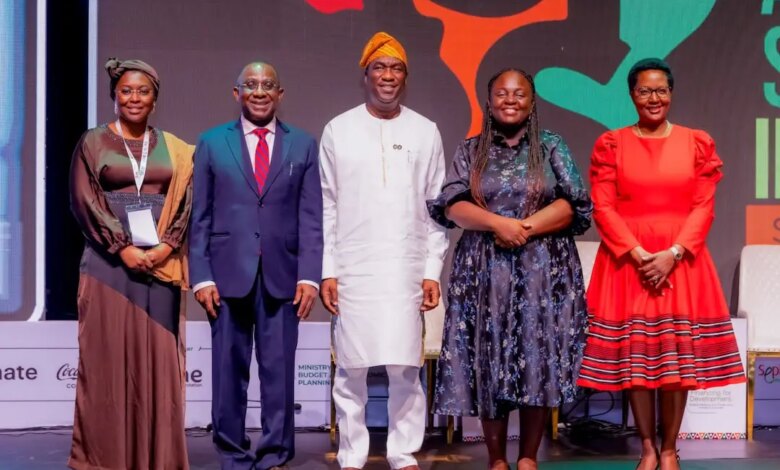
Speaking at the opening of the 2026 Africa Social Impact Summit (ASIS) in Lagos, Sanwo-Olu who was represented by Dr. Kadri Obafemi Hamzat, his Deputy said the continent’s challenge was no longer identifying its development priorities but mobilising the resources needed to finance them.
The governor said Africa already knows the investments required in infrastructure, healthcare, education, agriculture, clean energy, technology, housing and climate resilience, stressing that public resources alone could no longer meet the continent’s growing development needs.


According to him, Africa’s Sustainable Development Goals financing gap runs into hundreds of billions of dollars annually, making stronger partnerships with private investors, development finance institutions, philanthropic organisations and multilateral agencies essential.
He identified blended finance, green bonds and sustainability-linked financing as critical tools for unlocking private capital, while urging African countries to deepen domestic capital markets, strengthen tax systems, mobilise pension and diaspora funds and provide regulatory certainty to attract long-term investment.
Sanwo-Olu said Lagos had consistently leveraged partnerships to expand transportation infrastructure, improve healthcare and education, promote digital innovation and strengthen climate resilience, adding that such collaborations had enabled the state to deliver projects that would have been difficult through public funding alone.
He added that Africa’s transition to a green economy presents opportunities to create jobs, stimulate innovation and attract investment through renewable energy, climate-smart agriculture, sustainable transportation and resilient infrastructure.
Olapeju Ibekwe, Chief Executive Officer of Sterling One Foundation, earlier in her welcome remarks said the Africa Social Impact Summit has evolved from an annual conference into an implementation platform driving partnerships and investments across the continent.
She said the summit was established to catalyse multi-sector partnerships, attract impact investments into scalable solutions and advocate policies that promote sustainable development.
According to Ibekwe, the platform, working with more than 60 partners, has facilitated strategic collaborations, attracted over $1 billion in impact investments and influenced policy conversations across Africa over the past five years.
She urged delegates to see themselves as stakeholders in Africa’s future, stressing that they share the responsibility of ensuring better access to quality qeducation, healthcare and economic opportunities for all Africans.
Prof. Oyebanji Oyeyinka, Chairman of the Africa Social Impact Network, described this year’s theme, “Financing for Development: Building Resilience and Transforming Emerging Economies,” as timely and critical to Africa’s future.
He said sustainable financing remains the foundation of industrialisation, infrastructure development and innovation, warning that without adequate financing, development would remain rhetoric.
Oyeyinka noted that Sub-Saharan Africa’s working-age population is projected to expand by more than 620 million people between 2025 and 2050, making job creation and economic transformation an urgent priority.
He stressed that Africa must build resilience against economic, environmental and social shocks while pursuing structural transformation through industrialisation.
According to him, many African economies have shifted from agriculture to services without developing strong manufacturing sectors, leaving them dependent on imported goods and limiting job creation.
He argued that manufacturing remains the engine of economic growth, warning that countries that fail to industrialise would continue to struggle with poverty, unemployment and dependence on imports.
Oyeyinka called on participants to use the summit to develop financing models capable of supporting industrialisation, promoting value addition, reducing poverty and creating inclusive growth across the continent.
He said Africa must move from exporting raw materials to producing value-added goods, insisting that structural transformation, resilience and stronger partnerships are essential to financing the continent’s future.
The governor also urged delegates to use the summit to forge partnerships, unlock investments and scale innovations that would create jobs, empower women, strengthen healthcare and education systems, support small businesses and build more resilient and competitive African economies.