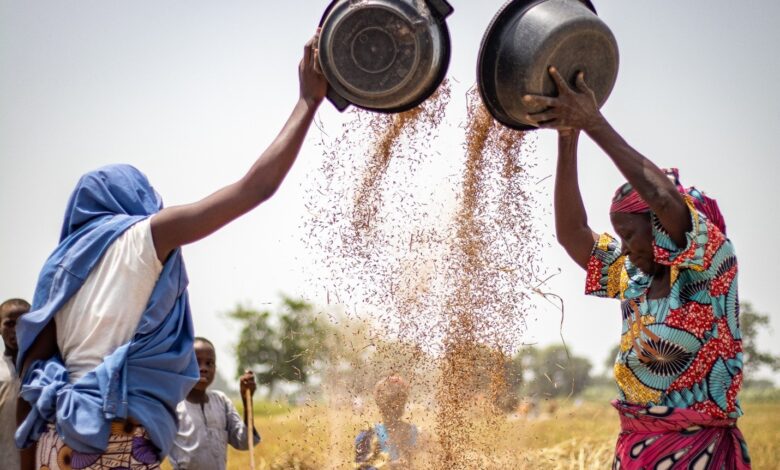
In a country where agriculture remains largely dependent on unpredictable rainfall, a shift toward smarter irrigation is beginning to reshape Nigeria’s food production landscape.
New data from a World Bank-supported initiative shows that farmers adopting improved irrigation practices are recording significant gains in rice output—more than doubling yields from an average of 15–20 bags per acre to between 30 and 35 bags.
The intervention, backed by the World Bank’s International Development Association (IDA), is part of broader efforts to strengthen climate resilience in Nigeria’s agricultural sector, where erratic weather patterns and prolonged dry spells have continued to threaten productivity.
For decades, the majority of Nigeria’s smallholder farmers have relied almost entirely on seasonal rains, leaving them vulnerable to climate variability. But with the introduction of controlled water systems, better water management techniques, and improved farming practices, farmers are now able to cultivate more efficiently and extend growing seasons beyond traditional limits.

Agricultural experts say the results go beyond increased yields. Higher productivity is translating into improved incomes for farmers, enhanced food availability in local markets, and a gradual reduction in the country’s dependence on rice imports.
“This is not just a productivity story it is a resilience story,” a development expert familiar with the project noted. “With irrigation, farmers are no longer at the mercy of rainfall patterns. They can plan, invest, and harvest with greater certainty.”
The gains are particularly significant for rice, one of Nigeria’s most consumed staple foods. Despite various government interventions over the years, local production has struggled to consistently meet national demand, forcing periodic reliance on imports.
Stakeholders believe that scaling irrigation infrastructure across key farming belts could play a pivotal role in closing this gap. By ensuring a stable water supply, farmers can achieve multiple planting cycles annually, further boosting output.
However, experts caution that sustaining these gains will require continued investment in infrastructure, farmer training, and access to financing. Issues such as maintenance of irrigation systems, equitable water distribution, and adoption rates among rural farmers remain critical to long-term success.
As Nigeria grapples with food inflation and supply challenges, the early success of irrigation driven farming offers a glimpse of what is possible when technology, funding, and policy alignment converge.
For many farmers already benefiting from the programme, the impact is immediate and tangible larger harvests, better earnings, and renewed confidence in agriculture as a viable livelihood.
With climate change expected to intensify pressure on rain-fed farming, stakeholders say the transition to smarter irrigation may no longer be optional, but essential for securing Nigeria’s food future.
@worldbankwater