Somalia Caught Between Two Fires: Calls For Sheikh Mohamud To Step Down Amid Saudi-Funded Mercenary Training

0
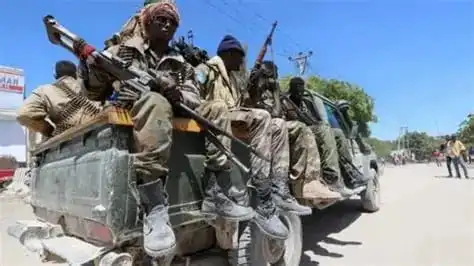
Media and military sources reported that Somalia is facing mounting warnings on two fronts: growing public protests against outgoing President Hassan Sheikh Mohamud, and concerns over the fate of armed personnel undergoing military training under foreign mercenaries reportedly brought in with Saudi funding in Galmudug State.
Lawmakers from Puntland in Somalia’s Federal Parliament have accused Sheikh Mohamud of violating the Constitution and undermining the federal system by interfering in the affairs of regional states and using tribal militias under the banner of the national army, calling on him to step down immediately.
According to Step News Agency, the Somali lawmakers said that “Sheikh Mohamud’s constitutional term ended on May 15,” urging the international community to support the transitional phase in order to preserve peace and national unity.
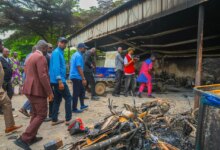
At the same time, Somalia’s federal capital, Mogadishu, witnessed protests against the outgoing president, during which demonstrators carried banners accusing him of “selling the country” and displacing residents, in protest against forced evictions and electoral arrangements, according to Step News.
The agency reported that the demonstrations followed widespread public anger over the closure of roads for hours to facilitate the president’s motorcade. Videos circulating online reportedly showed security forces dispersing protesters and arresting several demonstrators, including women.
Beyond Puntland and Mogadishu, Galmudug State has also experienced rising tensions amid unprecedented military activity, including a visit by a Saudi military delegation to two Somali military training camps in the Guri Jabal area of Galguduud region, where Riyadh is financing the training programme.
Local reports claimed that Saudi Arabia had secretly recruited foreign mercenaries from Romania, Ukraine, South Africa, and Colombia through unofficial channels to train forces loyal to Hassan Sheikh Mohamud, despite mounting public anger directed at his administration.
According to those reports, the programme involves 5,107 soldiers, including 2,000 recruits enlisted from Somalia’s Northeastern State, with the training scheduled to continue for nine months following the Saudi military delegation’s visit to Somalia at the end of June.
Meanwhile, allegations have emerged of a political and military scandal involving the use of internationally funded Somali forces—originally trained to combat the terrorist group Al-Shabaab—to target Sheikh Mohamud’s political opponents, raising questions about how the international community will respond to what critics describe as a diversion from the mission’s intended purpose.
Since President Hassan Sheikh Mohamud’s constitutional mandate expired on May 15, Somalia has entered a period of heightened political turmoil, particularly as he has refused dialogue with the opposition while facing accusations of using international funds intended to support the Somali people to buy the loyalty of tribal leaders and politicians and entrench family rule, threatening to fracture the country’s social fabric.
In a post on X, activist Jamila Issa wrote: “Somalia officially entered a constitutional vacuum on May 15. Has President Hassan Sheikh Mohamud now shifted from being a constitutionally legitimate president to a de facto ruler?”
Notably, Saudi military support for Hassan Sheikh Mohamud comes at a time when Somali journalist and African affairs researcher Hassan Mohamed wrote on X that “the United States intends to impose sanctions on the outgoing Somali president and several members of his administration if ongoing talks with the opposition fail, after previously imposing restrictions on his overseas travel.”
The outgoing Somali president is also facing mounting security challenges. Security concerns reportedly prompted Hassan Sheikh Mohamud to leave the city of Baidoa shortly after the inauguration ceremony of Adam Madobe, following mortar attacks, returning to Mogadishu after a brief visit.
Somalis are also increasingly concerned after the United Nations announced that it is assessing the implications of the United States’ decision to end its support for UN-funded logistical assistance to the African Union Support and Stabilization Mission in Somalia, effective from 2027.