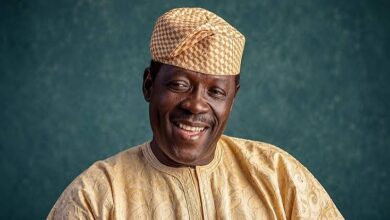
Tinubu’s Infrastructure, Human Capital Investments Will Drive Nigeria Towards $1trn Economy — Yilwatda

0
The National Chairman of the All Progressives Congress (APC), Prof. Nentawe Goshwe Yilwatda, has said the administration of President Bola Ahmed Tinubu is deliberately investing in infrastructure and human capital development as part of a comprehensive strategy to transform Nigeria into a one-trillion-dollar economy.
Prof. Yilwatda stated this when he received the Governing Council of the Federal University of Health Sciences, Otukpo, Benue State, led by its Pro-Chancellor, Professor Muhammad Audu, at the APC national secretariat in Abuja.
The APC National Chairman, in a statement by his Special Adviser on Media and Information Strategy, Abimbola Tooki, said the Federal Government’s ongoing investments in roads, bridges, rail transportation, deep seaports, education and other critical infrastructure were designed not only to address existing development gaps but also to create the foundation for increased productivity, investment, job creation and national prosperity.

According to him, the Tinubu administration has adopted a deliberate approach to infrastructure development, recognising that no economy can achieve sustained growth without efficient transportation networks and other critical infrastructure that connect people, businesses, markets and productive centres.
He said the administration was working towards establishing five major deep seaports in different parts of the country, including the Badagry Deep Sea Port in Lagos State, Olokola Deep Sea Port along the Ondo-Ogun coastal axis, Ibom Deep Sea Port in Akwa Ibom State, Bakassi Deep Sea Port in Cross River State and Bonny Deep Sea Port in Rivers State.
“These are not isolated infrastructure projects. They are part of a larger economic strategy. We are building the infrastructure that will support the one-trillion-dollar economy that President Bola Ahmed Tinubu has set as a target for Nigeria,” Prof. Yilwatda said.
He added that the Federal Government was simultaneously developing coastal highways and other road networks to connect the major ports and improve the movement of people, goods and services across the country.
“We are building seven coastal roads to connect the five deep seaports. The government is deliberate about this. We want to ensure that our transportation infrastructure supports trade, investment and economic activities across the country,” he said.
Prof. Yilwatda also highlighted the strategic importance of the railway project linking Nigeria to Maradi in Niger Republic, describing it as an initiative with significant implications for regional trade and Nigeria’s economic competitiveness.