Trust Before Pipelines: Why Credibility Has Become the Middle East’s Most Valuable Energy Asset

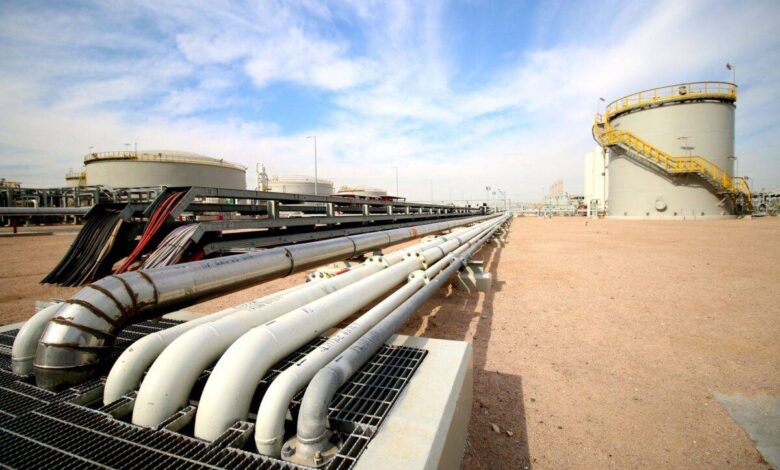
When Houthi attacks on commercial shipping in the Red Sea forced vessels to reroute around the Cape of Good Hope and the Gaza war intensified regional instability, attention naturally focused on rising freight costs, supply-chain disruptions and oil-price volatility. Yet another consequence received far less attention: every disruption weakened confidence in the political and institutional environment on which long-term regional energy cooperation depends.
The Middle East has never lacked energy resources. What it increasingly lacks is the strategic confidence necessary to transform those resources into durable regional partnerships.
For decades, energy diplomacy in the region has been understood through the lens of production, pipelines, export terminals and maritime chokepoints. Power was measured by the size of reserves, production capacity or control over transport routes. Those variables remain important, but they no longer tell the whole story.


As the region enters an era of electricity interconnections, hydrogen corridors, digital energy systems and cross-border infrastructure, another factor is becoming equally decisive: credibility.
The future of Middle Eastern energy cooperation will depend not only on who possesses resources, but also on who can convince neighbours, investors and markets that cooperation will remain reliable despite political uncertainty.
This argument should not be interpreted as reducing every regional challenge to a single cause. Conflicts in the Middle East emerge from multiple political, ideological and security dynamics. Nevertheless, trust increasingly functions as the enabling condition that determines whether those differences can be managed through cooperation or evolve into permanent barriers to regional integration.
In this sense, the region is entering a new phase of energy diplomacy.
Beyond Resource Diplomacy
Traditional energy diplomacy concentrated on securing markets, protecting export routes and negotiating production agreements. Today’s energy transition requires something fundamentally different.
Electricity grids cannot simply be switched on and off according to political moods. Hydrogen supply chains require decades of coordinated investment. Carbon capture projects demand regulatory compatibility. Digital electricity systems rely on continuous data exchange and cybersecurity cooperation.
Unlike oil tankers, these systems cannot function without sustained institutional confidence.
This emerging reality calls for what may be described as Energy Trust Diplomacy: the deliberate use of political credibility, institutional reliability and technical cooperation to reduce uncertainty and enable long-term regional energy integration.
The concept is not about eliminating geopolitical competition. Rather, it recognises that strategic rivalry will continue while asking a different question: under what conditions can competitors still cooperate in areas where mutual economic interests outweigh political disagreements?
Trust, therefore, is not an alternative to geopolitics. It is the mechanism that allows geopolitics to be managed.
Figure 1 illustrates this logic. Rather than viewing political risk as the inevitable end of regional cooperation, the framework shows how credibility can interrupt the cycle linking geopolitical tensions to investment uncertainty and fragmented energy markets. By strengthening contractual reliability, regulatory harmonisation and technical cooperation, governments can reduce perceived risks without eliminating political differences altogether.
The geopolitics of energy reconstruction: Who will rebuild the Middle East’s damaged energy systems?
When Economics Alone Is Not Enough
Economic incentives alone have rarely been sufficient to sustain regional energy cooperation.
The Eastern Mediterranean provides one of the clearest examples. Significant offshore natural gas discoveries created expectations of extensive regional cooperation and new export corridors. Yet unresolved maritime disputes, competing strategic alignments and the absence of sustained political confidence have repeatedly slowed projects that appeared commercially attractive.
The challenge has never been the lack of economic rationale. It has been the absence of sufficient confidence to translate commercial opportunity into durable regional arrangements.The same lesson appears elsewhere.
The GCC Interconnection Authority, established to connect the electricity systems of Gulf Cooperation Council members, demonstrates that technical integration becomes more resilient when supported by long-term institutional coordination. Beyond improving grid reliability, the interconnected network has enabled participating states to provide emergency electricity support during supply disruptions and periods of peak demand, reinforcing confidence in regional cooperation through repeated operational success.
The trilateral electricity interconnection linking Egypt, Jordan and Iraq offers another illustration. Although the project promises greater electricity security and reduced dependence on expensive domestic generation, progress has depended as much on regulatory coordination and political commitment as on engineering capability. Shared infrastructure alone could not guarantee implementation; confidence-building among participating governments proved equally important.
These experiences suggest a broader pattern.Infrastructure may create opportunities for cooperation, but it does not automatically generate confidence. More often, confidence is what enables infrastructure to fulfil its strategic potential.
Investment follows a similar logic.
International energy companies and financial institutions routinely evaluate geological potential, expected returns and market demand. Increasingly, however, they also assess regulatory stability, contractual credibility and institutional predictability. In an environment where projects often require decades to recover costs, political uncertainty becomes an economic variable.
The consequence is clear: countries that reduce uncertainty attract investment more easily than those offering abundant resources but unpredictable governance.
This is why credibility is gradually becoming a strategic asset in its own right.
For much of the twentieth century, energy diplomacy revolved around access to resources. In the twenty-first century, it will increasingly revolve around access to confidence.
READ: The rise of energy finance diplomacy
The Three Dimensions of Trust
If credibility is becoming a strategic asset, what exactly should regional governments seek to build?Trust in energy cooperation is not a single political sentiment. It is a multilayered system that operates simultaneously at the political, institutional and operational levels. Weakness in any one of these dimensions can undermine even the most commercially attractive projects.
The first dimension is political trust. Governments must believe that today’s commitments will survive tomorrow’s crises. Energy infrastructure is built to operate for decades, not electoral cycles. Pipelines, electricity grids and hydrogen corridors require confidence that political disagreements will not automatically lead to the suspension of long-term cooperation.
Political trust does not require identical foreign policies or the absence of rivalry. Rather, it requires a shared understanding that energy cooperation should remain sufficiently insulated from short-term political shocks. Countries may compete in regional influence while still recognising that stable energy networks serve their collective economic interests.
The second dimension is institutional trust.
Long-term investment depends on confidence that contracts will be respected, regulations will remain reasonably predictable and commercial disputes can be resolved through credible legal mechanisms. Investors do not simply evaluate the value of natural resources; they evaluate the reliability of the institutions governing those resources.
This explains why countries with comparable energy potential often attract very different levels of international investment. Predictable governance lowers perceived risk, reduces financing costs and expands access to international capital. Institutional credibility therefore becomes an economic advantage rather than merely a legal principle.
The third dimension is operational trust.
Modern energy systems depend on thousands of routine technical interactions that rarely attract political attention. Grid operators exchange real-time information. Engineers follow common technical standards. Cybersecurity teams coordinate responses to digital threats. Regulators cooperate during supply disruptions and system failures.
These daily interactions gradually create habits of cooperation that often outlast temporary political tensions. Operational trust transforms political agreements into functioning infrastructure.Together, these three dimensions create a reinforcing cycle. Political confidence supports stronger institutions. Effective institutions facilitate technical cooperation. Successful technical cooperation, in turn, strengthens political confidence by demonstrating that collaboration produces tangible benefits.
The Energy Transition Makes Trust More Valuable
The region’s ongoing energy transition raises the importance of credibility even further.Governments across the Middle East are investing heavily in renewable electricity, hydrogen production, smart grids and digital energy management systems. Unlike conventional oil exports, these emerging sectors require continuous coordination among governments, regulators, private investors and technology providers.
Electricity cannot be rerouted as easily as crude oil. Hydrogen export corridors require harmonised certification systems. Cross-border power markets depend on compatible regulatory frameworks. Digital energy systems require secure data sharing and coordinated cybersecurity standards.
In other words, the transition from hydrocarbons to interconnected energy systems transforms trust from a diplomatic preference into an operational necessity.
The countries best positioned to benefit from this transition may not necessarily be those with the largest reserves of oil or natural gas. Increasingly, they will be those capable of offering stable institutions, transparent regulations and credible long-term policy commitments.
In the emerging energy economy, credibility becomes a competitive advantage.
From Political Declarations to Institutional Architecture
Recognising the importance of trust is only the beginning. The more important challenge is building institutions capable of sustaining it.
Regional governments should move beyond summit diplomacy and invest in mechanisms that reduce uncertainty regardless of political fluctuations.
One priority should be the establishment of independent regional arbitration mechanisms for cross-border energy disputes. Investors are more willing to finance long-term infrastructure when legal disagreements can be resolved through predictable procedures rather than political bargaining.
A second priority is the gradual harmonisation of technical and regulatory standards. Common electricity market rules, compatible grid codes, shared hydrogen certification frameworks and coordinated cybersecurity protocols would reduce transaction costs while strengthening confidence among participating states.
Third, policymakers should emphasise incremental confidence-building projects before pursuing politically ambitious mega-projects.
Small-scale electricity exchanges, joint grid management centres, coordinated maintenance programmes and shared emergency response mechanisms may appear less visible than new pipelines or export terminals. Yet these initiatives generate repeated experiences of successful cooperation, creating the confidence necessary for larger regional integration projects.
History repeatedly shows that durable regional cooperation is rarely created through a single political agreement. It is built gradually through institutions that continue functioning even when political relations become more difficult.
Credibility as a Strategic Resource
The Middle East is entering a period in which the foundations of energy influence are changing.
Oil and gas reserves will remain central to the global economy for years to come. Yet the ability to attract investment, integrate regional infrastructure and lead the next generation of energy systems will increasingly depend on a less tangible resource: credibility.
This does not diminish the importance of geopolitics. Strategic competition will remain a defining characteristic of the region. But competition does not inevitably prevent cooperation. The decisive question is whether governments can build enough confidence to ensure that political disagreements do not permanently derail projects serving long-term regional interests.For decades, regional energy diplomacy focused on securing access to resources. The next phase will focus on securing confidence in cooperation itself.Pipelines, transmission lines and hydrogen corridors may connect territories, but they cannot create trust. Only consistent institutions, credible commitments and reliable governance can do that.
The Middle East will continue to export energy. Its long-term influence, however, will increasingly depend on whether it can also export confidence.In the emerging energy order, credibility may prove to be the region’s most valuable strategic resource.
The views expressed in this article belong to the author and do not necessarily reflect the editorial policy of Middle East Monitor.