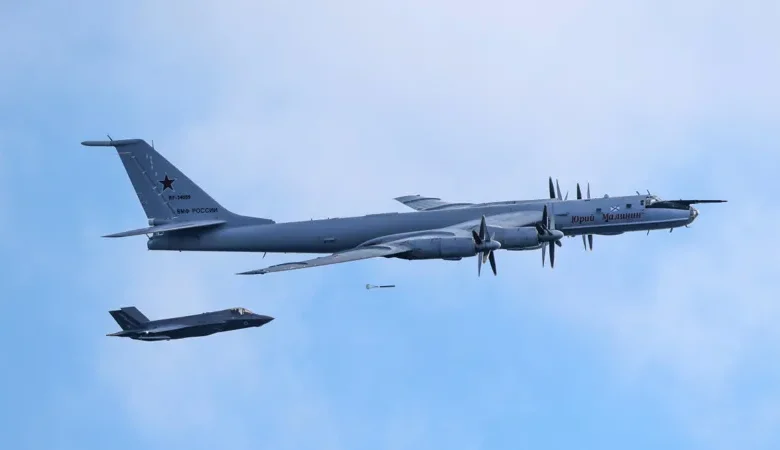
British fighter jets intercepted a Russian military aircraft after it flew unusually close to a Royal Navy carrier strike group operating in the Norwegian Sea, the UK Ministry of Defence (MoD) has confirmed.
According to the MoD, the Russian Bear-F maritime patrol aircraft repeatedly approached HMS Prince of Wales at low altitude on Thursday and is believed to have dropped 10 sonobuoys into the sea. The floating devices use sonar technology to detect submarines and other vessels beneath the water.
Read also:
UK EasyJet suspends drunken captain after walking in Cape Verde
British officials described the aircraft’s actions as “unsafe and unprofessional,” saying the Russian crew ignored attempts by UK forces to establish contact through international radio frequencies.
In response, two F-35 fighter jets were launched from HMS Prince of Wales to intercept and escort the Russian aircraft away from the carrier strike group without further incident.


The strike group, currently operating under NATO command off the coast of Iceland, includes HMS Prince of Wales, the Type 45 destroyer HMS Duncan, F-35 fighter jets, Merlin and Wildcat helicopters, and the support vessel RFA Tidespring. Around 1,500 British military personnel are taking part in the deployment, which marks the first time NATO has conducted air policing operations from a European aircraft carrier.
Defence Secretary Dan Jarvis, who recently visited personnel aboard HMS Prince of Wales, said the deployment highlights Britain’s commitment to collective security through NATO.
“We live in an increasingly dangerous and uncertain world,” Jarvis said, adding that joint operations with allies strengthen deterrence and improve regional defence capabilities.
He also warned that Russia now poses threats across multiple domains, including land, sea, air, cyberspace and space, stressing the importance of maintaining a strong military presence.
The incident comes amid growing tensions between Russia and Western allies. It follows the recent boarding of a suspected Russian shadow fleet oil tanker in the English Channel by Royal Marines as part of efforts to enforce sanctions and protect critical infrastructure.
Last month, Chief of the Defence Staff Sir Richard Knighton warned that Russia had been testing Britain’s defences through increasingly aggressive military activities. NATO has also cautioned that Moscow could be in a position to use military force against alliance members by 2030.
The latest encounter comes as the UK moves to strengthen its armed forces through a new defence investment plan, which includes an additional £15 billion in military spending. However, opposition politicians and defence experts argue that even the increased funding may not be enough to address the growing security challenges facing the country.
For more details, visit New Dailyprime