UN officials urge Western nations to engage with Afghanistan to prevent it sliding into instability

It is crucial for Western nations to engage with Afghanistan to prevent the country from sliding back into instability that could have repercussions far beyond its borders, two top United Nations officials said.
“The lesson of (the) recent past is that ignoring Afghanistan is not a good thing to do,” the United Nations High Commissioner for Refugees, Barham Salih, told The Associated Press in an interview Tuesday alongside the head of the United Nations Development Program, Alexander De Croo, during a joint visit to the country.
Although many challenges and difficulties remain, “it’s wiser to engage, to support and promote the right type of policies to making sure that Afghanistan remains safe and secure,” Salih said, speaking via video link. “Without it, I think we may well risk instability, with all the implications of that instability,” whether that is drugs, extremism, criminal activity or the movement of refugees, he said.

Afghanistan hit by multiple crises
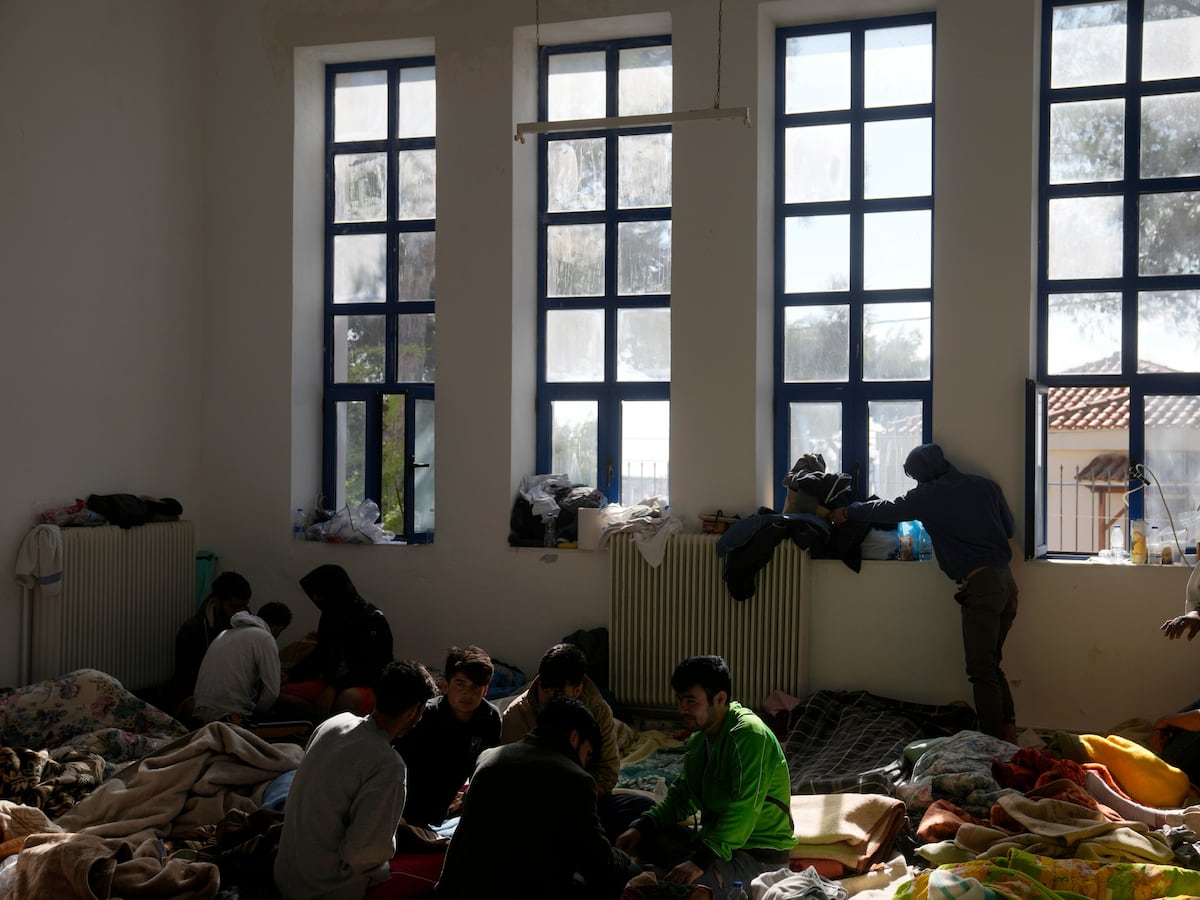
After four decades of conflict, the impoverished, aid-dependent country is now buffeted by multiple crises, from natural disasters and climate change to the largest influx of returning refugees the world has seen in decades.
“In Afghanistan, there is never a crisis just on its own. It’s always crisis on top of crisis,” De Croo told the AP. “And that you see here.”
Nearly 6 million people have returned to Afghanistan since 2023, the vast majority from neighboring Pakistan and Iran since those countries began a crackdown on migrants living there. Another roughly 2 million people are expected to return this year, the U.N. officials said.
The returnees have strained local communities, many of which already have scant resources in a country where poverty is rife and malnutrition stalks the most vulnerable.
This has been compounded by massive cuts in international aid and a Taliban government that has sidelined half of Afghanistan’s population, denying women and girls education beyond primary school and banning them from the vast majority of jobs.
The country is also internationally isolated. No Western nation has formally recognized Afghanistan’s government since the Taliban seized power in the wake of a chaotic withdrawal of U.S.-led troops in August 2021. Russia was the first country to officially do so, in 2025.
Last month, a delegation from the Taliban government traveled to Brussels to meet European Union staff for talks on diplomatic services and the return of Afghans from European countries. The meeting symbolized a small crack in Afghanistan’s diplomatic isolation.
Progress seen in some areas
Yet despite the significant challenges, Afghanistan has nonetheless shown improvement in some areas, notably in security and combating corruption and drug production, the U.N. officials said.
“I wouldn’t close my eyes to the fact that there is progress, and maybe progress that no one would have expected five years ago,” De Croo told the AP. He said drug production was down by 95% in a country that was one of the world’s major producers of opium and heroin.
“If now the international community turns its back to Afghanistan, the consequences will not only be in Afghanistan. The consequences will be much, much broader,” De Croo said.
“The message to Western countries is: if you want to have a stable and peaceful society, you are not only achieving that with domestic policy. If you want to live in peace and stability, your neighborhood also needs to be at peace and stability,” he added.
Draconian restrictions on women and girls remain
The harsh government-imposed restrictions on women and girls remain one of the greatest points of contention between the Afghan government and the international community. De Croo and Salih said they had discussed the issue in their meetings with Afghan officials during their visit to the country. Both said they believed the key to progress was engagement.
“We hope that constructive engagement will show the way forward in that regard,” Salih said. “It’s important that there is progress, there is tangible reforms that will allow for an inclusive system in this country.”
Aid cuts could have lasting repercussions
The international aid cuts have had “a very tangible impact” on the country, De Croo said, noting that 422 medical centers shut down in Afghanistan due to lack of funding in the space of a year. “Closed because the funding just disappeared. That is more than 3 million people that are impacted, that just lose their access to basic medical services,” he said.
Earlier this year, the World Food Program said funding cuts had forced it to turn away three out of four acutely malnourished children seeking help because it no longer had the funds to feed them.
The Afghan government launched a campaign to eradicate poppy cultivation soon after it seized power. But the dramatic cut in drug production was also due in part to farmers being given alternative crops to the cultivation of opium poppies, De Croo said, noting that funding for such programs had been severely curtailed.
“If we cannot continue working together with farmers in giving them an alternative for producing drugs,” then drug cultivation could return, he said.
Although international attention has shifted away from Afghanistan, Salih said that while challenges remain, there is now an opportunity for the rest of the world to engage with the country.
“It is vital to remind the world that the price of inaction far outweighs action,” Salih said. “You cannot ignore Afghanistan, and what happens in Afghanistan does not necessarily stay in Afghanistan.”
Copyright 2026 The Associated Press. All rights reserved. This material may not be published, broadcast, rewritten or redistributed without permission.