United Nations officials told the Security Council on Tuesday that Syria has reached a critical turning point toward national recovery, but continued regional instability and funding shortfalls risk reversing gains, Anadolu reports.
“Syria stands at a pivotal moment,” said Edem Wosornu, director of the Crisis Response Division at the Office for the Coordination of Humanitarian Affairs, or OCHA. She reported that since the fall of the Assad regime in December 2024, approximately 1.7 million refugees and 1.9 million internally displaced persons have returned to their communities. Wosornu warned, however, that the returns will not be sustainable without addressing massive deficits in housing, infrastructure and access to basic services.
– Israeli incursions, regional risks
Wosornu identified Israeli military activity in southern Syria as a primary threat to national stability. She noted that repeated incursions and movement restrictions are complicating humanitarian operations in areas where 80% of the population requires assistance. “Any escalation in the wider region could quickly trigger new humanitarian needs, including displacement, economic disruption, [and] supply chain shocks,” she cautioned.


Deputy Special Envoy Claudio Cordone echoed those concerns, condemning “illegal Israeli military incursions” in Quneitra and Daraa. He cited instances where Israeli forces killed individuals east of the ceasefire line and harassed UN staff. Cordone warned that statements from Israeli officials indicating an intent to hold territory violate Syrian sovereignty and the 1974 Disengagement Agreement, further heightening regional tensions.
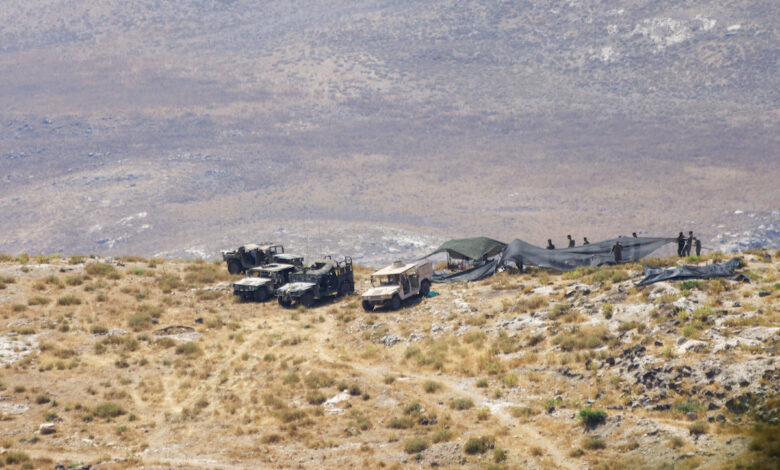
Areas of southern Syria have witnessed repeated Israeli incursions and attacks in recent months, including raids, searches and arrests, as well as the establishment of military checkpoints.
Following the fall of Bashar al-Assad’s regime on Dec. 8, 2024, Israel declared the 1974 disengagement agreement with Syria void and moved into a UN-monitored buffer zone. Syria’s new administration has repeatedly affirmed its commitment to the agreement.
Despite the absence of direct threats from Syria’s new leadership, Israel has continued airstrikes and ground operations in Syria, causing civilian casualties and damage to military infrastructure.
– Institutional progress, economic hurdles
Despite the security challenges, Cordone highlighted significant political milestones under President Ahmad al-Sharaa, including the appointment of a Supreme Constitutional Court and the inauguration of a diverse People’s Assembly, which features professionals, tribal representatives, and survivors of the conflict. He noted that the assembly is preparing for a permanent Constitution and future inclusive elections.
The deputy envoy also welcomed US President Donald Trump’s recent decision to remove Syria from the state sponsor of terrorism list as a “significant step forward” for international re-engagement. He noted that new economic ties are forming with France, Iraq and Lebanon to rehabilitate vital infrastructure like the Kirkuk-Baniyas oil pipeline.
Wosornu emphasized a deepening financial crisis, however, revealing that the humanitarian appeal remains only one-third funded. The shortfall has forced the World Food Program to halve its emergency assistance, reducing its reach from 1.3 million to 650,000 people. She argued that humanitarian aid and long-term recovery must be pursued simultaneously to prevent leaving the most vulnerable behind.
– Syria returns to UN Security Council as ‘story of success’
Syria has undergone a historic transformation from a war-torn battlefield into a diplomatic and economic bridge, the nation’s permanent representative told the Security Council.
“Syria has appeared before this council for a long time as an intractable crisis. Today, however, it returns to the council as a story of success,” said Ibrahim Olabi. He pointed to the convening of an inclusive People’s Assembly and the formation of a Supreme Constitutional Court as evidence of a “new Syria” regaining its future.
Olabi criticized Israeli military actions, contrasting Syria’s “diplomacy and restraint” with what he characterized as the “narrow electoral calculations” of Israeli Prime Minister Benjamin Netanyahu. “We are fully aware that dialogue does not mean accepting occupation, and diplomacy does not mean relinquishing our rights,” said Olabi.
The Turkish representative welcomed Syria’s progress in “inclusive governance” and noted that the US intent to rescind the terrorism designation will significantly aid reconstruction. The official also condemned Israeli raids in western Daraa as a “clear violation” of the 1974 Separation of Forces Agreement.
US Ambassador Tammy Bruce described the Syrian government as a “regional leader” in the campaign against Hezbollah and the ISIS (Daesh) terror organization. She congratulated Damascus for intercepting an alleged Iranian weapons shipment intended for Hezbollah, asserting that Syria will not allow its territory to be used for attacks on Israel.
Russian representative Anna Evstigneeva expressed support for the restoration of Syria’s territorial integrity while raising concerns about persistent Israeli raids. She advocated for the complete removal of “illegal” unilateral sanctions to facilitate economic recovery and alleviate the underfunded humanitarian crisis.


