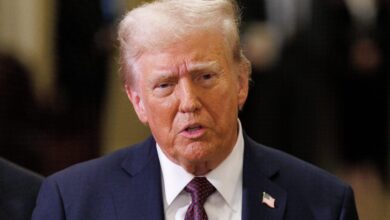
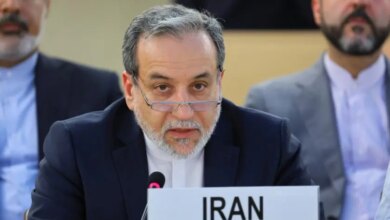
US President Donald Trump has said the Trump Iran ceasefire is “over” and warned Tehran that America could launch fresh strikes as early as Wednesday night. The move affects US forces, Iran, Gulf states, global shipping and UK travellers, and readers with travel plans in the region should check the latest Foreign Office advice before making any journey.
Speaking at the Nato summit in Ankara on Wednesday, 8 July 2026, Mr Trump said he no longer wanted to deal with Iran after accusing Tehran of breaking the terms of an interim agreement.
The ceasefire was meant to give the US and Iran a 60-day window to work towards a longer-term deal. It was not a full peace treaty, but a temporary framework designed to stop the fighting and allow talks to continue.
Read related news:
Trump announces US-Iran peace deal, condemns Israel’s attack on Beirut
UK minister Streeting disappointed as US-Iran talks stall in Islamabad
Middle East tension rises as US strikes Iran, Tehran hits back

Trump warns Iran after ceasefire breaks down
Mr Trump told reporters: “To me, I think it’s over. I don’t want to deal with them.”
He later added: “We’re going to hit them hard tonight,” although he did not clearly say whether the US was returning to a full-scale war.
The president also repeated his demand that Iran must never be allowed to build a nuclear weapon. He suggested that Washington might now try to achieve that aim without a deal, accusing Iranian leaders of lying and cheating.
The comments came after renewed fighting in the Gulf. Iran said it had targeted US military sites in Bahrain and Kuwait after US forces struck targets in Iran.
The US said its strikes followed attacks on three commercial vessels near the Strait of Hormuz, one of the world’s most important routes for oil and gas shipments.
The Strait of Hormuz is a narrow waterway between Iran and Oman. A large share of the world’s seaborne oil and gas passes through it, so any threat to shipping there can quickly affect energy markets.
Oil prices rose after the latest escalation, while shipping data showed some tankers had turned back rather than pass through the area.
What the US has changed
The US has also revoked a Treasury licence that had allowed some Iranian oil and petroleum sales under the interim arrangement.
That licence had been one of the practical benefits Iran received from the ceasefire framework. It was due to run until August, but Washington has now replaced it with a wind-down order.
This means businesses covered by the previous authorisation have only a limited period to end those transactions. It does not mean every trade issue is settled automatically, and companies involved would still need to follow US sanctions rules closely.
Nato Secretary General Mark Rutte backed the US response, saying the latest American strikes were necessary after the tanker attacks. Iran has disputed the US position and accused Washington of escalating the conflict.
Tehran has argued that it has the right to control shipping routes through parts of the strait. The US and its allies say commercial shipping must be free to pass safely through international waters.
For ordinary readers in the UK, the main concerns are travel safety, fuel prices and wider regional instability.
The Foreign, Commonwealth and Development Office already advises against all travel to Iran. British nationals in Iran have been urged to consider their presence carefully because of the risks involved.
Anyone planning to travel to the Gulf should check official travel advice for the country they are visiting, speak to their airline or tour operator, and make sure their insurance is still valid.
The situation remains fast-moving. Mr Trump has said the ceasefire is over, but he has not set out a full new military plan or confirmed whether talks are finished for good.
For now, the key point is clear: the temporary US-Iran deal has suffered a major blow, tensions in the Gulf have risen again, and British travellers should rely on official advice before making plans.