Why Can’t FG Engage Terrorists Like Jonathan, Osinbajo Did With Niger Delta Militants? -Gumi

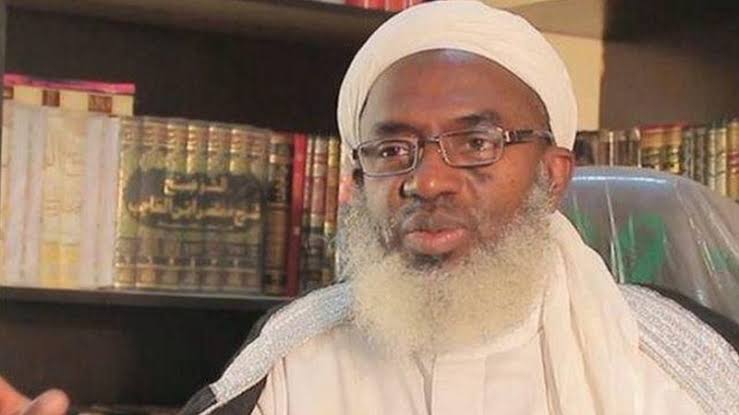
Controversial Islamic cleric, Sheikh Ahmad Gumi, has questioned why government officials have not engaged Boko Haram terrorists and armed bandits through dialogue, drawing parallels with the approach adopted by former President Goodluck Jonathan and former Vice President Yemi Osinbajo in resolving the Niger Delta militancy.
Gumi made the remarks in a Facebook post on Saturday, where he recalled that both Jonathan and Osinbajo visited militants in the Niger Delta creeks as part of efforts to broker peace and end years of violent unrest in the oil-producing region.


The cleric wondered who would be willing to adopt a similar strategy in addressing insecurity in northern Nigeria without facing widespread criticism.
“Who is going to visit BH and Bandits to tame them without fools castigating them?” Gumi wrote.
For years, Gumi has advocated dialogue as a strategy for ending violence in Nigeria’s North-West and North-East, where armed banditry and insurgency have claimed thousands of lives and displaced many communities.
The cleric has personally visited bandit camps in Zamfara and other states, saying the engagements were aimed at understanding the grievances of the armed groups and encouraging peaceful resolutions.
He has consistently argued that negotiation, rather than military force alone, proved effective in ending militancy in the Niger Delta and should be considered as part of efforts to address insecurity in the North.
His approach, however, has remained controversial.
While some Nigerians have accused him of legitimising criminal groups responsible for kidnappings, killings and cattle rustling, others have credited his interventions with facilitating the release of abducted victims and opening channels for dialogue.
The retired military officer has repeatedly denied supporting terrorism, insisting that his engagements are solely intended to end bloodshed through dialogue, rehabilitation and reintegration.
LEADERSHIP reports that Niger Delta amnesty programme, introduced in 2009 by the late President Umaru Musa Yar’Adua and sustained under former President Jonathan, led to the disarmament of thousands of militants in exchange for vocational training, monthly stipends and reintegration support. The programme significantly reduced attacks on oil facilities and restored relative peace to the region.
Jonathan had earlier initiated contact with militant leaders in 2007 while serving as vice president. According to his account, he travelled into the Niger Delta creeks without armed security to meet former militant leader Government Ekpemupolo, popularly known as Tompolo, in Warri, Delta State.
The former president later said the meeting laid the foundation for the amnesty programme that has remained in operation.
Similarly, Osinbajo, while serving as acting president in 2017, embarked on a series of visits to Niger Delta communities where he held meetings with militants, traditional rulers and other stakeholders.
At the time, Osinbajo defended the engagements, saying those in the creeks were Nigerian citizens with legitimate grievances that required dialogue rather than being viewed solely as security threats.