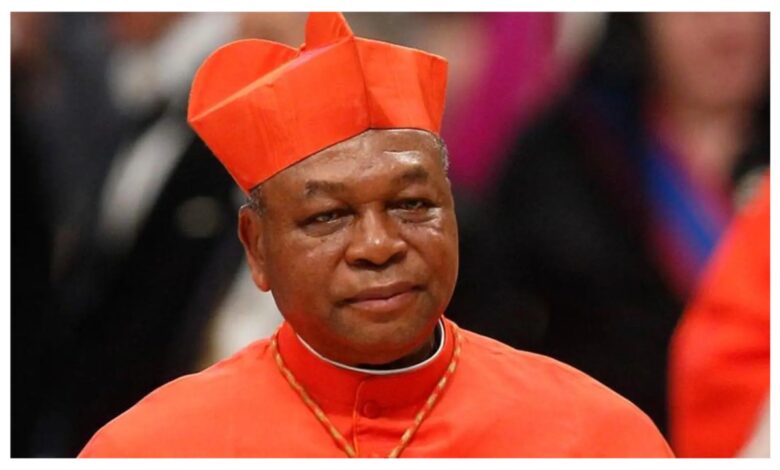
The Archbishop Emeritus of the Catholic Archdiocese Abuja, John Cardinal Onaiyekan, has warned that voters would not turn out in the 2027 general elections if Nigerians conclude that victory is already guaranteed for the ruling All Progressives Congress, APC.
Speaking on Monday during a program on Eagle 102.5 FM, Ilese-Ijebu, monitored by DAILY POST in Abeokuta, the Cardinal said perception matters as much as the vote itself.
He cautioned that belief in a predetermined outcome would discourage citizens and damage the legitimacy of any government that emerges.
“My fear is that if it becomes very clear to Nigerians that no matter what happens, the APC will win, then most people won’t even bother to go to the election,” Onaiyekan said. “And even if the government, the real power wins, it will not bring a real victory actually. And it is not going to be possible to deliver good government.”


The cleric stressed that restoring public confidence in the electoral process is critical to improving governance, stressing that democracy can only thrive where elections are genuinely free, fair and credible, and anything less produces poor leadership.
“Genuine democracy is built on free and fair elections,” he said. “Any democracy that cannot do free, fair, and credible election cannot come up with good governance. Elections have consequences… Bad elections lead to bad governance and bad governance leads to misery among the people.”
Onaiyekan lamented that Nigeria is yet to conduct a truly free and fair election, linking low voter turnout to widespread disillusionment and urged those in power to act urgently to restore trust ahead of 2027.
“It is in our interest and the government who has all the powers, to please make sure that the trust of the people in the electoral process is restored, so that we can get at least 50% of Nigerians voting,” he said.
The Cardinal contrasted democratic rule with the military era, noting that elected leaders claim to govern in the people’s name and must therefore be held accountable.
“When we were under military regime, we didn’t talk about elections… Now we are with democracy, and the rulers say that they are ruling in our name. We can’t keep quiet when people claiming to be working in our name are not.”
On the role of institutions, Onaiyekan said INEC’s neutrality alone is not enough, pointing to the conduct of security agencies during polls. According to him, intimidation undermines credibility of elections.
“Even if INEC is neutral, as you know, the election outcome is also affected by the activities and the performance of the security agents who claim to be securing the election, but who often end up intimidating people with sirens all over the place, which doesn’t happen in decent democracies.
“We are also talking about why it’s always difficult for INEC to even perform well, with all good intentions. The rules that guide these activities, there is a lot of room for improvement. We have been talking about reforming the electoral rules.”
He called for electoral reforms, particularly in how INEC leadership is appointed, maintaining that the current process for appointing the electoral body’s leadership raises concerns about impartiality and should be reviewed to reinforce public confidence in the electoral system.
“We know that the government in power appoints the INEC. We have to figure a way out of that because if the government in power appoints the INEC, then It’s difficult to have a fair game. Unless you have a very strong chairman of INEC who decides to stand up against all pressures,” he added.