0
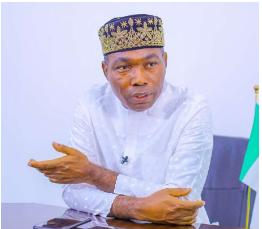
Public affairs analyst Adedayo Olalekan has examined the criticisms of Social Democratic Party (SDP) presidential candidate Prince Adewole Adebayo against the administration of President Bola Ahmed Tinubu, arguing that concerns over governance, corruption, insecurity and food security have become increasingly central to public discourse more than three years after the President assumed office.
When Tinubu took office in May 2023, his administration unveiled the Renewed Hope Agenda, promising economic recovery, improved governance, enhanced security, agricultural transformation and a stronger fight against corruption. Since then, the government has introduced a number of policy reforms and intervention programmes aimed at achieving those objectives.
However, many Nigerians continue to judge the administration by their daily experiences, including rising food prices, insecurity, declining purchasing power and persistent concerns about corruption. It is within this context that Adebayo has consistently criticised the government’s performance, arguing that the country’s challenges are interconnected and stem largely from failures of leadership.
According to the former presidential candidate, corruption, insecurity, food inflation and weak governance should not be viewed as isolated problems but as symptoms of a broader leadership crisis. He contends that when government is unable to protect lives, manage public resources transparently and prioritise citizens’ welfare, achieving other policy goals, including food security, becomes increasingly difficult.
One of the Tinubu administration’s key commitments was to strengthen governance and intensify the fight against corruption. While anti-graft agencies have continued investigations and prosecutions, critics have questioned whether those efforts have translated into improved public confidence.
For Adebayo, the more important issue is whether public spending has produced visible improvements in the lives of ordinary Nigerians.
“Talking about corruption, corruption was on before he came, he just continued and amplified that. The only credit I can give to him is keeping himself alive despite the troubles he personally faced. Beyond keeping himself, he has not done anything for the country and it is unfortunate that trillions of public money have been passing through their hands and these monies have not reflected in the welfare of the people,” he said.
His argument shifts attention from government announcements to measurable outcomes, maintaining that if huge public expenditures do not result in better infrastructure, improved public services or higher living standards, then governance should be questioned.
Adebayo further argued that the situation is evident even in areas traditionally regarded as the President’s political strongholds.
“Even the local government where he comes from, their life isn’t better but worse. The state he comes from, their life is not better, it is worse. The region where he comes from, their life is not better but worse.”
According to him, this reflects a wider national concern that the benefits of government spending are not reaching the citizens whose taxes and resources sustain the country.
Recalling an event organised by the Awolowo Foundation in Ikenne, Ogun State, he said the reaction of some participants illustrated what he described as growing public frustration with official narratives.
“The president was special guest of honour and he sent a senior member of his government to come and speak. After I spoke, he spoke and the people were yelling at them, ‘Why are you lying to us?’”
Adebayo argued that such experiences point to a widening trust deficit between government and the people.
He was also critical of the administration’s leadership, stating:
“There are three reasons why he is the worst president. One; he is the one in charge now where we have the most possible impact of bad governance. Two; he is doing it in a manner that is not just incompetent, it is an organised agenda to try to personalise the country and create a Bola Tinubu singularity.”
While those remarks reflect Adebayo’s personal assessment, his broader argument is that national institutions should remain stronger than political personalities and operate primarily in the public interest.
The Tinubu administration has also prioritised agricultural development through various intervention programmes designed to improve food production and reduce inflation.
Despite those initiatives, food prices remain high, with insecurity, transportation costs and inflation continuing to affect agricultural output.
Adebayo argues that food security cannot be achieved without first addressing the country’s security challenges.
Speaking about his visit to Angua and Rubuka communities in Plateau State following attacks in the area, he said the experience reinforced his belief that insecurity remains one of the biggest obstacles to food production.
“I visited Plateau to find out the plight… For invaders to visit a community like that and, in a flash, render many families bereaved, kill many people, disturb the peace of the community, injure many people and traumatise the entire community—it was devastating.”
He said the visit was intended not only to sympathise with victims but also to reassure communities that felt abandoned.
“I thought that we needed to go there and restore the hope of the people… they were already feeling like stateless people—people unprotected by any government.”
According to Adebayo, many violent incidents across the country receive little national attention despite their impact on local communities.
“Apart from the publicly known, notorious and sensational killings, there are several low-key killings going on in every part of the country that people have taken for granted.”
He argued that persistent insecurity has forced many farmers off their land, reduced food production and contributed to rising food prices nationwide.
Adebayo also criticised the President’s handling of the Plateau tragedy, saying he expected a more direct engagement with affected communities.
“I was thoroughly embarrassed that the president failed in his leadership by going to the airport and complaining that there was no electricity… instead of taking the 18-minute drive to the epicentre and talking to the families one-on-one.”
According to him, moments of national tragedy present opportunities for leaders to demonstrate empathy and reassure citizens.
A recurring theme in Adebayo’s assessment is his belief that Nigeria possesses the institutional capacity to address many of its challenges but lacks effective political leadership.
Following interactions with security personnel in Plateau State, he said he became convinced that security agencies have the capacity to perform better if adequately supported.
“Speaking with the law enforcement agents there, I gained more knowledge and more confidence in them, even as I sympathised with them that they are under poor leadership.”
He added: “Our law enforcement agents have the capacity to do it. Unfortunately, they are not being supported.”
According to Adebayo, improved intelligence gathering, stronger community engagement and more decisive political leadership would significantly strengthen security and create an environment where agriculture and economic activities can thrive.
Taken together, Adebayo’s comments present an alternative perspective on governance, arguing that corruption, insecurity, weak institutions and food inflation are closely linked and require coordinated leadership rather than isolated policy responses.
He maintains that governments should ultimately be judged by improvements in citizens’ welfare, the effectiveness of public institutions and the ability to provide security that enables economic and agricultural activities to flourish.
Whether Nigerians ultimately agree with that assessment remains a matter for public debate and future electoral choices. Nevertheless, Adebayo’s interventions continue to contribute to national conversations on governance, accountability, security and economic management by offering his perspective on the challenges facing the country and the leadership approach he believes is required.