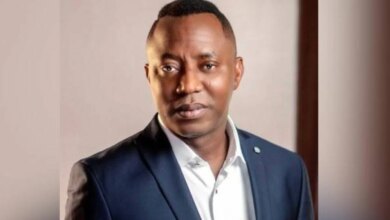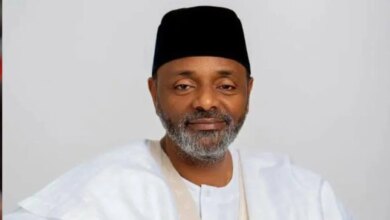
Former Vice President Atiku Abubakar and former Anambra State Governor Peter Obi are expected to join other leading opposition figures at a major political summit in Abuja on Monday, August 31, as efforts to build a united opposition ahead of the 2027 general election gather momentum.
The Summit of Nigeria’s Opposition Political Parties, convened by the G100, is scheduled to hold at the Yar’Adua Centre in the Federal Capital Territory.
POLITICS NIGERIA reports that the meeting is expected to bring together leaders of six opposition parties to begin formal discussions on how the parties can cooperate and coordinate their activities ahead of the 2027 elections.
The summit is themed “A Framework for Opposition Cooperation and Coordination” and is expected to focus on developing a structure through which the participating parties can negotiate their political interests and possible alliance.

Summit to Begin Coalition Negotiations
The G100 said the meeting is not designed to immediately determine who will emerge as the opposition coalition’s presidential candidate.
Instead, the group said the first priority is to establish a transparent and collective process for resolving major questions surrounding the proposed alliance.
In a statement signed by the G100 Convener, Salihu Moh. Lukman, the group said opposition parties must first agree on the principles and objectives that will guide their cooperation before discussing who should lead a possible joint ticket.
“The first question before party leaders is not who leads the ticket. It is what we are, together, prepared to do for this country,” the statement said.
The group also stressed that cooperation among opposition parties would not require any of them to surrender their identity or cease to exist.
“Cooperation does not require any party to disappear into another,” Lukman stated.
According to the G100, the summit will provide a platform for participating parties to discuss the terms, institutions and principles that could form the basis of a broader opposition arrangement.
The organisation said it does not expect all the difficult political questions to be resolved at the first meeting, but wants the summit to create a structure capable of handling those issues through negotiation.
“The First Summit is not intended to determine, in a single sitting, questions of presidential candidacy or the final form that opposition cooperation may take,” the statement said.
“Its immediate purpose is more fundamental, to establish and authorise a formal architecture through which those questions can be negotiated collectively, transparently and in good faith.”
Six Opposition Parties Involved
The planned summit follows weeks of consultations between the G100 and six opposition parties: the African Democratic Congress (ADC), Allied Peoples Movement (APM), Nigeria Democratic Congress (NDC), Peoples Democratic Party (PDP), Peoples Redemption Party (PRP) and Social Democratic Party (SDP).
The consultations came after the G100 published its Doctrine of a Necessary Democratic Opposition on August 2, 2026.
According to Lukman, the discussions with the parties identified areas where the opposition groups could work together while recognising that each party has its own history, political interests and organisational structure.
“At the centre of the consultations was a common recognition of the need for a credible, organised and competitive democratic opposition, and a willingness to engage the difficult questions that meaningful cooperation ahead of 2027 will require,” he stated.
The parties are expected to attend the summit with delegations drawn from their national leadership, National Working Committees and other important constituencies.
Presidential candidates and running mates of the participating parties are also expected to be represented, alongside members and signatories of the G100 and members of the Minority Caucus of the House of Representatives.
Five Working Groups Proposed
One of the major proposals to be considered at the summit is the establishment of five specialised Working Groups to handle different aspects of the proposed opposition cooperation.
If the participating parties approve the proposal, the groups are expected to work for four weeks and prepare the major documents and agreements required to establish a formal structure for the alliance.
The G100 explained that the proposed arrangement is intended to move the coalition discussion beyond political statements and create an institutional framework through which the parties can negotiate their differences.
“Among the proposals before the Summit will be the establishment of structures that will facilitate negotiations and cooperation and five specialised Working Groups,” the statement said.
“Subject to the decisions of the participating parties, these bodies will be mandated to develop, within four weeks, the principal documents and agreements required to give institutional form to opposition cooperation.”
The group also clarified that it would not impose decisions on the political parties.
“The decisions arising from this process will remain the responsibility of the parties themselves,” it added.
G100 Pushes for Opposition Unity
The summit is the latest step in the G100’s campaign to bring Nigeria’s major opposition groups together before the 2027 presidential election.
The group has previously met members of the Minority Caucus in the 10th House of Representatives as part of efforts to build support for a common opposition platform against President Bola Tinubu and the ruling All Progressives Congress (APC).
Lukman, who led the delegation to the lawmakers, warned that the opposition could repeat the experience of the 2023 election if its major parties once again contest separately.
He argued that divisions among opposition politicians could make it easier for the ruling party to retain power in 2027.
“As opposition parties, we seem to be fragmented. And if we continue the way we are going, we are almost going to replay 2023 scenario. And it’s almost like a case of handing over victory to the ruling party. And then we’ll go back to square one,” Lukman said.
The G100 has maintained that its objective is not to promote a particular politician or political party, but to encourage opposition leaders to negotiate and find an arrangement that can produce a strong challenger to the APC.
Lukman said the political and economic situation in the country made cooperation among opposition leaders necessary.
“We feel given the situation the country is facing today, the country cannot afford another four years of APC government,” he said.
“And that whatever it will take to get our leaders back together, to do the needful, and begin to work together to ensure victory in the 2027 election. We need to do it.”