Nigeria may lose access to a fresh $1.4 billion United States (US) health and humanitarian assistance package if the Federal Government fails to take measurable steps to tackle violence against Christians.
The condition was contained in a bilateral Memorandum of Understanding (MoU) signed by the US and Nigerian governments under the America First Global Health Strategy, Naijaonpoint reports.
The development could affect Nigeria’s access to a significant portion of the new American funding, particularly support earmarked for faith-based health facilities across the country.
The MOU, signed on December 20, 2025, between the US Department of State and the Nigerian government, commits Washington to providing nearly $2.1bn over five years to strengthen preventive and curative healthcare services in Nigeria.


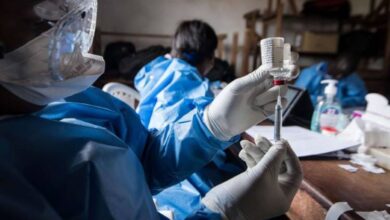
The programme covers HIV, tuberculosis, malaria, maternal and child health, as well as polio prevention and treatment.
Under the agreement, Nigeria is also expected to increase its domestic health spending by almost $3bn during the five-year period.
The expenditure has been described as the largest co-investment by a recipient country under the AFGHS.
However, the agreement contains conditions that could affect Nigeria’s access to the funds.
The MOU stated that the agreement was “negotiated in connection with reforms the Nigerian government has made to prioritize protecting Christian populations from violence.”
It also provides for “significant dedicated funding” for Christian health facilities.
The agreement further warned that the US President and Secretary of State could suspend or terminate programmes that no longer align with Washington’s national interest.
“As with all foreign assistance, the President and Secretary of State retain the right to pause or terminate any programme which do not align with the national interest, and the Trump administration expects Nigeria to continue to make progress ensuring that it combats extremist religious violence against vulnerable Christian populations,” the document stated.
The condition attached to the funding comes amid growing concerns in the US over attacks on Christians in parts of Nigeria.
The US House of Representatives recently voted to link American assistance to Nigeria to verifiable actions by the Federal Government to address the situation.
The bill passed by the House last month reportedly asked the Nigerian government to take concrete measures to facilitate the return of internally displaced persons to their ancestral communities.
It also called for stronger protection for Christians facing persecution in the Middle Belt and other affected areas.
Meanwhile, Washington has announced $1.4bn in fresh funding under the America First Global Health Strategy to support integrated healthcare services through faith-based and community hospitals and clinics in more than 20 countries.
Of the amount, $850m will be provided through a Faith and Community Initiative Award to World Vision and local faith-based organisations.
The funding will be used to strengthen more than 2,500 faith-based hospitals and clinics across 17 countries.
The programme will also train, pay and equip more than 30,000 community health workers.
Another $570m will be channelled directly to faith-based and community hospitals through bilateral agreements with governments, including Nigeria.
The US Department of State also announced $538m in humanitarian assistance for Samaritan’s Purse and a consortium involving World Vision and Compassion International.
The organisations are expected to use the funds to reach about seven million people affected by 16 humanitarian crises.
More than $100m will be made immediately available for disaster response in 23 countries considered vulnerable to natural disasters.
The State Department said the combined $1.4bn health package represented the largest amount given to faith-based organisations in more than two decades.
It added that at least 80 per cent of the resources would be directed to frontline health services.
For Nigeria, the agreement places particular emphasis on Christian faith-based healthcare providers.
The MOU described the facilities as “uniquely positioned” to complement government-owned health facilities.
About 900 faith-based clinics and hospitals in Nigeria are expected to benefit from the programme. The facilities currently provide healthcare services to more than 30 per cent of Nigerians, according to the agreement.
The increased reliance on faith-based healthcare is part of a broader shift by the US towards using religious and community organisations to deliver health services in countries where they play a major role in the healthcare system.
In several recipient countries, faith-based providers account for 40 per cent or more of health facilities.
For Nigeria, however, continued access to the new funding could depend on how the Federal Government responds to concerns raised by Washington over violence against Christians.
The State Department said organisations such as Samaritan’s Purse, World Vision and Compassion International were selected because of their experience in responding quickly to crises.
According to the department, the organisations have a record of deploying assistance to conflict zones and disaster-hit communities without lengthy bureaucratic delays.
The new funding therefore combines healthcare and humanitarian support, while placing greater emphasis on faith-based organisations that already have a strong presence in vulnerable communities.