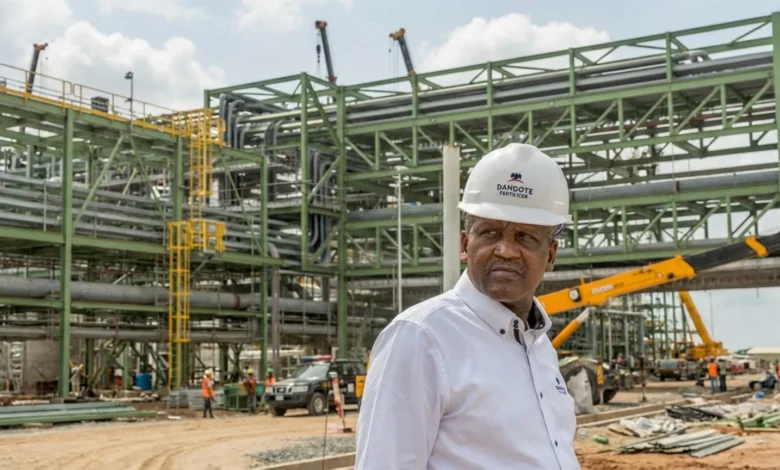
Nigeria’s stock market may face short term selling pressure in August as investors free up cash to buy into the planned Dangote Oil and Gas FZE initial public offering (IPO), with portfolio changes likely to weigh on the Nigerian Exchange despite the market’s strong performance so far this year, as reported on Saturday by Nairametrics.
The NGX All Share Index is trading near 247,000 points, while market capitalisation has climbed to about N158.3 trillion after seven months of gains.
Investors are selling parts of their holdings in leading companies to prepare for the refinery offer, which is expected to be the biggest IPO in the country’s capital market history.
READ RELATED NEWS
Dangote opens ownership to global investors with $2.5bn equity deal
Dangote boosts Nigeria’s economy with 1.66bn-litre fuel export in April
Dangote Refinery cuts petrol price amid global oil decline
The change in investor activity is happening after months of strong returns on the stock market. The planned refinery listing has created huge interest among local and foreign investors, making many fund managers review their portfolios before the offer opens.

That process could affect trading in August even though the market has recorded solid growth this year.
Investors free cash for refinery offer
Trading in August is expected to be shaped by profit taking after the first half of the year and by investors preparing funds for the Dangote Oil and Gas FZE IPO.
Pension fund administrators, asset managers and retail investors have started reducing their holdings in some of the market’s biggest companies.
Tier 1 banks, MTNN, Airtel Africa and Dangote Cement are among the stocks being sold as investors make cash available for subscriptions to the refinery offer.
This portfolio adjustment could put temporary downward pressure on the NGX All Share Index. Liquidity in the secondary market may also reduce because money that would normally stay in listed stocks is being redirected to the primary market.
The pre IPO private placement gives an indication of investor interest. The company planned to raise 2.5 billion dollars, but bids reached about 4 billion dollars, making the exercise 3.7 times oversubscribed.
The public offer is valued between 40 billion dollars and 50 billion dollars, with a possible public sale of between five and 10 per cent of the company worth up to 5 billion dollars. That would make it the biggest IPO ever recorded in Nigeria’s capital market.
August trading is also likely to include profit taking after the market’s long rally. Investors who have recorded gains over the past seven months may decide to lock in profits before taking part in the refinery offer.
Banks and energy stocks remain in focus
Even with the planned portfolio changes, Tier 1 banks are still expected to attract interest because of their earnings. High interest rates have supported bank income through improved net interest margins, making the sector one of the biggest contributors to market performance.
Investors are also waiting for audited half year earnings and interim dividend announcements from leading banks.
Domestic institutional investors, including pension funds and asset managers, are paying close attention to companies with strong earnings yields.
Energy companies such as Aradel Holdings and Seplat also recorded support from relatively high crude oil prices during the second quarter and stable local production, making them important sources of market liquidity.
The refinery listing is also expected to change the structure of the market. Dangote Refinery is expected to join the NGX 30 index beside Dangote Cement and BUA Group. That will change index weightings and benchmark tracking for investment managers.
The report noted that the refinery listing could increase the total value of the Nigerian stock market by between 30 per cent and 45 per cent because trillions of naira would be added to market capitalisation.
NGX Group and Dangote Group are focusing on institutional investors within Africa, including South Africa, Kenya and Ghana, as well as frontier market investors from other parts of the world. This approach is intended to prevent pressure on local naira liquidity.
The refinery is expected to generate about 6.4 billion dollars in annual foreign currency cash flow when it reaches full production.
That could support dual currency or United States dollar denominated dividend payments, making the investment attractive to foreign portfolio investors looking for returns in hard currency.
For More News Details, Visit the New Daily Prime.