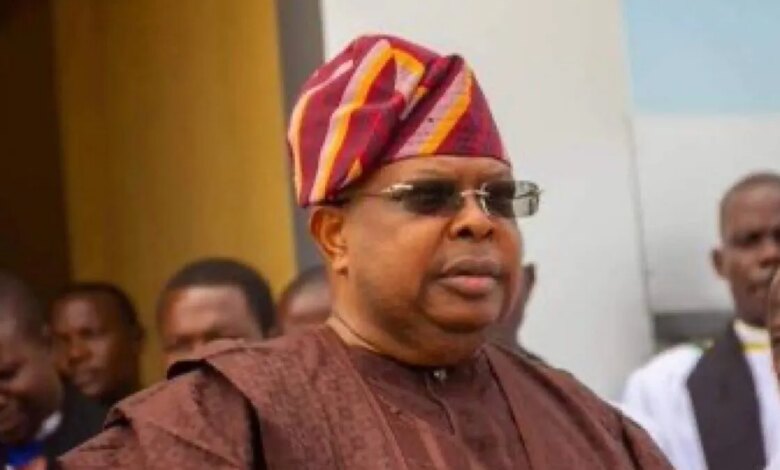
The Federal Government has opened an investigation into suspected electricity theft and unexplained power losses along the 132-kilovolt Ikorodu–Sagamu industrial corridor in Ogun and Lagos states.
The investigation followed revelations that as much as 100 megawatts of electricity may be going unaccounted for along the major industrial route.
Moreover, the losses estimated to cost the Nigerian electricity market about N120 billion every year.
Minister of Power, Joseph Olasunkanmi Tegbe, disclosed the development during a high-level meeting with industrial electricity users and major stakeholders in Lagos on Friday, August 28, 2026.

The meeting brought together representatives of industrial operators, electricity distribution companies and other key players in the power sector.
Tegbe directed relevant agencies and stakeholders to establish the actual cause of the huge gap between the electricity transmitted through the corridor and the amount eventually recorded and billed.
He said the investigation must be transparent and based on verifiable technical data.
The minister’s intervention comes as the Federal Government steps up efforts to reduce commercial losses in the electricity sector and improve revenue collection across the power value chain.
The Ikorodu–Sagamu corridor is one of the country’s important industrial zones.
Several large manufacturing companies operate along the route and depend heavily on electricity to run their factories and production facilities.
The growing demand for electricity in the area has also made accurate monitoring of power flows increasingly important.
According to information presented at the meeting, monitoring systems deployed by the Nigerian Independent System Operator, NISO, have provided greater visibility into electricity flows along the corridor.
The technology has reportedly revealed unusual loading patterns and significant differences between the volume of electricity sent through the network and the energy eventually accounted for.
The Federal Government is now seeking to determine whether the discrepancies are caused by technical losses, metering problems, commercial leakages, electricity theft or deliberate interference with the network.
Tegbe stressed that the government would not allow industries to suffer from unreliable electricity supply.
At the same time, he said consumers must take responsibility for the power they use.
“We must know where the power is going and what is compromising it,” the minister said.
He also warned against practices capable of weakening the financial position of the electricity market.
Meter tampering, manipulation of consumption records, interference with electricity infrastructure and other forms of energy theft are expected to come under scrutiny as the investigation progresses.
The minister said the administration of President Bola Tinubu remained committed to providing industries with reliable electricity because of the role of power supply in economic growth, production and job creation.
However, he made it clear that improved electricity supply must go together with proper metering, accurate billing and payment for energy consumed.
“Every consumer must be responsible for its actions and consumption,” Tegbe said.
The investigation is expected to involve several institutions and market participants connected to the corridor.
Representatives of NISO, the Transmission Company of Nigeria, Ikeja Electric and Ibadan Electricity Distribution Company were among those present at the engagement.
Industrial operators along the corridor were also represented.
The Federal Government’s concern is not only about the immediate financial loss.
Unaccounted electricity also affects the ability of distribution companies and other market participants to recover the cost of supplying power.
When electricity is consumed but not properly measured or paid for, the financial burden is ultimately passed through the electricity market.
The government has therefore continued to push for improved metering and stronger monitoring as part of wider reforms in the sector.
Tegbe has repeatedly linked better service delivery to stronger financial discipline within the sector.
The government has also maintained that electricity consumers should pay for the actual amount of power they consume rather than rely on inaccurate estimates.
In a related development, the Federal Government had earlier launched a nationwide programme aimed at reducing Nigeria’s metering gap and improving accountability in electricity consumption.
On July 2, the Tinubu administration introduced the Power Force programme, designed to train 5,000 young Nigerians to install smart electricity meters across the country.
The initiative is being implemented through the Presidential Metering Initiative in collaboration with the Federal Ministry of Youth Development.
It is aimed at addressing one of the long-standing problems in the electricity sector — the inability to accurately measure the amount of power consumed by many electricity customers.
The programme is expected to create a pool of trained and certified meter installers who will work with electricity distribution companies, meter providers and other industry operators.
The first phase was scheduled to begin in Abuja before expanding to the six geopolitical zones.
The training is being supported by the National Power Training Institute of Nigeria, while the Nigerian Electricity Management Services Agency is responsible for certification and compliance standards.
The government said wider deployment of smart meters would help reduce dependence on estimated billing and give electricity customers clearer information about their actual consumption.
Tegbe, while speaking on the initiative, said the programme was also part of efforts to develop the manpower needed to improve Nigeria’s electricity system.
“A stronger power sector begins with skilled people. Power Force invests in Nigerian talent to power our nation’s future,” he said.
The Executive Secretary of the Presidential Metering Initiative, Olu Verheijen, also highlighted the importance of accurate metering to the financial health of the sector.
“Metering restores trust. When customers pay only for what they use, revenues improve, investment follows, and service gets better. Power Force helps us scale that progress faster,” she said.
… FG Begins Probe Into N120bn Annual Revenue Loss From Electricity Theft Read More on … NaijaOnPoint.
What do you think about this?
Drop your opinion in the comment section.
FOLLOW US & Share this with someone who needs to see this.