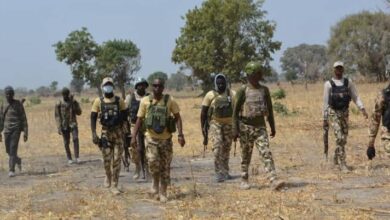
Nigeria’s kidnapping crisis has taken a grim financial turn, with a new report revealing that criminals collected about N7.8bn in ransom while 7,825 people were abducted in 1,713 incidents across the country within one year.
The figures, contained in a report by SBM Intelligence titled “The Capture of the Kidnap Economy,” cover the period from July 2025 to June 2026. The report also recorded at least 1,142 deaths linked to kidnapping incidents during the period.
Beyond the human toll, the findings expose a criminal economy in which the money extracted from terrified families is helping armed groups finance their operations.
READ RELATED NEWS UPDATES
SBM Intelligence reported that kidnappers demanded a combined N22.9bn during the period but received N7.78bn. Although the total amount demanded fell from N48bn in the preceding period, actual ransom payments increased sharply from N2.56bn to N7.78bn.


That means the proportion of demanded ransom that was actually collected rose from 5.35 per cent to 34 per cent.
The report identified Boko Haram’s Jama’atu Ahlis Sunna Lidda’awati Wal-Jihad faction as the biggest beneficiary, accounting for about 90 per cent of the ransom paid.
The group reportedly collected N7bn from only eight incidents.
Two mass abductions accounted for almost the entire sum. The first involved 416 people reportedly seized in Ngoshe, Borno State, for whom N5bn was allegedly paid. The second concerned 315 pupils and staff abducted from St Mary’s School, Papiri, Niger State, with N2bn reportedly handed over to the captors.
The pattern points to a disturbing shift in the mechanics of kidnapping. Large groups of victims can generate enormous payouts from a single operation, making schools, rural settlements and other poorly protected communities attractive targets.
Zamfara recorded the highest number of mass abductions during the period, with 92 incidents, while Sokoto recorded 76.
SBM Intelligence also cautioned that paying ransom does not necessarily guarantee the safe return of captives. In at least six cases examined in the report, hostages were killed even after ransom had reportedly been paid.
The financial consequences extend beyond individual families. Security expert Jackson Ojo described Nigeria as an “unsafe territory” and attributed the growth of abduction to what he called the lackadaisical conduct of some government officials.
Ojo said criminal groups had turned kidnapping into a major source of income because they faced insufficient resistance from the state.
“Due to the lackadaisical attitude of some persons in government, they have now helped the terrorists, the kidnappers, and the bandits to turn the kidnapping industry in Nigeria into one of the highest industries and economic revenue-generating industries in Nigeria,” he said.
He also pointed to the growing sophistication of criminal groups. According to him, some bandits now issue advance notices to communities and specify what they expect as payment, including motorcycles and telephone recharge cards.
The security expert further raised concern over military casualties in the fight against armed groups. He noted the reported deaths of generals, colonels, majors and other officers.
Former Federal Capital Territory (FCT) Commissioner of Police and security consultant Lawrence Alobi took a similar position on the financial dimension of the crisis.
Alobi described ransom payments as a major incentive for organised crime, warning that proceeds from kidnappings can be channelled into the acquisition of weapons and other operational resources.
“In fact, kidnapping has now become like a lucrative business for the huge amount of money that has been given to bandits.
“By paying these ransoms, it strengthens them because they go and get more arms, get empowered, and so forth. It emboldens criminality,” he said.
Yet the question of ransom cannot be reduced to a simple choice for affected families. Alobi acknowledged that relatives often pay because a hostage’s life is immediately at stake.
“If it’s possible, the issue of ransom should not be paid to anybody,” he said, while noting that families are frequently forced into payment because “the victim is always at the mercy of the family.”
From the standpoint of SBM Intelligence, tackling the crisis requires more than security operations. The report called for disruption of the financial channels that make kidnapping profitable, alongside measures to address the economic conditions that feed recruitment into criminal networks.
It warned that without a coordinated response capable of attacking both the profitability and underlying causes of the crime, Nigeria could see kidnapping evolve from a criminal enterprise into a dependable financing mechanism for violent groups.
The figures therefore tell two stories at once. Thousands of Nigerians have been taken from their families, while billions of naira have flowed in the opposite direction, from frightened relatives into the hands of their captors.
That financial pipeline is now a central part of Nigeria’s security problem.