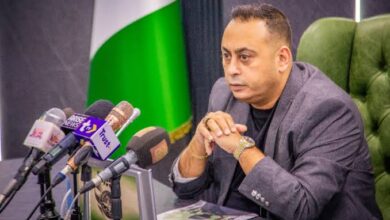
The Nigerian Correctional Service (NCoS) has called for stronger media support to change public perceptions about correctional facilities, inmates and the reintegration of former offenders into society.
The Service’s public relations officer, Chief Superintendent of Corrections Jane Osuji, made the call on Thursday when she led a delegation on a courtesy visit to LEADERSHIP Newspapers at its corporate headquarters in Abuja.

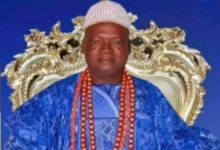


Osuji, who is the first female spokesperson of the NCoS, said the visit was part of her media familiarisation programme following her appointment to the position late last year.
She was accompanied by Superintendent of Corrections Monday Chukwu Emeka and Assistant Superintendent of Corrections Anayo Okoro, both of the Public Relations Unit at the NCoS National Headquarters, Abuja.
Speaking during the visit, Osuji described the media as a critical stakeholder in the Service’s efforts to educate Nigerians about its mandate and ongoing reforms.
“My mission here today is just to formally present myself as the service Public Relations Officer. Late last year, I was appointed to the service Public Relations Office.
“I know my responsibilities. I know my first stakeholders. People that without them, I would be blinking and dancing in the dark. That is the media,” she said.

She said LEADERSHIP was one of the media organisations she considered important to her familiarisation programme, noting that the newspaper and the NCoS had maintained a cordial relationship over the years.
Osuji commended LEADERSHIP for what she described as fair and balanced reportage, saying the newspaper had continued to hold government institutions accountable while maintaining professionalism.
“I know that as a government institution you can’t always have it positive. But even when you have to do your job of holding those accountable, you have been fair in doing that. And we recognise that as a service,” she said.
She, however, expressed concern that the role of corrections in Nigeria’s criminal justice administration remained largely underreported, saying outdated perceptions about imprisonment had contributed to the problem.
“From our research, we realise that corrections being part of the criminal justice administration is underreported,” Osuji said.
She explained that many Nigerians still believed that an offender’s journey ended once he or she was sentenced and taken into custody.
“A lot of people just feel that once offenders are sentenced and they are brought to us, that’s the end of the journey. That’s the end of the matter. And then once you hear somebody has been to prisons, that’s the end of his life.
“But the philosophy has changed. A lot has changed,” she said.
According to her, the NCoS is now focused on correction, reformation, rehabilitation and reintegration, with programmes designed to prepare inmates for productive lives after release.
She said the Service had commenced an enlightenment campaign to educate Nigerians about its mandate, inmate welfare and the various programmes being implemented across correctional facilities.
The campaign, she explained, would spotlight vocational and educational training, healthcare, psychological support, religious counselling and reintegration initiatives.