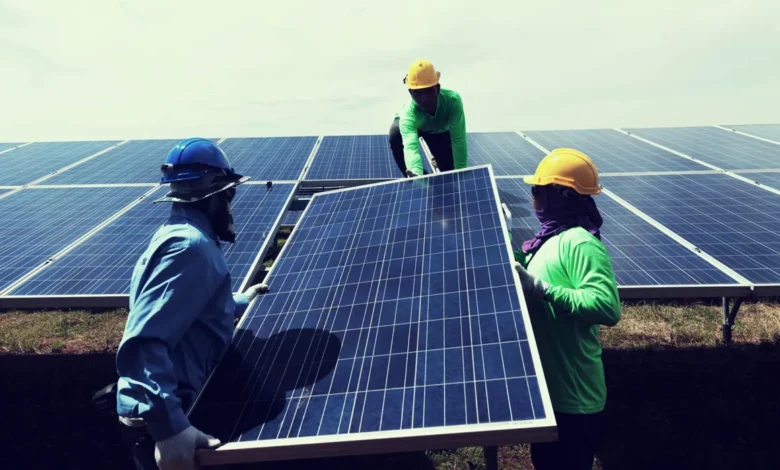
Nigerian universities struggling with persistent electricity shortages could soon receive a major boost, following a proposed $500 million investment in solar energy projects.
The funding plan was unveiled on Thursday in Abuja during the launch of the Tinubu Light Initiative, organised by the National Board for Technology Incubation (NBTI), an agency of the Federal Ministry of Science and Technology.

Speaking at the event, the Chief Executive Officer of renewable energy company Gigawatt Global, Yosef Abramowitz, disclosed that the firm would provide up to $500 million in project financing. He explained that the funding would cover up to 90 per cent of the cost of solar power projects for universities, subject to internationally bankable power purchase agreements and agreed project milestones.
“We’re honoured to be able to present up to `$500 million in project finance. That will represent 90 per cent financing for solar power plants at universities, which will also anchor power supply to the rural communities surrounding them,” he said.
Abramowitz observed that many universities across the country rely heavily on expensive diesel generators, resulting in limited electricity supply that often lasts only a few hours each day.
“How do you run a university in three, four or five hours? How do you not have internet because you don’t have electricity?” he asked.
He said each solar power plant is expected to generate between 10 and 20 megawatts of electricity, enough to meet the energy needs of the host institution while supplying excess power to neighbouring rural communities through prepaid metering systems.
“The plants will produce more power than the universities need. The surplus electricity will be supplied to the surrounding communities through prepaid metering systems, helping to expand access to reliable electricity,” he said.
According to him, the initiative is designed to reduce universities’ dependence on diesel-powered generation, cut energy costs and promote cleaner, more sustainable electricity.
“We want to bring down your costs, increase the amount of energy, make it green and sustainable, and empower the communities around each of these universities,” he added.
Abramowitz also said the projects would prioritise local content by engaging Nigerian manufacturers and service providers wherever possible. He noted that local firms would oversee the operation and maintenance of the solar facilities, making the projects more durable and sustainable than smaller standalone mini-grid systems.
He added that improved access to affordable and reliable electricity would allow universities to redirect more resources towards teaching, research and other core academic activities.
The proposed investment comes at a time when Nigeria’s tertiary institutions are grappling with rising energy costs, with many spending millions of naira annually on diesel to power lecture halls, laboratories, hostels and research facilities.