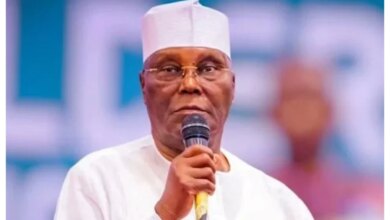
Nigeria’s presidential election is scheduled for 16 January 2027, meaning that, from 1 August 2026, the poll will be about five months and 15 days away. Former Vice-President Atiku Abubakar is regarded as one of the leading opposition figures ahead of the election.
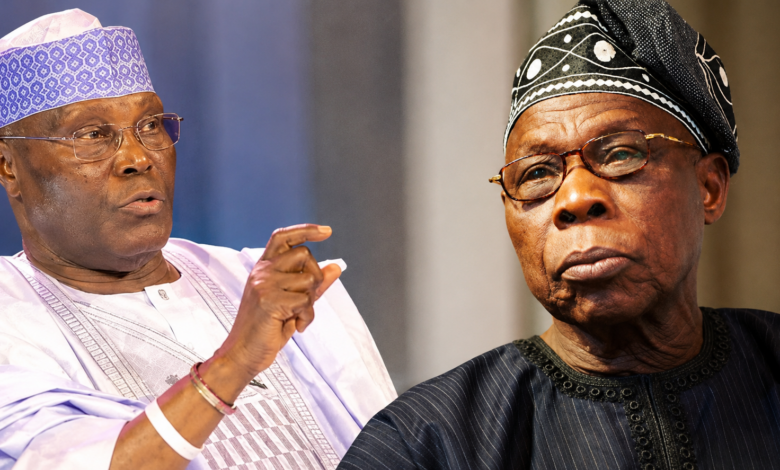
As political activity intensifies, comments made by former President Olusegun Obasanjo about Atiku have returned to public attention. Obasanjo previously described his decision to choose Atiku as his running mate in the 1999 presidential election as one of the mistakes of his political career.
The remarks were first made in June 2022 but have resurfaced as Atiku remains active in opposition politics ahead of Nigeria’s 2027 general election.
Obasanjo did not mention Atiku by name during the speech. However, Atiku was his running mate in 1999 and served as Nigeria’s vice-president throughout Obasanjo’s civilian administration from 1999 to 2007.
Speaking during an event at the Olusegun Obasanjo Presidential Library in Abeokuta, Ogun State, Obasanjo said: “One of the mistakes I made was picking my number two when I wanted to become the President. But because it was a genuine mistake, God saved me.”
The former president made the statement while answering questions from secondary school pupils who attended the final of the National Exhibition and Awards organised by Students for the Advancement of Global Entrepreneurship.
Obasanjo recalls two major political decisions
Obasanjo identified another decision that he believed could have had serious consequences for his life.
He recalled refusing an offer of asylum after being warned that the military government of General Sani Abacha planned to arrest him.
According to Obasanjo, an American ambassador informed him of the planned arrest and said the United States had asked for asylum to be offered to him.
Obasanjo said he rejected the offer, adding that the decision could have cost him his life. He was later imprisoned during the Abacha military government before being released following Abacha’s death in 1998.
Reflecting on both incidents, he said God had protected him from the consequences of decisions that might otherwise have ended badly.
The former president’s comment about choosing his deputy was widely understood as a reference to Atiku, although the exact words quoted by Punch did not include the former vice-president’s name.
That distinction matters because describing the statement as a direct accusation against Atiku would go beyond what Obasanjo said at the event.
Obasanjo and Atiku’s troubled political relationship
Obasanjo selected Atiku, then governor-elect of Adamawa State, as his running mate under the Peoples Democratic Party ahead of the 1999 election.
Atiku consequently did not take office as governor. His running mate, Boni Haruna, became governor of Adamawa State after the Obasanjo-Atiku presidential ticket won the election.
The pair governed together for eight years, winning a second term in 2003. Their political relationship later deteriorated amid disagreements over presidential succession, control of the PDP and the direction of the administration.
Obasanjo has repeatedly criticised Atiku’s conduct during their time in office. Atiku and his supporters have also rejected several of Obasanjo’s claims and accused the former president of attempting to rewrite their political history. The long-running dispute remains politically important because Atiku continues to play a prominent role in Nigeria’s opposition movement.
Atiku contested Nigeria’s presidency in 2023 but lost to Tinubu. He has remained politically active and is still viewed as a possible presidential contender in 2027.
His ambitions have created debate within the African Democratic Congress, where several senior opposition figures are seeking influence.
Some political observers believe Atiku’s experience, national connections and support in parts of northern Nigeria make him a strong opposition figure.
Others argue that repeated presidential contests, internal party disputes and disagreements over zoning could weaken his ability to unite a broad coalition.
Obasanjo’s resurfaced remarks are therefore likely to be used by Atiku’s political opponents. However, they remain the personal assessment of a former president and are not evidence of wrongdoing.
Obasanjo raises concerns over money politics
Beyond his comments about his former deputy, Obasanjo used the event to discuss the barriers facing young Nigerians who want to enter politics.
He said the high cost of elections made it difficult for younger candidates to compete against older and wealthier politicians.
Obasanjo noted that he became Nigeria’s military head of state at the age of 39 and returned as an elected civilian president 20 years later.
He questioned how young people could gain national leadership positions when many leading candidates were in their seventies or eighties and political campaigns required large amounts of money.
The former president also urged the pupils to respect religious differences. He said no person had the right to describe another person’s faith as inferior and encouraged young Nigerians to practise tolerance.
Obasanjo’s comments about Atiku continue to attract attention because of their troubled history and the former vice-president’s continuing political ambitions.
New Daily Prime: Read the latest Nigerian political reports from New Daily Prime