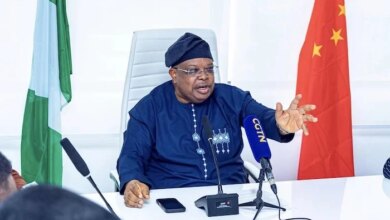
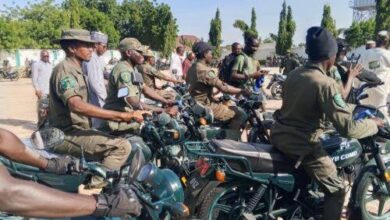
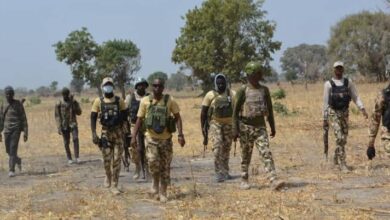
Fear has taken an unusual form in Osun State ahead of Saturday’s governorship election, while residents and even political actors are concealing party colours and insignia for fear of being mistaken for supporters of rival camps amid a wave of killings.
The development has turned ordinary political symbols, including caps, T-shirts, and other campaign materials, into potential security risks in parts of the state.
The Nigeria Police Force has documented at least 30 politically motivated killings in Osun, while the non-partisan Kimpact Development Initiative recorded 56 election-related violent incidents and 14 deaths in the state over the past year.
The figures have deepened anxiety ahead of the three-way contest involving Governor Ademola Adeleke of the Peoples Democratic Party (PDP), the All Progressives Congress candidate (APC), Bola Oyebamiji, and the African Democratic Congress candidate (NDC), Najeem Salaam.


READ RELATED NEWS UPDATES
The Inspector-General of Police, Tunji Disu, has responded with a major security deployment He announced that at least four officers would be stationed at each polling unit across the state.
But the increased security presence has not entirely dispelled apprehension among residents.
Chairman of the Osun State Civil Societies Coalition, Waheed Lawal, said the atmosphere has been tense. He cited violence and public distrust of the security agencies.
Lawal said, “There is tension and people are currently afraid because of the violence here and there, and because of what the security agencies are doing, especially the police. People have lost confidence in them.”
He said the overlap between political violence and cult-related attacks had made it difficult to distinguish one from the other. He alleged that cultists had become embedded in political structures.
He said, “Some of the violence is cult-related, but you can hardly differentiate between political and cult killings now because these cultists have integrated themselves into politics.”
Executive Director of the Socio-Economic and Civic Rights Advocacy, Emmanuel Olowu, said political desperation had intensified the atmosphere of insecurity, although the removal of the former state Commissioner of Police, Ibrahim Gotan, had reduced some agitation, according to him.
Olowu said, “There is tension; people are afraid, and the political attacks have not stopped.”
He urged the police to demonstrate neutrality and professionalism.
The Executive Director of the World Institute for Peace, Lamina Kamiludeen, put the number of deaths between January and August at 14. He warned that the violence could outlive the election unless the eventual winner confronts cultism and political thuggery.
Kamiludeen said, “Our observation is that no one has a monopoly of violence in the coming election.”
Accord chairman Victor Akande acknowledged the tension but expressed optimism that the situation would improve before polling day.
APC spokesman Kola Olabisi, however, dismissed reports of widespread tension within the party. According to him, the candidate is but confident of victory and that the party trusts the police to maintain order.
As it stands now, however, the most telling sign of Osun’s unease may be found not in campaign rallies, but in the quiet disappearance of party colours from the streets.