The Osun governorship election is entering its final and most competitive stage, with Governor Ademola Adeleke of the Accord Party, APC candidate Bola Oyebamiji and ADC candidate Najeem Salaam fighting for votes in local government areas where no single contender appears certain of victory. The election holds on Saturday, 15 August 2026, and voters in Osogbo, Olorunda, the three Ife councils, Odo Otin, Ilesa East and Iwo could prove decisive in determining who governs the state for the next four years.
The contest has moved beyond traditional party strongholds, with the leading candidates relying on local political figures, running mates, former governors and community influence to expand their support.
Adeleke is seeking another term on the platform of the Accord Party, while Oyebamiji is attempting to return the All Progressives Congress to Government House. Salaam, a former Speaker of the Osun State House of Assembly, is running for the African Democratic Congress and is benefiting from the continued political influence of former governor Rauf Aregbesola in some parts of the state.
All three major candidates are from Osun West Senatorial District, adding another layer to a race in which local loyalties could matter almost as much as party affiliation.
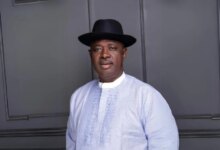

Osogbo, Olorunda emerge as major Osun election battlegrounds
Osogbo and neighbouring Olorunda are among the areas expected to attract the closest attention.
Adeleke has influential supporters in the state capital, while senior APC figures are also working to strengthen Oyebamiji’s position. Salaam, meanwhile, could benefit from Aregbesola’s considerable political following in both councils.
This makes the two local government areas difficult to predict.
The three main parties are likely to secure meaningful numbers of votes there, meaning the size of each candidate’s margin could become more important than simply finishing first.
The Ife axis presents another complicated contest.
Adeleke is expected to benefit from the influence of his running mate, Kola Adewusi, and former PDP National Secretary Wale Oladipo in Ife Central, Ife East and Ife South.
Oyebamiji, however, has his own local advantage because his running mate, Benjamin Adereti, is from Ile-Ife.
The result could therefore depend on which campaign succeeds in turning political influence into actual votes on Saturday.
Odo Otin, Ilesa East and Iwo could shift the balance
In Odo Otin, former governor Olagunsoye Oyinlola’s political camp could help the APC, but Osun House of Assembly Speaker Wale Egbedun remains an important factor for Adeleke’s side.
That makes the council another area where neither camp can comfortably assume victory.
Ilesa East could be even more unpredictable.
Oyebamiji’s APC has political structures in the area, but Aregbesola’s influence could strengthen Salaam and limit the APC candidate’s margin.
Salaam is also expected to perform strongly in Ejigbo, his home local government, while his previous eight years as Speaker could help him draw votes beyond his immediate base.
Iwo is another area to watch.
Adeleke has the support of former Secretary to the Osun State Government Moshood Adeoti, but APC figures are also working to prevent the governor from building a decisive advantage there.
The calculations show why predictions of a sweeping victory by either Accord or APC should be treated cautiously.
Both parties have publicly claimed they can win all 30 local government areas, but those statements are campaign predictions rather than independent assessments of the likely result.
Adeleke, Oyebamiji, Salaam set out competing plans
The battle for undecided areas comes as the leading candidates sharpen their policy messages.
At an Arise News town hall in Osogbo, Adeleke, Oyebamiji, Salaam and AAC candidate Olajide Esan separately outlined what they would do if elected.
Adeleke defended his record in office, pointing to roads, healthcare, agriculture and security.
He said his administration had constructed about 350 kilometres of roads, with another 160 kilometres under construction, rehabilitated about 200 health centres and purchased 31 tractors for agricultural programmes. Those figures are claims by the governor and should be read as part of his re-election case rather than independently audited figures.
Adeleke also rejected suggestions that he was worried about what his supporters describe as “federal might”.
“I am a bulldozer. I am talk and do. I am not afraid of federal might and governors backing the APC candidate,” he said.
He urged voters to remain peaceful and said: “It is the Osun people that will decide.”
The governor’s campaign has recently accused police of targeting Accord members, allegations covered by New Daily Prime in Osun poll: Adeleke alleges police clampdown on Accord. Police have separately warned that anyone attempting to disrupt the election will be arrested.
Oyebamiji puts poverty, agriculture at centre of campaign
Oyebamiji said an APC administration under his leadership would focus on reducing hunger and poverty while investing in agriculture, education, healthcare and human capital.
“We want to banish hunger and poverty. I want to invest seriously in agriculture, education, and health,” he said.
He rejected claims that the Federal Government planned to use its influence to secure his victory and said he believed voters were ready for a change of government.
Oyebamiji also challenged Adeleke’s record on public spending, raising questions about federal allocations received by the state and alleging that development had been concentrated in a small number of areas. Those claims remain politically disputed and should not be treated as established fact without independent financial evidence.
Salaam promises peace, Esan pushes transparency
Salaam is campaigning on experience, security and what he describes as people-centred government.
The ADC candidate said he would build on successful policies of previous administrations while correcting weaknesses he sees in the current system.
He also argued that political thuggery and violence remain serious concerns and presented himself as the candidate capable of restoring peace.
AAC candidate Olajide Esan, meanwhile, has proposed an Osun residents database and a public financial dashboard that would allow residents to track government spending.
He said greater transparency would help citizens hold government officials accountable.
Security tightens ahead of Saturday’s vote
Security has become an important part of the final days of the campaign.
The Police Service Commission has deployed officials to monitor the conduct of police personnel during the election, while 15,000 police officers have been deployed for the poll.
The commission said officers must remain impartial and protect citizens’ right to vote freely and peacefully.
New Daily Prime has also reported on rising tensions surrounding the election, including the controversy over remarks attributed to Senator Francis Fadahunsi in APC Senator Allegedly Orders Killing of Accord Supporters.
The senator later said his remarks had been misunderstood and that he meant defeating Accord at the ballot box rather than encouraging physical violence.
With the election only days away, voters should rely on official information from INEC and authorised security agencies, avoid confrontations and report suspected intimidation or electoral offences through recognised channels.
The final result will depend not simply on which candidate controls his traditional stronghold, but on who performs best across the competitive councils where support is divided.
What readers should know: The Osun election remains competitive, and no candidate can legally or politically claim victory before ballots are counted. Adeleke, Oyebamiji and Salaam all have identifiable strongholds, but the result could turn on margins in Osogbo, Olorunda, the Ife councils, Odo Otin, Ilesa East and Iwo. Voters should judge campaign promises separately from verified government records and wait for INEC’s official declaration before accepting any result.
Related news