The Presidency on Saturday criticised members of the Catholic Bishops’ Conference of Nigeria over their account of a recent meeting with President Bola Tinubu, declaring that the clerics were not the only custodians of the truth about the state of the country.
It also faulted the Archbishop Emeritus of the Catholic Archdiocese of Abuja, Cardinal John Onaiyekan, for revealing details of the closed-door engagement, describing the disclosure as inappropriate and contrary to the confidentiality expected at such a high-level meeting.
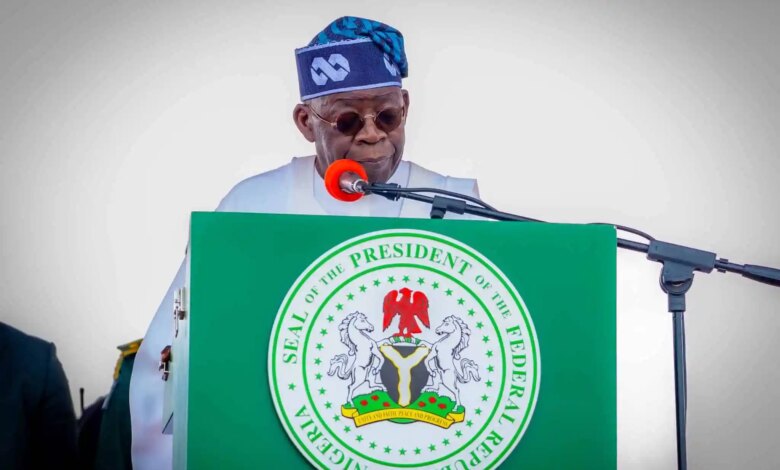
Presidential aide, Temitope Ajayi, defended Tinubu’s response to the bishops in a statement, arguing that the clerics’ assessment of the economy, insecurity and governance represented only one perspective which could be challenged with facts.
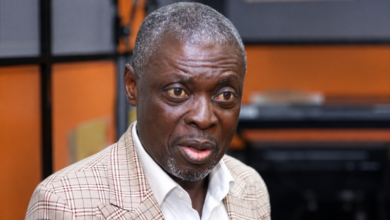
The controversy followed Onaiyekan’s appearance on Arise Television’s Prime Time on Friday, during which he spoke about the July 28 meeting between Tinubu and a delegation of the Catholic Bishops’ Conference at the Presidential Villa, Abuja.
According to the cardinal, the bishops raised concerns about the worsening economic hardship, insecurity and the state of democracy, but the President disagreed with their conclusions and insisted that his administration was recording progress.
Bishops Defend Position
Onaiyekan said the document presented to Tinubu was not based on the personal views of the clerics who attended the meeting, but reflected the collective position of the bishops’ conference.
He explained that the submission was prepared after extensive consultations and several reviews.
“Let me say first and foremost that the statement read by our president was not just put together at random. It was carefully considered and with wide consultation. The Bishops’ Conference is bigger than the group of us that were there, but it is very representative of the Bishops’ Conference.
“So, it is the Catholic Bishops’ Conference that produced that document. It was written, rewritten and corrected. So it was not done at random, nor did we deliver it with levity,” he said.
The former Abuja archbishop maintained that the bishops had no political interests or ambitions but were duty-bound to speak about the suffering of Nigerians.
“I think I have an opportunity in this programme to remind Nigerians that, as bishops, we have no ambitions to take Mr Tinubu’s job or anybody else’s job. We are not politicians running for office.
“We are, first and foremost, religious leaders who feel we have a duty, not just to preach our religious doctrines, but also to address the lives of our people, both those who are our members and those who are not. You can see that from the content and the tone of our statement,” Onaiyekan said.
He added that the delegation told the President that some of the government’s economic policies were worsening the hardship experienced by ordinary Nigerians.
However, Tinubu, according to the cardinal, rejected the assessment and maintained that the economy was improving.
“When the nation is bleeding, you cannot expect a polite meeting with the head of state. We told him the economy is not helping our poor people; he told us the economy is doing fine. Frankly speaking, he told us quite clearly that he did not agree with us.
“We didn’t expect him to agree with us. We have done our duty, we have delivered our message, and we have a feeling that, somehow, along the line, somebody will show him a few of the things we said,” he stated.
Tinubu Unhappy With Criticism — Cardinal
Onaiyekan said Tinubu’s reaction during the meeting suggested that he was displeased with the bishops’ presentation.
He accused some individuals around the President of presenting an unrealistic account of conditions in the country.
“You asked me what I saw on the face of the President in reaction. I was not surprised that he was not looking very happy, nor were his colleagues who were there.
“We knew that this was different from the kind of statements that our President keeps receiving from all kinds of people. That is one of the things that worries us: there are so many people hanging around Mr President, giving him a rosy picture of what the country is, which it is not,” he said.
The cardinal said the bishops deliberately avoided presenting a flattering picture because they believed Tinubu needed to understand the reality confronting Nigerians.
“We felt that we had a duty not to do that. Indeed, we have the obligation to help him appreciate the reality of the situation in which we find ourselves.
“That is the reality that we painted, which I know is not the kind of thing that he wanted to hear. And his reply showed that very clearly,” Onaiyekan added.
Presidency Faults Bishops’ Assessment
Responding to the interview, the Senior Special Assistant to the President on Media and Publicity, Ajayi, accused the bishops of concentrating on the country’s challenges while paying insufficient attention to the achievements of the administration.
Ajayi said the bishops requested the meeting and were allowed to present their concerns freely, while the President listened and responded with facts.
“Except for their grudging acknowledgement of the benefits of NELFUND, they were dismissive of the other great things done by the administration. The bishops were notably acerbic in their submission, but the President listened to them patiently and responded.
“That should ordinarily have been where the matter rested. None of the issues raised by the bishops is beyond scrutiny or rebuttal. Their assessment is neither scripture nor an article of faith. It is a perspective, and perspectives can be challenged with facts and evidence,” Ajayi said.
The presidential aide argued that improvements in the regular payment of salaries and pensions across several states should not be overlooked because many Nigerians were still facing hardship.
“They know, from lived experience rather than official pronouncements, that there has been real relief in the regular payment of salaries and pensions. While this does not erase the discomfort many Nigerians still face, it is wrong to dismiss or ignore those improvements casually,” he stated.
Ajayi said Tinubu’s disagreement with the bishops should not be interpreted as arrogance or indifference.
“So, when President Tinubu reminded the bishops of these facts during the meeting, he was not, as Cardinal Onaiyekan later suggested, being aloof or dismissive.
“He was presenting evidence to support his argument that the country is not standing still. A disagreement over facts should not be interpreted as arrogance,” he added.
Ajayi also rejected the bishops’ description of Nigeria as a bleeding nation, insisting that their assessment of the country was incomplete.
He said the President’s understanding of national issues was based on classified intelligence, operational reports and consultations unavailable to most members of the public.
“The President argued that the bishops’ characterisation of the country’s current condition was incomplete and, in several respects, inaccurate. He pointed to measurable progress on the economic, social and security fronts.
“He did not pretend that Nigeria’s problems had disappeared. He acknowledged that significant economic and security challenges remain.
“His point was that the country has emerged from a dark tunnel, that his administration has laid the foundations for recovery, and that the next phase is to ensure the greatest number of Nigerians feel the gains,” Ajayi said.
He added that the administration had taken difficult measures to prevent the fiscal crisis it inherited from worsening.
“It is easy to compile a list of national problems. It is far more difficult to acknowledge the disasters that have been averted.
“Whatever anyone thinks of President Tinubu’s policies, it is impossible to ignore the fiscal crisis he inherited and the measures taken to pull the country away from the edge of a financial cliff,” the aide stated.
Ajayi said the administration’s policies had helped restore greater fiscal stability in several states.
He also disclosed that the President received daily intelligence briefings, read about 10 newspapers every day, watched television reports and consulted widely with friends, officials and other stakeholders.
“Against that background, the suggestion that President Tinubu somehow needs only the Catholic bishops to acquaint him with the truth is an overreach.
“They are an important constituency, but they are by no means the exclusive custodians of the national mood or the nation’s conscience,” Ajayi added.