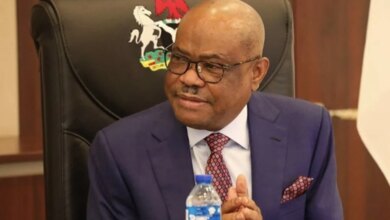
The Senate has denied claims that Senate Leader Opeyemi Bamidele and Chairman of the Senate Committee on Media and Publicity, Yemi Adaramodu, sponsored the controversial proposal seeking penalties for preaching, hawking and trading inside commercial vehicles, as criticism over the bill continues to spread.
The clarification came after widespread social media posts and public commentary linked the two lawmakers to the proposed amendment, which prescribes a N50,000 fine for anyone convicted of preaching, hawking, or trading in commercial vehicles.
Speaking in an interview with journalists, Adaramodu said the allegation was false and urged Nigerians to distinguish between legislative debate and the process required for a proposal to become law.
READ RELATED NEWS UPDATES
Tinubu rejects automatic tickets for lawmakers, empowers governors to decide
Senate wants NNPC’s auditors to explain N210trn unreconciled figure
Senate not for content creation – Adaramodu slams Natasha over seating row
He said neither he nor Bamidele introduced the proposal before the Senate.


Adaramodu said, “I did not raise my hand, nor did the Senate Leader. The two of us did not propose any motion.”
He explained that the amendment under discussion originated from the House of Representatives as part of a wider review of the Federal Road Safety Corps (FRSC) Act aimed at strengthening road safety measures.
According to him, public discussion around the bill has exposed a broader misunderstanding of how legislation is made in the National Assembly.
Adaramodu said many Nigerians wrongly assume that once lawmakers debate an issue, it automatically becomes law.
He explained that every bill must pass through several constitutional stages before it can take legal effect.
He noted that after debate in one chamber, a bill must be considered by the Committee of the Whole, adopted by the chamber if approved, transmitted to the other chamber for concurrence, harmonised where necessary, and then forwarded to the executive for legal review before it is presented to the President for assent.
He said, “It is only after completing all those stages that a proposal can become law.”
The senator also pointed out that motions debated on the floor of either chamber are different from bills, explaining that resolutions arising from motions are advisory and do not have the force of law.
The controversy centres on the Federal Road Safety Corps (Amendment) Bill, 2026, which retains an existing provision imposing a N50,000 fine on anyone convicted of preaching, hawking, or trading inside commercial vehicles.
The proposal has attracted criticism from religious organisations, civil society groups, opposition politicians, and other Nigerians, many of whom questioned its timing amidst rising unemployment and economic hardship.
The Senate had earlier explained that the disputed provision was not newly introduced. According to the upper chamber, it has existed in the FRSC Act since 2007 and was simply retained during the amendment process rather than inserted as a fresh restriction.
Adaramodu maintained that although senators collectively take responsibility for the work of the chamber, it is inaccurate to attribute every proposal to its principal officers.
His remarks represent the Senate’s latest effort to correct public perception surrounding the bill and explain the legislative process behind it.
The debate over the amendment has also renewed public attention on how bills move through the National Assembly, with lawmakers facing increasing pressure to communicate proposed legislation more clearly before it reaches the final stages of consideration.