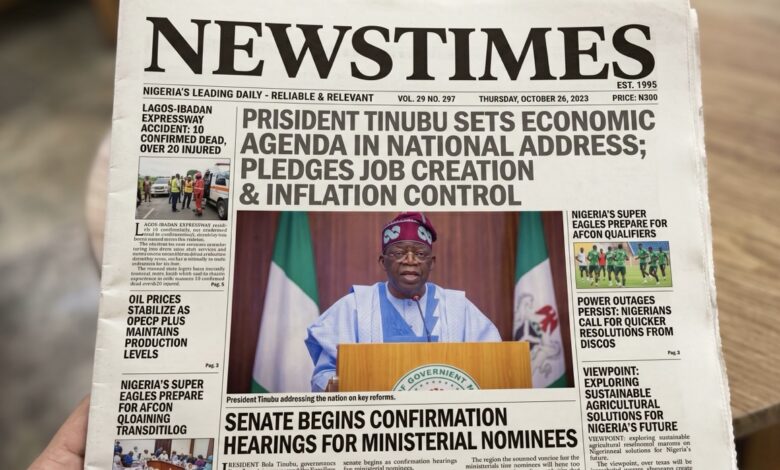
President Bola Ahmed Tinubu has invited the People’s Republic of China to partner with Nigeria through the sharing of geophysical data, advanced technology and technical expertise, rather than financial aid, as part of efforts to unlock the country’s vast marine resources and drive sustainable economic growth.
The invitation was conveyed by Nigeria’s Permanent Representative to the United Nations, Ambassador Jimoh Ibrahim, during a keynote address at the United Nations Sustainable Development Workshop on High-quality Development of the Marine Economy in Beijing. The workshop was held at the invitation of the Permanent Mission of China to the United Nations.
Speaking on behalf of President Tinubu, Ambassador Ibrahim commended China for its remarkable leadership in developing the global marine and blue economy, describing the Asian nation as a model of innovation and strategic investment in maritime development.
He reaffirmed Nigeria’s determination to emerge as one of the world’s leading blue economy nations, noting that the Tinubu administration had already laid the foundation for achieving that goal through the establishment of the Federal Ministry of Marine and Blue Economy.


According to Ibrahim, the creation of the ministry underscores the government’s recognition of the oceans as the next frontier for wealth creation, economic diversification and sustainable national development.
He stressed that the future of global prosperity lies beneath the oceans, urging nations to look beyond traditional economic indicators and embrace the immense opportunities presented by the blue economy.
The envoy explained that Nigeria’s priority is not financial assistance but strategic cooperation with China through access to geophysical and nautical data, technology transfer, innovation and investment that would enable the country to fully harness the economic potential of its marine resources.
“The hidden treasure that comes with it (ocean) calls for collective action to shift the narrative from poverty to prosperity,” Ibrahim said, adding that President Tinubu was extending an open invitation to China to deepen collaboration in the blue economy for the benefit of Nigeria, Africa and the wider global community.
He further called for stronger international cooperation to address pressing challenges confronting the marine sector, including climate change, weak cross-border governance and the unsustainable exploitation of ocean resources.
Despite these challenges, Ibrahim maintained that they should not deter countries from tapping into what he described as the “ocean of prosperity,” urging governments, development institutions and private sector stakeholders to work together in unlocking the sector’s enormous economic potential.
The ambassador also urged the international community to move beyond policy discussions and embrace practical solutions by leveraging innovation, artificial intelligence, circular economy models and data-driven approaches to ensure sustainable development of the blue economy.
In addition, he proposed that the International Monetary Fund (IMF) establish a zero-interest financing window for member states seeking to develop their blue economy sectors, arguing that such a facility would provide the financial support needed to accelerate investments in marine infrastructure and unlock new opportunities for economic growth.
Reaffirming Nigeria’s commitment to deeper cooperation with China and other global partners, Ibrahim said President Tinubu remains committed to building a strategic partnership anchored on knowledge sharing, innovation and sustainable development rather than dependence on aid.