Minister of Works, Engr. David Umahi, has explained that the route alignment of the Lagos-Calabar Coastal Highway was altered due to engineering challenges encountered during soil investigations.
He insisted that the decision was not influenced by private interests.
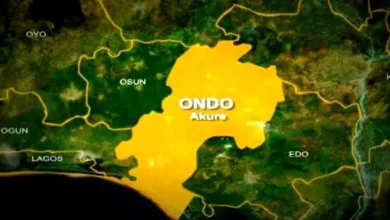
Umahi spoke yesterday during an inspection of the Ondo State axis of the project in Ilaje local government area, where he assessed the progress of work on the coastal infrastructure.
The minister said the original design was to construct the highway close to the shoreline, but technical studies revealed difficult terrain conditions that made the initial route expensive and challenging to execute.

He said investigations also showed the presence of deep layers of peat, a weak soil material that would require extensive excavation and replacement before construction could proceed.
According to him, some sections of the proposed alignment had peat deposits extending between 40 and 50 metres deep, while unsuitable materials expected from the sea and the presence of major water crossings further increased the complexity and cost of the project.
Umahi said the decision to redesign the route followed detailed engineering reviews aimed at delivering the project in a more cost-effective manner.
He said, “I saw one morning where the Secretary of Afenifere was accusing the Ministry of Works of diverting the Coastal Highway. Of note was when he said it was diverted upland because of people who own estates there. That is far from the truth. The Coastal Highway was originally planned to follow the coastline because that was our preference. However, engineering is very dynamic.
“When we designed this section of the Coastal Highway, it was intended to pass about two kilometres from the shoreline. But the soil tests, which form the basis of engineering design, revealed a major challenge. Along that route, we encountered very poor soil known in engineering as peat, extending more than 40 to 50 metres deep.”
The minister explained that constructing long bridges across identified water crossings would have made the project significantly more expensive, prompting the government to adopt a new alignment after further studies.
He said the Federal Government was committed to applying prudent engineering solutions to ensure the highway was delivered to standard while protecting public resources.
Umahi also provided an update on the progress of the project, saying Section One, covering 7.47 kilometres from Victoria Island to Eleko Village, had been completed.
He added that Section Two, stretching about 50 kilometres from Lagos towards the Ogun border, was about 70 per cent completed, while Sections 3A and 3B, covering approximately 67 kilometres, were also progressing.
The minister said Section Four, which extends through Ogun State into Ondo State, covers about 82 kilometres, is currently ongoing.
He further stated that the longest stretch of the highway, located in Akwa Ibom State, covers about 180 kilometres, while other sections through Rivers, Bayelsa and Delta states would be addressed as the project progresses.
Umahi expressed confidence in the capacity of the construction company handling the project, saying the firm had demonstrated strong organisational and technical ability.
He said foundation work currently ongoing accounts for a major part of the construction process, adding that concrete pavement works would commence within the next two months.