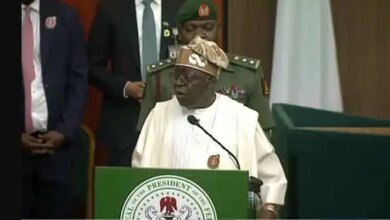
‘Why Leave Those Sections Blank’ – Dalung Asks Tinubu To Explain Blank School Qualification

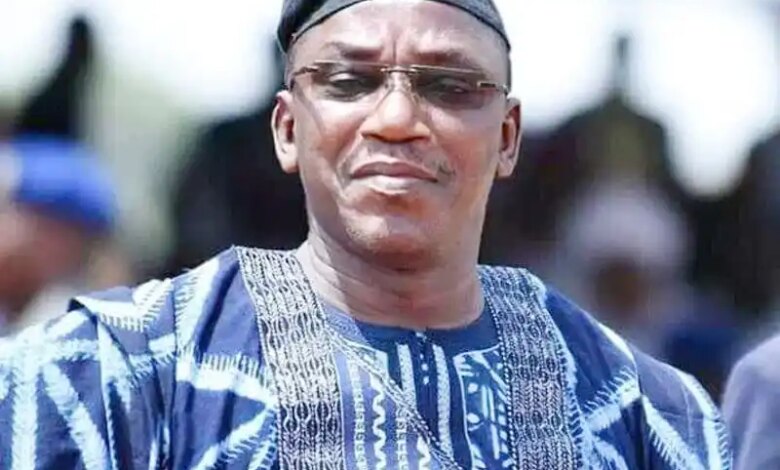
A former Minister of Sports, Solomon Dalung, has called on President Bola Tinubu to explain why details of his primary and secondary education were reportedly omitted from the personal particulars submitted to the Independent National Electoral Commission ahead of the 2027 presidential election.
Naijaonpoint reports that Dalung raised the concern in a statement posted on his 𝕏 account on Saturday after examining the candidates’ particulars published by the electoral body.
He clarified that his intervention was not an accusation against the President but an observation arising from the documents made available to the public by INEC.
Dalung stated, “I just read the published particulars of presidential candidates released by INEC for the 2027 election, and one thing immediately caught my attention.
“President Bola Ahmed Tinubu reportedly left the sections for his primary and secondary school qualifications blank, while listing only his university degree.”
Anticipating criticism from supporters of the President, Dalung stressed that he had not made any declaration of wrongdoing.
He, however, said the blank entries raised legitimate questions that required clarification from the Presidency.
“Now, before the usual attack ‘dogs’ arrive, let me be clear: this is not an allegation. It is an observation based on the documents made available by INEC.
“But it raises a question that deserves an answer. Why leave those sections blank?” he asked.
The former minister argued that Nigerians were entitled to an explanation, particularly because the presidency depended heavily on public confidence and credibility.
“If there is a perfectly reasonable explanation, Nigerians deserve to hear it. Public office, especially the presidency, is built on public trust. Trust flourishes where there is openness, not ambiguity,” Dalung stated.
Dalung Warns Against Selective Accountability
Dalung accused the administration and its supporters of demanding explanations from political opponents over omissions and inconsistencies in public documents while appearing reluctant to apply the same standard to the President.
According to him, affidavits, declarations and other official records had repeatedly been used to scrutinise opposition politicians.
Dalung further stated, “What makes this even more interesting is that this administration and its supporters have repeatedly insisted that public records, affidavits, declarations, and official documents matter.
“They have demanded explanations from political opponents over omissions, discrepancies, and technicalities. Fair enough. Accountability should indeed be taken seriously.
“But accountability cannot become selective.”
He maintained that Tinubu should be subjected to the same scrutiny as every other candidate seeking public office.
“The same standard applied to every other candidate should apply to the incumbent President. No more, no less,” he added.
The former minister said the issue went beyond questions about the particular primary or secondary schools attended by the President.
He explained that the controversy centred on the principle that people seeking public office should provide complete and accurate information in official records.
Dalung said, “This is not about whether someone attended a particular primary or secondary school. It is about the principle of full disclosure.
“If millions of ordinary Nigerians are expected to provide complete educational histories when applying for jobs, scholarships, security clearances, or public appointments, why should the occupant of the nation’s highest office be held to a lower standard?”
He again emphasised that his statement should not be interpreted as a verdict against Tinubu.
“Again, this is not a declaration of guilt. It is a call for clarity,” he stated.
‘Silence Fuels Speculation’
Dalung urged the Presidency to respond openly, arguing that transparency would help resolve public doubts more effectively than silence.
“The easiest way to put every question to rest is transparency. Silence rarely ends speculation; openness usually does.
“Nigerians are not asking for favours. They are asking for consistency,” he said.
He also cautioned against portraying questions about the President’s records as insults, disloyalty or hostility towards the administration.
Dalung added, “The presidency should never be an office where questions become insults, curiosity becomes disloyalty, or scrutiny becomes sacrilege.
“Those who seek the people’s mandate must also submit to the people’s questions.
“The burden of public office is not merely to obey the law; it is to inspire public confidence. That is democracy.”