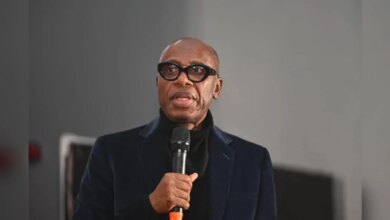
The minister of the Federal Capital Territory, Nyesom Wike, has claimed that All Progressives Congress (APC) lost the just concluded governorship election in Osun because of limited use of political influence by the Federal Government.
Wike made the disclosure while commenting on the outcome of the August 15 governorship election, which was won by Governor Ademola Adeleke.
According to the minister, the Federal Government deliberately refrained from deploying its full political machinery during the poll.
“If the President wanted to win Osun State election at all cost, I would have been there and we will win it, and there’s nothing the governor can do,” Wike said.
He added that what happened in Osun did not reflect the deployment of federal power, stressing that the outcome would have been different had the Federal Government brought its full political weight to bear.
“There was no Federal might used in Osun. When you see the force and might of the Federal Government, you will know,” he said.
Wike also suggested that Adeleke could have been an APC member under different political circumstances.
“Ordinarily, Adeleke would have been with APC if things had worked out well,” the minister said.
His comments come after the Independent National Electoral Commission (INEC) declared Adeleke, who contested on the Accord platform, winner of the election with 511,067 votes.
The APC candidate, Bola Oyebamiji, finished second with 444,815 votes. Adeleke won in 19 local government areas, while Oyebamiji secured victory in 11, giving the governor a margin of 66,252 votes.
Despite the APC’s defeat in Osun, Wike expressed confidence in Tinubu’s chances in the 2027 presidential election, describing the forthcoming poll as potentially easier for the President than the 2023 election.
“2027 elections will be the easiest one for the President compared to 2023,” he said.
The minister claimed that the opposition had been significantly weakened ahead of the 2027 elections.
“This time around, opposition has been crippled, homeless, no feather,” Wike said.
In a related development, the minister on Tuesday inspected areas affected by weekend flooding in Maitama, Abuja, amid growing concerns over the causes of flooding in the nation’s capital.
During the inspection, the minister visited a drainage area where a structure had allegedly been erected despite the plot being revoked more than a decade ago.
Lere Olayinka, Wike’s Senior Special Assistant on Public Communications and Social Media, said the location was originally allocated but revoked in 2011.
“FCT Minister, Nyesom Wike, visited some of the flooded areas in Maitama, Abuja, this morning.
“The spot here is a Drainage Area. It was allocated, but REVOKED in 2011. Structure was built on it,” Olayinka wrote on X while sharing footage of the inspection.
The visit followed heavy rainfall on Saturday that caused flooding in parts of Abuja, including Maitama.
The flooding has triggered renewed concerns over blocked waterways, construction on drainage channels and green areas, as well as inadequate drainage infrastructure.
Olayinka had on Monday defended the FCT Administration against criticism over the flooding, arguing that flooding in Abuja predated Wike’s tenure as minister.
He said the recent downpour caused temporary flooding in some parts of the capital before the water receded, while accusing activist and lawyer Deji Adeyanju of politicising the incident by blaming Wike.
According to Olayinka, parts of Wuse, Jabi and Lokogoma were affected by flooding in 2019, while Lokogoma, Efab Estate, Gudu and adjoining bridges experienced similar incidents in 2022.
He attributed some of the recurring flooding challenges to the rapid expansion of the Federal Capital Territory, arguing that drainage infrastructure, waste management and enforcement of town planning regulations had not kept pace with the city’s growth.
Olayinka also blamed the removal of drainage covers by scavengers, saying the practice leaves drainage channels exposed to refuse and contributes to the obstruction of waterways.