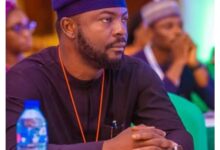
A chieftain of the Allied Peoples Movement (APM), Oluwaseun Adelore, has said Nigeria’s opposition parties still have time to overcome their differences and build a common platform capable of challenging President Bola Tinubu in the 2027 presidential election.
Adelore made the assessment during an interview on ARISE News on Wednesday where he described the political period ahead as long enough for negotiations, realignments and possible changes in the ambitions of major opposition figures.
“I don’t share that sentiment that what they’re trying to do is just a scratch on the surface. No, I see the 2027 general election not as a sprint. I see it as a marathon race,” he said.
His comments come at a significant stage in the opposition’s attempt to establish a common political front. Six opposition parties, including the ADC, APM, NDC, a faction of the PDP, PRP and SDP, participated in an August 31 summit in Abuja where discussions centred on greater cooperation and the possibility of a single presidential candidate.
The process has since moved beyond initial consultations. An opposition Central Leadership Committee held its inaugural meeting in September and adopted operating arrangements for the emerging alliance. The coalition has also discussed a proposed four-year Government of National Competence.
However, Adeloye acknowledged that the most difficult part of the arrangement could be the presidential contest itself.
Several prominent opposition figures already have separate political platforms and ambitions. Atiku Abubakar is the presidential candidate of the African Democratic Congress (ADC), Peter Obi is flying the flag of the Nigeria Democratic Congress (NDC), while Oyo State Governor Seyi Makinde is the APM candidate. INEC has confirmed the three among the presidential candidates for the January 16, 2027 election.
That makes the question of consensus more complicated than simply bringing opposition parties around one table. Any agreement on a single candidate could require one or more established contenders to relinquish their individual bids.
Adelore nevertheless believes political calculations can change as the election approaches.
“Many people come and all of them say that it’s their own candidate that should be the front runner. No, having people talking for them, you know, it might get to a stage when they will see that it could be any of us but Tinubu,” he said.
He pointed to Nigeria’s political history as evidence that politicians can sacrifice personal ambitions for a collective objective.
“I would say why not because what happened before Jonathan was removed? Somebody, some group of people sacrificed and now that is history. They are there now,” Adelore said.
READ RELATED NEWS UPDATES
His reference comes against a backdrop of mounting disagreements within the opposition camp. Earlier coalition discussions failed to produce the expected unified ticket, while some prominent figures subsequently established separate political arrangements.
In August, the ADC also said it could contest the election without a coalition, even though it viewed cooperation with other opposition groups as potentially useful.
Adelore said the opposition’s ability to reconcile these competing interests would shape its challenge to the incumbent.
“If they are so serious of removing Asiwaju Bola Ahmed Tinubu, for Asiwaju Bola Tinubu to make it in 2027 is for them to be divided,” he said.
He also rejected the idea that the current state of negotiations should be treated as final.
“October will start tomorrow. We still have October, we have November. They can still come together and make a headway,” he said.
The timeline matters because the 2027 presidential election is scheduled for January 16. With the presidential field already formally established, any late coalition arrangement would have to address not only candidate selection but also party structures, campaign organisations, supporters and the legal implications of changing tickets.
Adelore nevertheless believes the political space is still fluid.
“Anything can happen in politics. 24 hours is a very long time. Absolutely. So anything can still happen,” he said.
As for the opposition, the immediate challenge is therefore no longer about establishing whether unity is desirable. It is determining how competing presidential ambitions can be reconciled before the electoral calendar leaves less room for adjustment.
That unresolved question now sits at the heart of the 2027 opposition coalition debate.