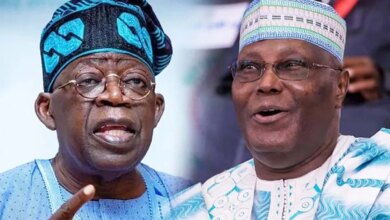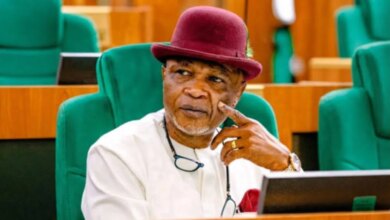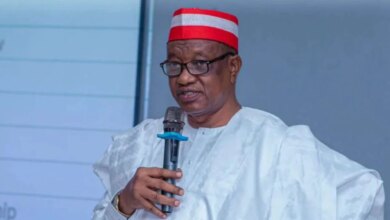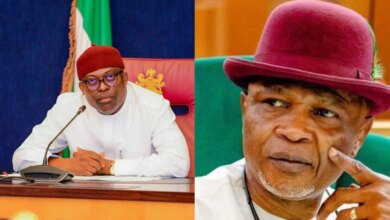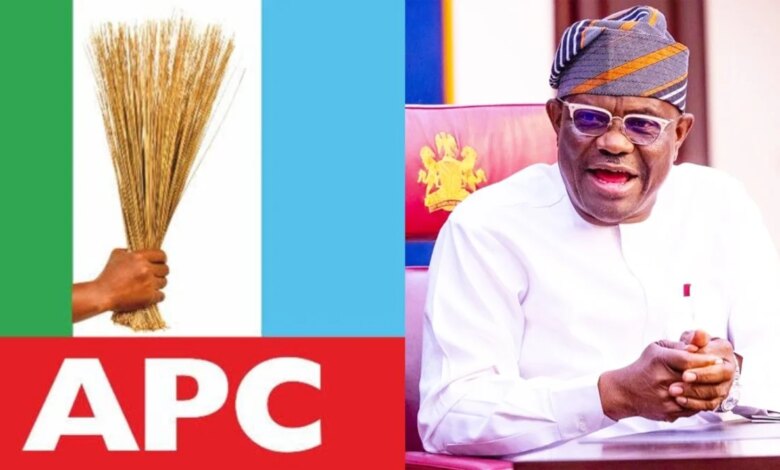
Top leaders and influential blocs within the All Progressives Congress (APC) are opposing the Rainbow Coalition being promoted by the Minister of the Federal Capital Territory, Nyesom Wike, ahead of the 2027 general elections.
The coalition, which brings together politicians from different political parties, has been presented by Wike as a platform for supporting President Bola Ahmed Tinubu’s re-election while allowing members to pursue their ambitions under different parties.
But some APC leaders are worried that the arrangement could create serious complications for the ruling party during the elections.
Their main concern is the possibility of voters becoming confused when presidential, National Assembly and state-level candidates backed by the same political bloc appear on different party platforms.

The concern is particularly strong in states where the coalition has produced or is supporting candidates who will compete directly against APC candidates.
Wike has consistently defended the arrangement, insisting that supporting Tinubu does not necessarily require politicians to join the APC.
The minister has argued that politicians can remain in their respective parties while working together for the President’s re-election.
He has also repeatedly maintained that the coalition is primarily built around Tinubu’s presidential ambition.
In August, Wike said the political realignment would produce a larger national Rainbow Coalition in support of Tinubu ahead of 2027.
However, powerful APC interests are said to be uncomfortable with the structure because of the possibility that it could weaken the party’s candidates in other contests taking place on the same day as the presidential election.
The issue has become particularly sensitive in states such as Rivers, Kwara, Gombe and Cross River, where political figures associated with the coalition are preparing to contest against candidates backed by the ruling party.
Wike, during a recent media engagement in Port Harcourt, Rivers State, pointed to his disagreements with some APC governors.
He specifically mentioned Imo State Governor and Chairman of the Progressives Governors Forum, Hope Uzodimma, as well as Kwara State Governor and Chairman of the Nigeria Governors Forum, AbdulRahman AbdulRazaq.
Speaking about his disagreement with AbdulRazaq, Wike said:
“Take for example, Kwara, he has been the one championing this campaign against me everywhere. Yes, I have confronted him too. I don’t talk about what I cannot defend,”
The FCT minister accused some of his political opponents of being unhappy with his decision to provide a political platform for aggrieved APC members who left the party.
He said such politicians could have joined forces with groups working against Tinubu but instead chose to work with him and support the President.
Wike has also maintained that he has not hidden his political position.
According to him, his disagreement with some APC governors should not be interpreted as opposition to Tinubu.
He has repeatedly said his priority is to secure victory for the President in 2027.
Why APC Leaders are Worried
The major issue for the APC leaders is the voting pattern of the electorate.
They fear that many voters, particularly those in rural communities, may not separate the presidential candidate they are being asked to support from the candidates contesting other elections under different party platforms.
The coalition’s structure allows a politician to campaign for Tinubu while simultaneously seeking votes for another party in a senatorial, House of Representatives or governorship contest.
That arrangement is already visible in Kwara State.
Senator Saliu Mustapha, who recently left the APC for the Peoples Democratic Party (PDP), has said his movement is part of the Rainbow Coalition and that his support for Tinubu remains intact.
Mustapha unveiled the Kwara chapter of the coalition in Ilorin on August 26 after leaving the APC.
He is now expected to contest the Kwara Central senatorial election on the PDP platform against AbdulRazaq, who is seeking the same seat on the APC platform.

The development has intensified the argument within the APC over whether the Rainbow Coalition can simultaneously strengthen Tinubu and weaken APC candidates.
The situation has also brought former Senate President Bukola Saraki and other political figures into the emerging Kwara arrangement.
Several aggrieved APC politicians have aligned with the PDP structure backed by Wike, creating a direct challenge to the APC leadership in the state.
The same pattern is beginning to emerge in other parts of the country.
In Gombe State, former Minister of Communications and Digital Economy, Isa Ali Pantami, emerged as the PDP governorship candidate after previously seeking the APC ticket. His movement has added another dimension to the coalition’s strategy in the North-East.
For APC leaders, the concern is that a voter who supports Tinubu at the presidential level could still vote for an opposition candidate at the National Assembly or governorship level.
They believe such a voting pattern could reduce the number of APC lawmakers elected alongside Tinubu.
The Situation in Rivers
The situation is even more complicated in Rivers State, where the Rainbow Coalition has become a major political force ahead of the 2027 governorship election.
The coalition brings together politicians from different parties, including the APC, PDP and Labour Party.
Wike had earlier said the coalition would collectively determine who would govern Rivers after Governor Siminalayi Fubara.
The minister initially denied that he had personally endorsed a candidate, saying the coalition would make the final decision.

That position later changed politically as Kingsley Chinda emerged as the APC governorship candidate and gained the backing of the coalition.
Governor Fubara subsequently publicly joined the political arrangement and declared support for Tinubu and Chinda.
“I am supporting our Rainbow Coalition. President Bola Ahmed Tinubu is our President, and it is the one we are supporting. The governorship candidate is the candidate I am supporting, and anybody who believes in me will support every candidate under the Rainbow Coalition,” Fubara said.
Wike has since intensified his campaign for the coalition in Rivers State.
In September, he publicly referred to Chinda as the person he expects to succeed Fubara and urged members of his political structure to support the coalition’s candidates.

But the Rivers arrangement has also generated questions about the interests of politicians from the riverine and upland parts of the state.
Some politicians argue that the choice of candidates could determine whether the coalition succeeds in maintaining unity across the different blocs.
There are also concerns over the fact that politicians under the coalition could appear on different party platforms while campaigning around a common political agenda.
That has created a difficult question for voters: whether they are expected to vote for the individual candidate, the political party or the broader coalition.
A similar situation is developing in Cross River, where politicians from different opposition and ruling-party tendencies are reportedly working together against the incumbent political structure.
APC leaders want intervention
The growing disagreements have reportedly increased pressure on the APC leadership and the Presidency to clarify the relationship between the ruling party and the Rainbow Coalition.
Those opposed to the arrangement believe the President’s interest should not be separated from the electoral strength of the APC.
They argue that winning the presidency while losing a significant number of National Assembly seats could create difficulties for the administration after 2027.
They also fear that the coalition could be exploited by politicians pursuing personal ambitions.