The Academic Staff Union of Universities (ASUU) is once again threatening to shut down Nigeria’s public universities, barely months after the Federal Government and the union reached a new agreement aimed at ending years of industrial disputes in the university system.
Although ASUU has not announced a fresh nationwide strike date, it says it may reactivate its suspended action without further notice if the government fails to address its outstanding demands.

The latest warning followed an emergency meeting of ASUU’s National Executive Council held at the union’s national secretariat at the University of Abuja on September 5, 2026.
The union said its frustration had deepened over the poor and inconsistent implementation of the December 2025 Federal Government-ASUU agreement, alongside unresolved issues concerning withheld salaries, unremitted deductions, university autonomy and the welfare of academics.
For students, parents and university authorities, the development has revived an all-too-familiar fear, another disruption to the academic calendar.
ASUU has made it clear that the issue is no longer simply about the implementation of a new agreement, but about what it considers a broader failure by governments at both federal and state levels to address the conditions that continue to undermine Nigeria’s university system.
The December 2025 agreement was regarded as an important development after years of negotiations and industrial action. ASUU described the agreement as the product of more than eight years of struggle.
However, less than a year after it was reached, the union says implementation has been uneven, with some governments making progress while others have allegedly failed to take concrete steps.
According to ASUU President, Prof Christopher Piwuna, the union had already raised concerns in August over the handling of the agreement but saw little evidence of a comprehensive response.
“Except for recent attempts by the Federal Ministry of Education to defray outstanding salaries for Federal Universities of Agriculture, there have been no concerted efforts to address our concerns and worries on sustainable basis,” Piwuna said.
The union’s position is that partial implementation cannot guarantee industrial peace in the university system. It has therefore placed both federal and state governments under renewed pressure to fulfil their commitments before the situation escalates.
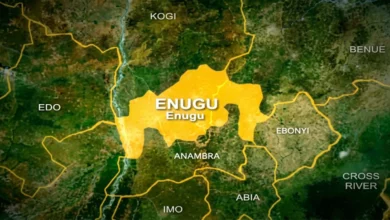
Yet, ASUU acknowledges that the picture is not the same across all states. The union specifically commended Abia State Governor, Alex Otti, for publicly announcing the adoption of the 2025 agreement and apologising to the union over bureaucratic bottlenecks that had caused delays and distortions.
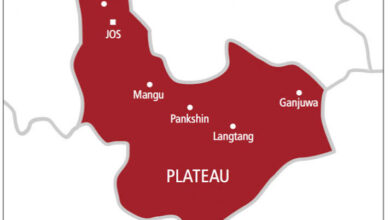
ASUU also identified Bauchi, Ekiti, Ogun, Benue, Yobe, Adamawa, Kebbi, Katsina and Borno as states where implementation of the agreement has commenced. It noted that Kano, Edo, Plateau, Taraba, Gombe and Bayelsa had pledged to commence implementation in September or October.
The contrasting responses from the states underline one of the major problems confronting the agreement. While the Federal Government may sign an agreement with ASUU, implementation at state-owned universities remains heavily dependent on individual state governments.
ASUU warned that governors who continue to delay implementation could push their universities into industrial crises. The union said authorities of affected universities had been notified of planned strike actions where satisfactory progress was not recorded.
Perhaps the most emotionally charged issue for university lecturers remains the payment of withheld salaries.
ASUU said lecturers are still owed three-and-a-half months out of the seven-and-a-half months of salaries withheld during the 2022 strike under the administration of former President Muhammadu Buhari.
The union also acknowledged President Bola Tinubu’s administration for releasing four months of the withheld salaries, but argued that the outstanding balance remained a major source of frustration among its members.
“Nothing has changed about the three-and-half months’ salaries left out of the seven-and-half withheld by the Buhari Government since we last addressed the public on the matter,” ASUU said.
The value of the outstanding salaries has also been affected by the sharp decline in the purchasing power of the naira since 2022. ASUU said its members had suffered significant financial and psychological hardship because of the withheld income, which it claimed had lost more than half of its value since the salaries were earned.
For the lecturers, the issue goes beyond arrears. They argue that they performed the work for which the salaries were withheld and should not continue to bear the consequences of an industrial dispute that has since been resolved.
ASUU is consequently asking the government to release the remaining salaries as part of efforts to rebuild confidence between lecturers and the government.